————–
FINAL REPORT
KA210-SCH – Small-scale partnerships in school education
TRANSNATIONAL PROJECT MEETING/MOBILITY
Festival ‘Water Customs and Traditions’
within the project ‘Currents of Life: Rivers as Ecosystems and Cultural Pathways’
Grant Agreement&Project Number 2025–1-Sl01-KA210-SCH-000362058
Razlog, Bulgaria 16th – 20th April, 2026
16.04 – arrival day // 20.04 – departure day
17.04 Friday
9.00 – 10.00
Workshop 1
Welcome meeting
Ice-breaking activities
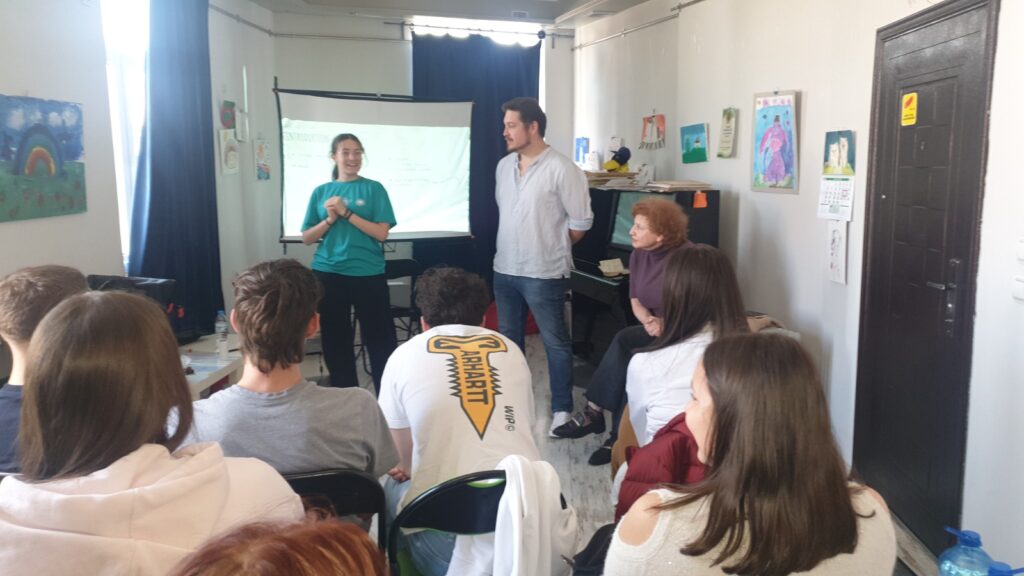
The Bulgarian students organized and implemented an ice-breaking game ‘Guess Who’, based on 3 facts presented by every participant’.
After that all the project partners did a Kahoot quiz ‘Water Bodies’, which contained 20 multiple-choice questions.
10.00 – 11.00
Workshop 2
Introducing the partner organizations/regions/countries
/the partners’ presentations/.
- The Bulgarian students presented numerous facts about their countries, including geographical features, natural conditions, biodiversity, population, economy, customs and traditions. The second part of the presentation was devoted to Razlog and Bansko districts. The final part of the presentation was about Rila&Pirin Initiatives for Enhancement, NGO.
- The Czech students provided some interesting details about their country, the Czech educational system and their school which has different career paths, including beer brewery craftsmanship and veterinary.
- The Slovenian students gave a presentation that contained a lot of information about Slovenia, the Municipality of Domzale – especially their traditions of straw craftsmanship /making straw hats and other accessories/, the local sights, parks and cultural /sporting events. They also presented their school, which teaches not only general subjects but also vocational ones /plumbing, mechanics, and more/. The school can boast numerous after-school sports clubs and other activities as well as various projects and teacher/student exchanges.
- The Spanish students talked about Spain, Andalusia and Jaen, their hometown with its rich history. They provided some fascinating facts about their gastronomy, historical and cultural sights, olive groves and olive oil production. They presented their school, its curriculum and campus.
- The Czech partner presented the project website and logo. The project website http://currentsoflife.eu/ contains the information about the project, the partners’ countries, international meetings and project outcomes. The partners voiced their opinions and approved of the webpage and the project logo presented.
Coffee break
12.00 – 13.30
Workshop 3
Exploring Water-Related Traditions in Folk Culture – Identifying and analyzing cultural traditions linked to water, focusing on regional water bodies: written and oral traditions, historical documentation, and ethnographic research.
- The Bulgarian partner presented the analytical information on water in Christianity, namely, baptizing; on Bulgarian traditions related to water /including various beliefs and magical practices; on so called Silent Water, Love Magic, Living Water, Dead Water and Healing Rituals. Folklore myths were also presented in detail, e.g. Water Spirits together with some local traditions, such as engaging and wedding ceremonies, 6th January ritual, Easter rituals. The presentation finished with the folk song devoted to a water tradition.
- The Czech partner talked about mythical figures related to water, for instance, Morana /a symbol of winter/ and Hostman/Water Goblin, its wooden statues as well as paintings, an opera and even moves that feature it. They also showed a video made by the students themselves providing a lot of information about some folk traditions. Another video they made and showed was connected with another water tradition.
- The Slovenian partner gave a presentation about the local customs and traditions related to the biggest torrential river in Slovenia – the Kamnishka Bistritsa river. The elaborated on the Valvasor’s legend, the legend of Veronika. They also explained the concept of the Traditional Laundry process in the past as well as its link to the social life/community gatherings. They also commented on how hiking along the river brings people together due to creating special routes and stations.
- The Spanish partner presented the folk traditions that are popular in Spain, mentioning the Water Tribunal in Valencia as an extraordinary example as well as some legends related to fountains in Jaen. They also showed and explained the meaning of the Spanish proverbs connected with water. The Night of San Juan was given as another shining example of a water-related ritual. At the end of the presentation they played a popular song.
(the presentations are to be also in PDF, max. 5 pages)
Lunch break
15.00 – 16.30
Workshop 4
Historical Perspectives on Water – Investigating historical shifts in how water sources like rivers, lakes or mineral springs have been approached and utilized in the region
- The Bulgarian students elaborated on diverse hydrological resources of Razlog, Bansko, Dobrinishte, Banya and Eleshcnitsa, showing the photos and giving detailed information about thermal mineral water of the area wits numerous mineral springs. They also told about public baths and special social rituals that accompany visiting such a place and describe special places called Valyavitsa.
- The Czech students presented their report on the Vltava River, numerous lakes and ponds, timber rafting, underwater caves.
- The Slovenian students gave a presentation about economic benefits of the local river, namely mills and hydro turbines, providing precise descriptions of these industrial structures as well as their photos. They also commented on the local power station, its usage and impact. Besides that some information on fishing and a fishing society, the local wastewater treatment plant.
- Thee Spanish students devote their presentation to communal management, industrial and agricultural use of water resources in their area. In addition, water as an energy source, natural mineral springs/balneology, a tourist resource were described in the presentation.
- The students were divided into 4 international teams and assigned the task of doing a brief research into specific themes:
- Water&Settlement Patterns;
- Technological Change in Water Use;
- Environmental Impacts Over Time.
Every team is to do research for different regions of the world:
Team 1 – China
Team 2 – Africa
Team 3 – North America
Team 4 – South America
After one-hour work the teams presented their findings.
17.00 – 19.00
A Cultural tour of Bansko – an international ski resort.
18.04 Saturday
7.30 – leaving for Plovdiv
11.00 -12.30
Workshop 5
‘Storytelling’ – Ted-talk style stories. The workshop was delivered by Dr Mihail Hadzhiev from Rila-Pirin NGO, member and medical doctor, along with Dr Aglika Byandova, also a Rila-Pirin NGO member and Plovdiv Medical University assistant professor.
Workshop 5 comprised some theoretical stuff on how to give a Ted talk spreading interesting ideas and various exercises involving all the participants as the young people were willingly doing the interactive tasks. Afterwards, they worked in small international groups and came up with interesting stories that were made up in accordance with the instructions given by the educators.
15.00 – 17.00
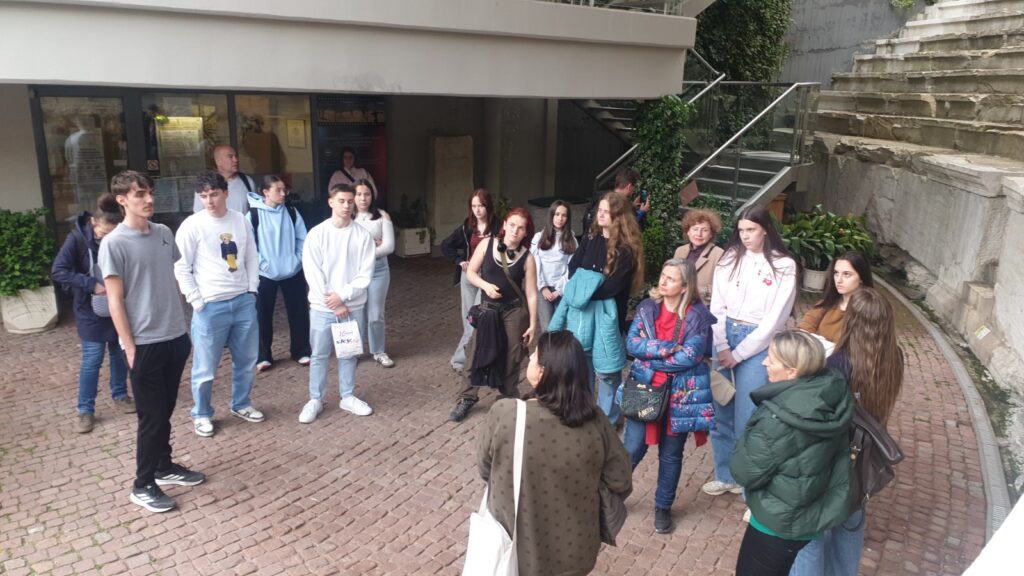
A cultural visit to Plovdiv’s historical sights / a guided tour/.
19.04 Sunday
9.00 – 11.00
Workshop 6
Water in Mythology and Religion – Exploring the symbolic meanings and interpretations of water in various
myths and religious contexts (guest speaker).
The workshop was delivered by Assoc. Professor Ivanka Sakareva from University lecturer, South-West University – Blagoevgrad.
The workshop consisted of a short talk, numerous interactive activities. After presenting the role of water in all the religions, the participants were given some practical tasks, such as writing down any associations they have with the word WATER.
Small-scale project work in international teams /other regions of the world/.
Coffee break
11.30 – 12.30
Workshop 7
A tutorial for students on how to make interactive maps.
The participants learned how to create an interactive map, use no-code tools like Google My Maps, Mapme, Genially, or Canva for simple projects, or leverage developer platforms like Mapbox or Google Maps API for complex, custom needs; the general process involves gathering data, choosing a tool (simple vs. code-based), adding locations/features, customizing design, and then sharing or embedding the map on a website. Then they were instructed how to use PamPam (pampam.city), which is a user-friendly tool designed to create interactive, aesthetic maps without needing any coding skills.
Afterwards, the students worked in national teams and created the first versions of the interactive maps of their countries.
Workshop 8
The project evaluation.
The educators worked on planning what to do within the next project stage taking into consideration what had been written in the application form.
The dates for the next project meeting/mobility: 05.10 /arrival day/ – 9.10 /departure day/.
12.30 – 13.30
Workshop 9
Field Trip to the local village of Bachevo
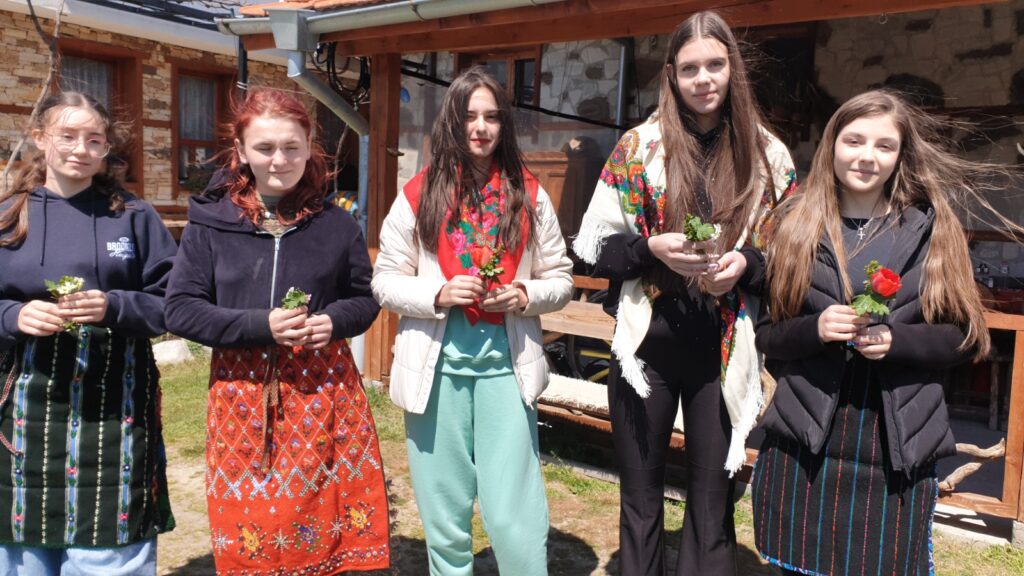
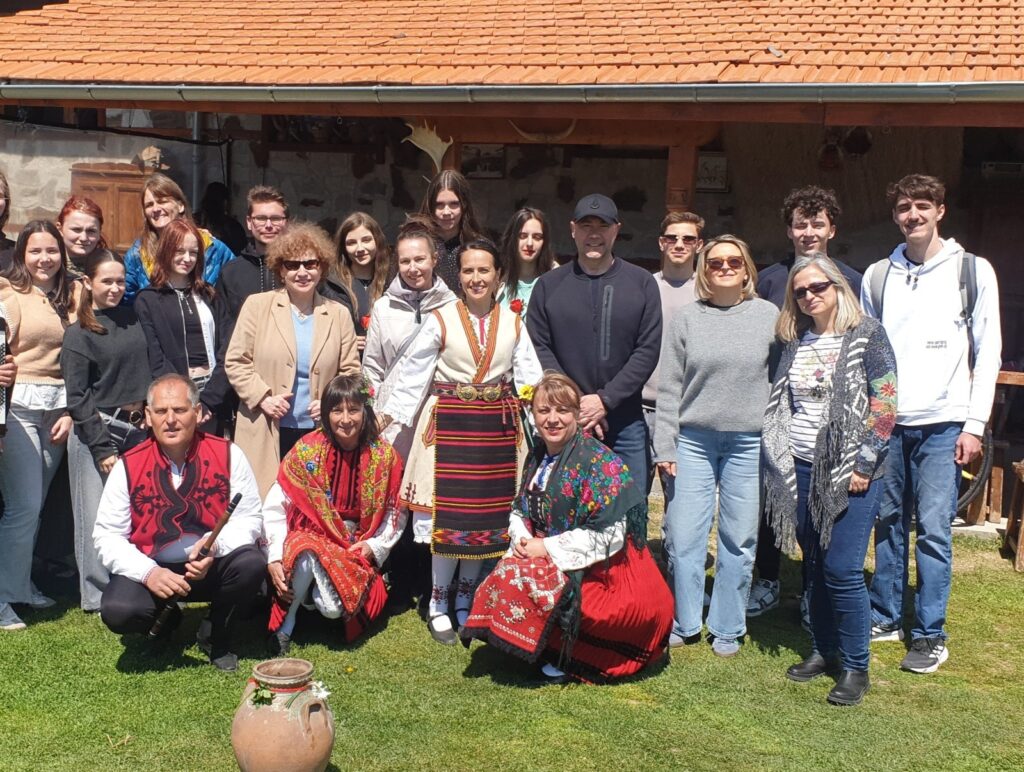
The local folk band gave a live performance of the local water-related traditions. They sang several songs devoted to rivers, lakes and other water bodies. They also showed a unique ritual known as “Topene na kitki” (Immersion of Flower Bunches). Normally, The ritual begins on the evening before the holiday. Girls and women prepare small bouquets (kitki) of spring flowers and medicinal herbs, tied with a red thread and a personal “mark” (usually a ring or a bead). These are placed in a copper cauldron (menche) filled with “silent water”—water carried from a spring in total silence. The vessel is left overnight under a rose bush or a fruit tree to “sleep” under the stars. The next morning, the community gathers at the main square for the “Vadenе na kitki” (Taking out the flowers). A young girl /in our case the girls from the partner teams/ pulls the bouquets out one by one. As each is drawn, traditional songs are sung to “predict” the future—usually forecasting health, a good harvest, or a prosperous marriage for the owner of that bouquet.
Workshop 10
Feedback/Evaluation – questionnaires
All the participants completed the evaluation forms given by the host partner.
The results will be published on the project website.
————–
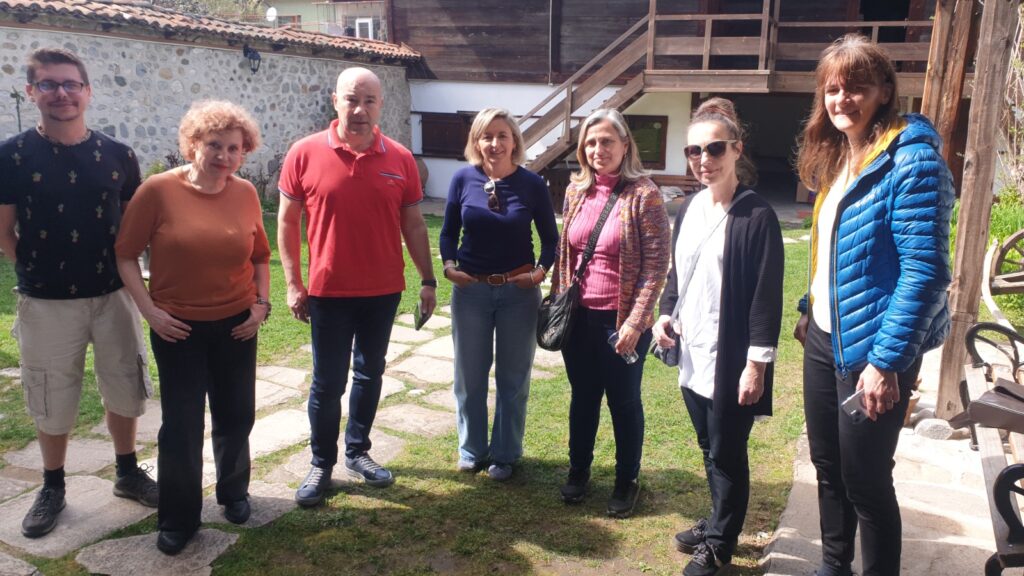
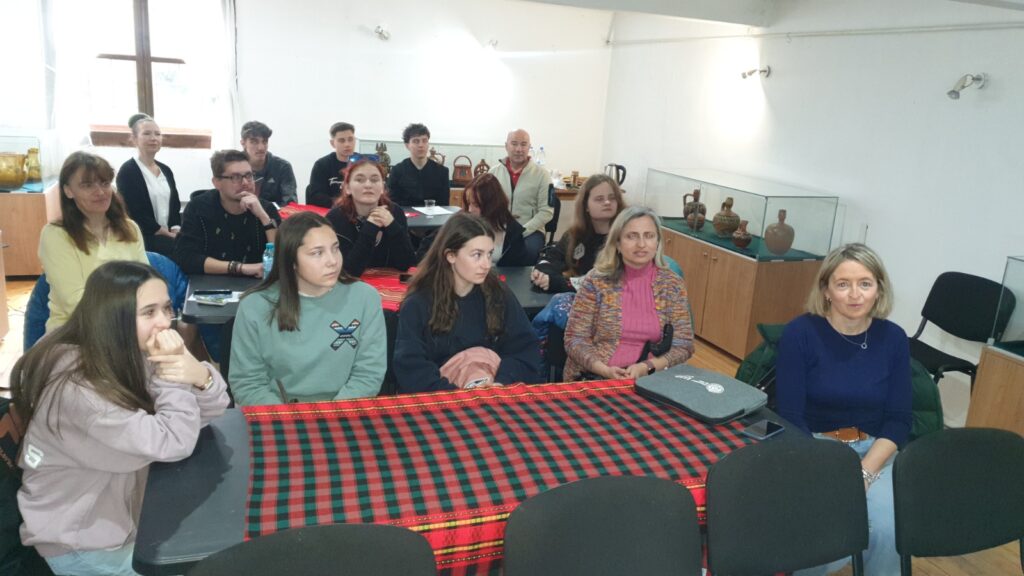
On 16.04 – 20.04 the NGO ‘Rila-Pirin Enhancement Initiative’ held a transnational project mobility ‘Water Customs and Traditions’ within the project KA210-SCH ‘Currents of Life: Rivers as Ecosystems and Cultural Pathways’.
The project aims to explore the cultural and historical importance of rivers in different societies; to gain a deeper understanding of the ecological significance of water bodies;
foster a sense of responsibility for water conservation and the sustainable use of water resources; promote interdisciplinary learning by integrating multiple fields of study; enhance
critical thinking and research skills through hands-on exploration and analysis.
The major project activities include LTTA “Rivers in Narratives and Imagery”, Festival “Water Customs and Traditions”; Training Event “Linking Climate Change and Water Resources”; Multiplier Event “Lifeblood of Nature” and Developing “Guide to Effective Practices”.
The project is to be implemented through collaboration of partner organisations from Slevenia, the Czech Republic, Spain and Bulgaria.
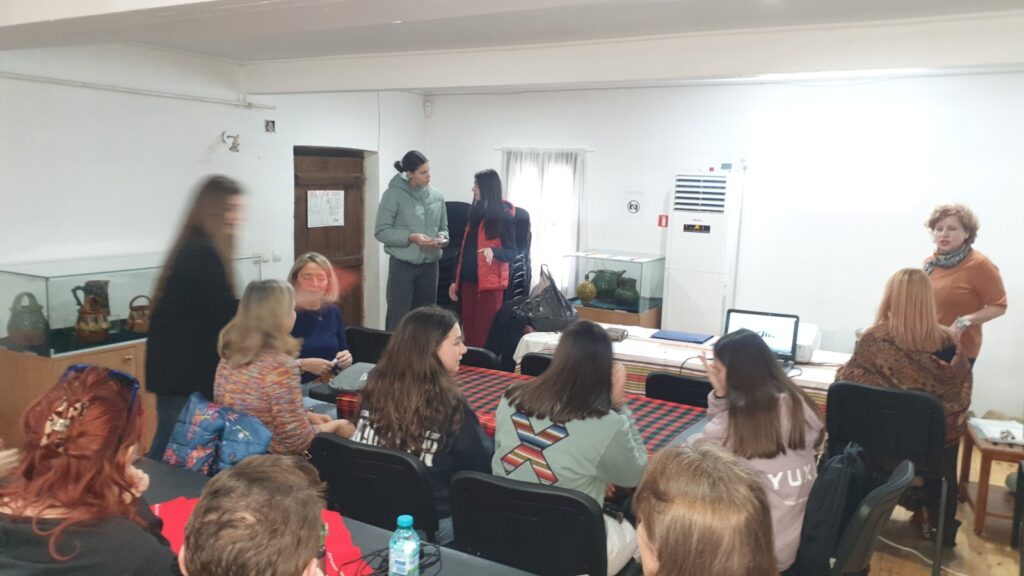
During the mobility in Razlog the participants /2 educators and 5 students from every partner country/ had a series of workshops, such as Exploring Water-Related Traditions in Folk Culture; Historical Perspectives on Water; Water in Mythology and Religion; Make Interactive Maps and more; visited Bansko and Plovdiv and saw a live performance of the local water-related traditions, given by the local folk band in Bachevo.
В периода 16.04 – 20.04 неправителствената организация „ Рила-Пирин – Инициативи за растеж “ проведе транснационална мобилност по проекта „Обичаи и традиции, свързани с водата“ в рамките на проект KA210-SCH „Реките като екосистеми и културни пътеки“.
Проектът има за цел да проучи културното и историческото значение на реките в различни общества; да постигне по-задълбочено разбиране за екологичната значимост на водните обекти; да се насърчи чувството за отговорност за опазването на водата и устойчивото използване на водните ресурси; да се насърчи интердисциплинарното обучение чрез интегриране на различни предметни области; да подобри
изследователските умения и критично мислене.
Основните дейности по проекта включват международни мобилности с различни теми „Реките в разказите и образите“, „Обичаи и традиции, свързани с водата“; „Връзката между климатичните промени и водните ресурси“; „Животът на природата“ и изготвяне на „Наръчник за ефективни практики“.
Проектът ще бъде изпълнен чрез сътрудничеството на партньорски организации от Словения, Чешката република, Испания и България.
По време на мобилността в Разлог участниците (по 2 преподаватели и 5 ученици от всяка партньорска страна) участвали в поредица от работни ателиета, като например „Проучване на традициите, свързани с водата, в народната култура“; „Исторически перспективи върху водата“; „Водата в митологията и религията“; „Създаване на интерактивни карти“ и др.; посетиха Банско и Пловдив и присъстваха на представление на живо на местни традиции, свързани с водата, изнесено от местния фолклорен ансамбъл в Бачево.
————–


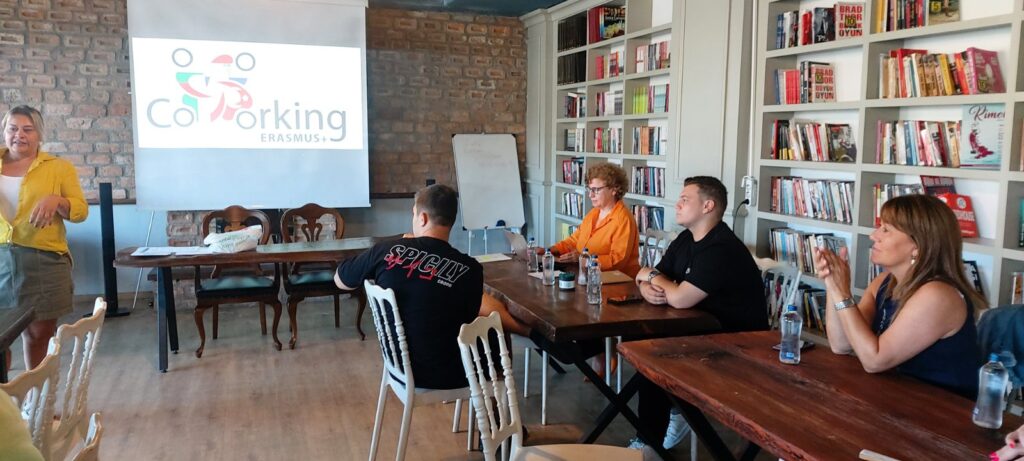
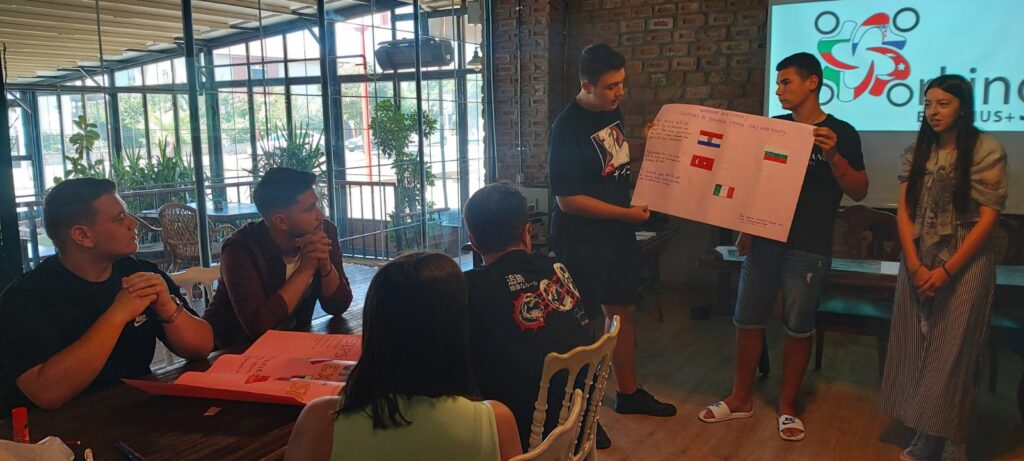
COWORKING4YOUTH ERASMUS+ PROJECT
2023-1-PL01-KA210-YOU-00114653
YOUTH TRAINING – İZMİR , TURKEY
08- 12 FEBRUARY 2025
6 NGO members and volunteers took part in this project mobility.
The participants were involved in a series of activities during the project.
08.02.2025
The participants arrived in Izmir.
09.02.2025
A ferry ride to Alsancak to visit the Izmir International Fair.
10.02.2025
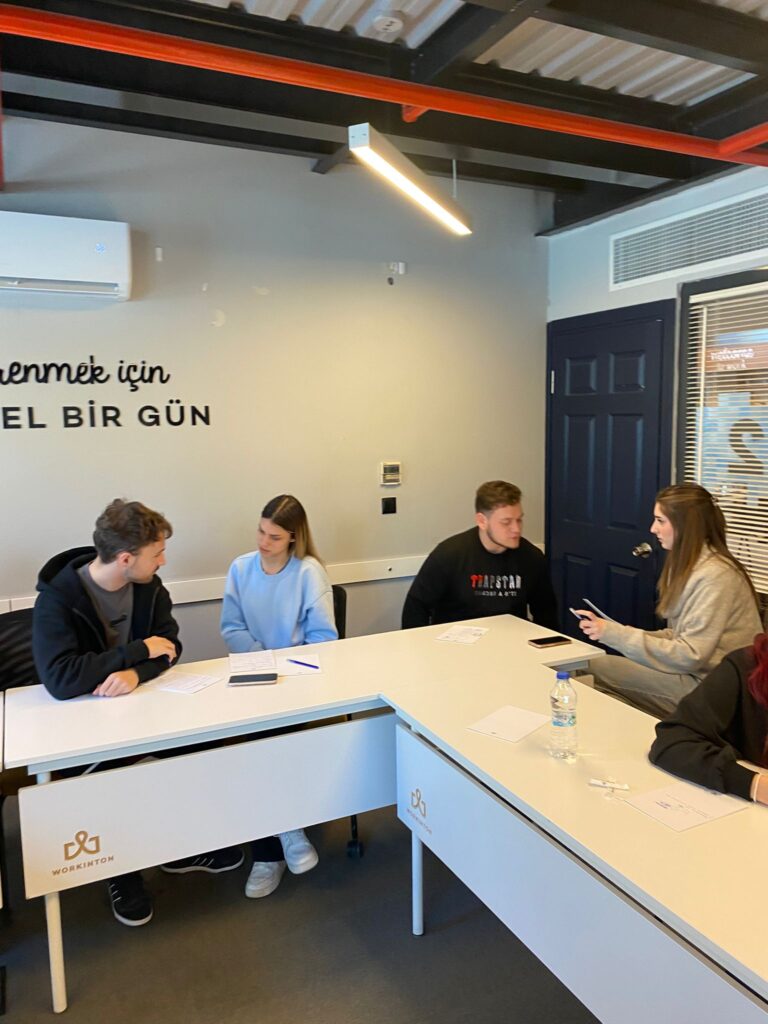
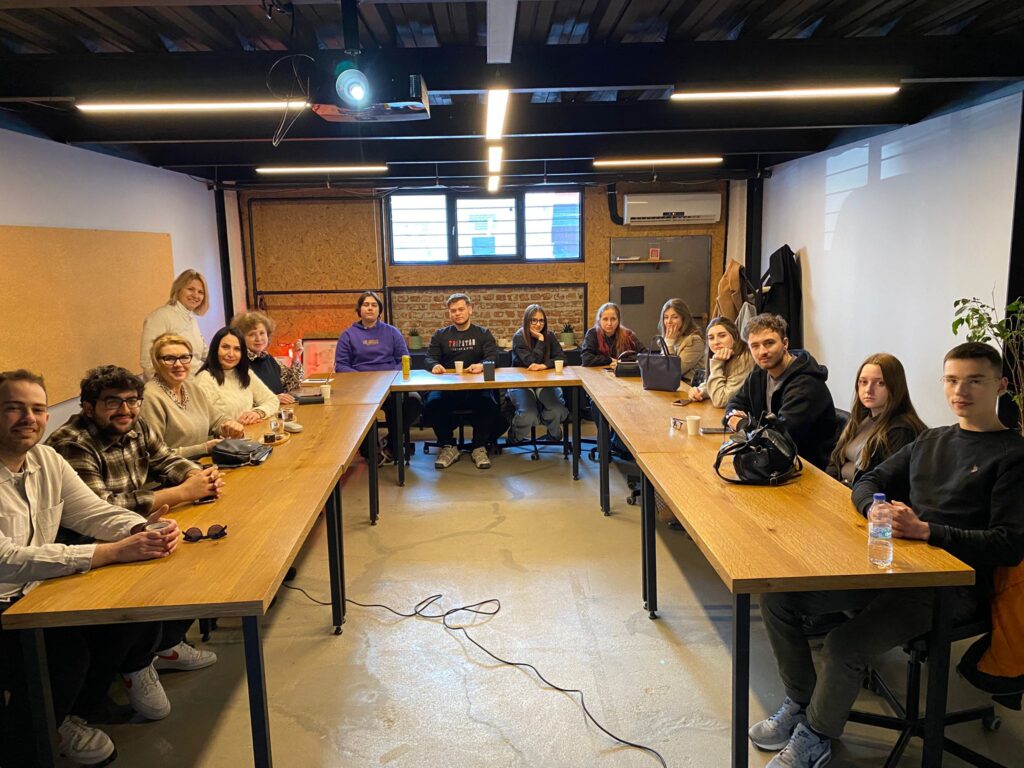
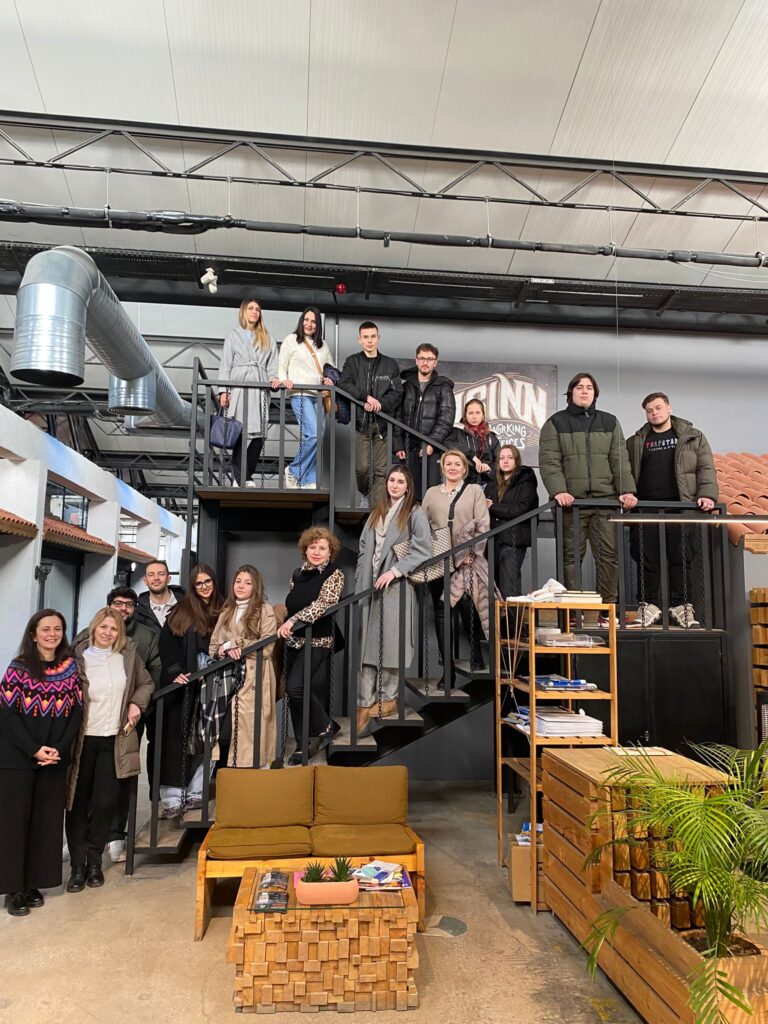
A visit to Workinton Coworking Space, followed by a visit to Originn Coworking space. Coordinators meeting with Canva videos in the evening.
11.02.2025
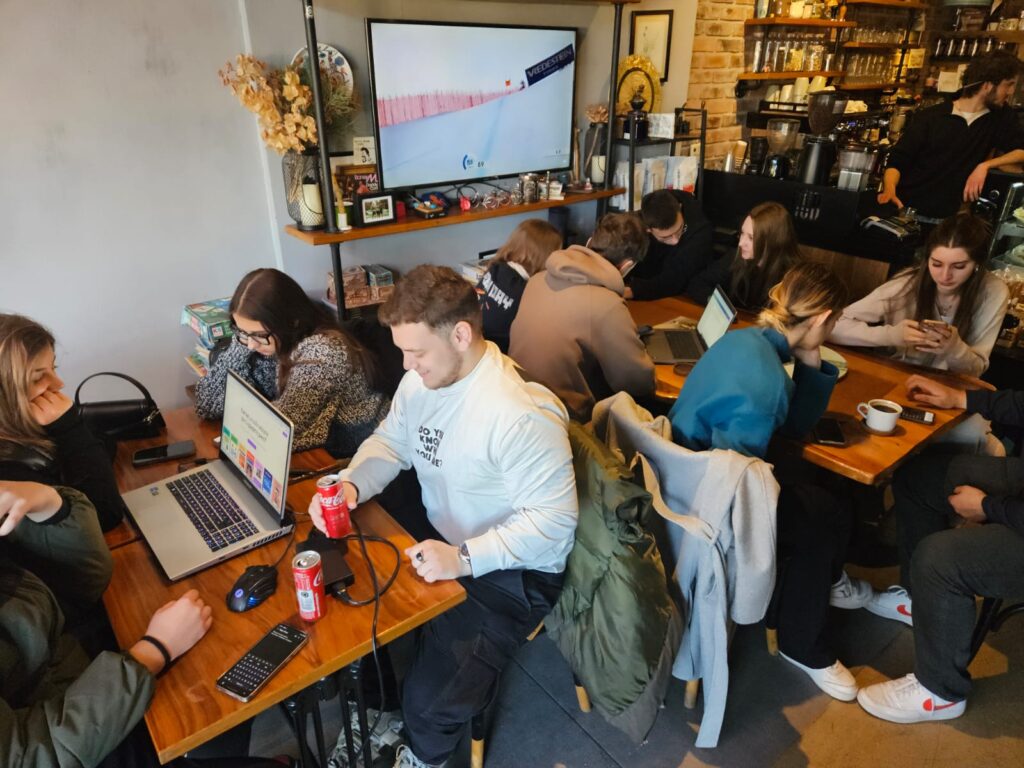
Conducted Workshops: Digital Tools for Collaboration and Networking and Communication Skills. Later in the day there was a meeting with 3 entrepreneurs at Karsryaka Kolektif.
Certificate Ceremony;
Evaluation of the meeting.
12.02.2025
Departure of the participants.
————–
KA210- YOUTH – Small-scale partnerships in YOUTH
TRANSNATIONAL PROJECT MEETING
A3.2 : ‘’The phenomenon of Co-working – Good practices in Europe’’
within the project ‘COWORKING4YOUTH’
Grant Agreement &Project Number 2023-1-PL01-KA210-YOU-000114654
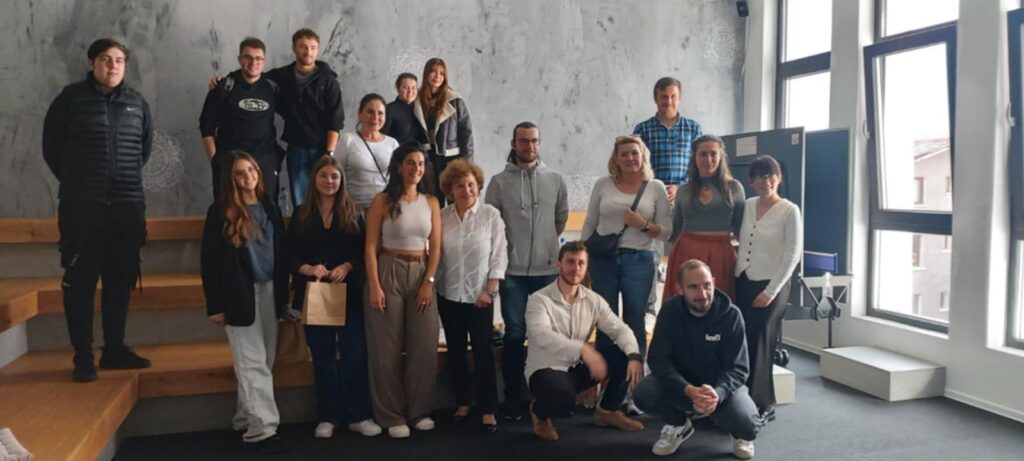
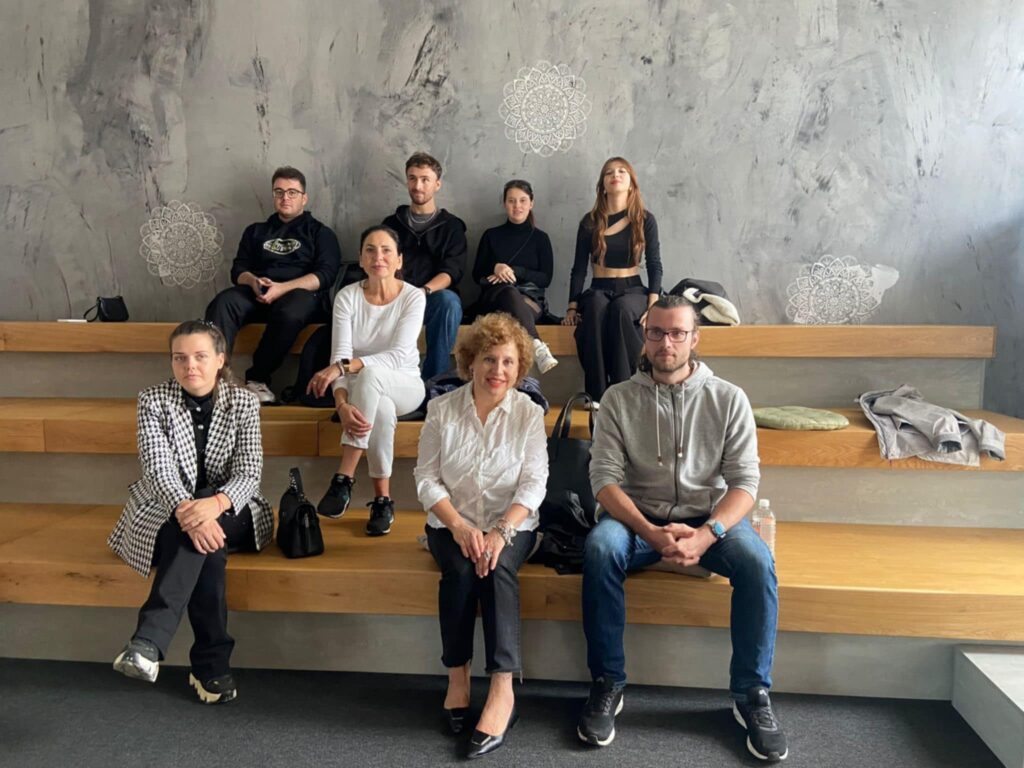
Razlog, 10th– 14st October, 2024
DAY 1.
Welcome meeting/Ice-breaking activities
Kahoot ‘Co-working concepts’, the quiz created and run by Dr Aneta Tumbeva.
Workshop 1
The partners’ reports/presentations about the Co-working communities in their countries. The Bulgarian partners are to deliver their presentation in Plovdiv.
The Polish partners gave a presentation devoted to various Coworking spaces in Warsaw, Krakow and other big cities providing numerous details on how they are organized and function. They put a lot of emphasis on their advantages and disadvantages taking into consideration the criteria such as location, noise, amenities, accommodation options. The Turkish partner presented quite a few coworking communities in their country – Istasion in Kushadasa, Atolie in Antalya, InnoCampus /a mobile coworking community/,
Workshop 2.
The partners’ reports/presentations about Co-working communities in different parts of Europe The Polish team gave a presentation on Coworking communities in Northern Europe – Sweden, the UK, Holland, Denmark, Latvia, Lithuania, Estonia. In all these countries Coworking practices are very popular and keep growing. They talked about benefits and downsides of Coworking communities in every country mentioned above as well as about their perspectives/future development. Besides that, they provided some precious information about boosting the freelance &gig economy.
The Turkish team gave a presentation/talk about Southern Europe, specifically Italy, Portugal, Spain, Greece, Malta. The Bulgarian team delivered 6 presentations on Central Europe, namely, coworking communities in Germany, France, Austria, Switzerland, Hungary, and Romania. All the presentations contain plenty of information about such spaces in Paris, Bordo, Strasburg/Geneva, Zurich, Basel, Lausanne/ and the opportunities & coworking events they provide for freelancers. They also commented on benefits of Coworking communities and the challenges they generate. The presenters pay attention to some vital issues, including the government policies, support, initiatives, costs, sustainability as well as future trends, especially hybrid models, suburban expansions and niche coworking spaces.
Workshop 3
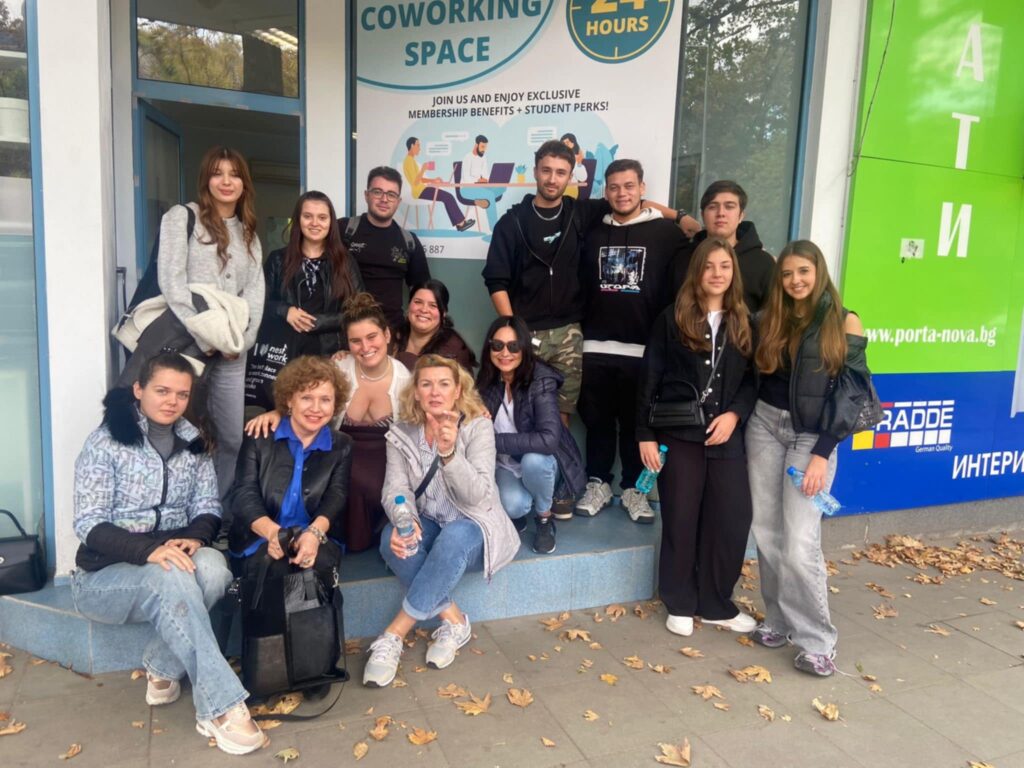
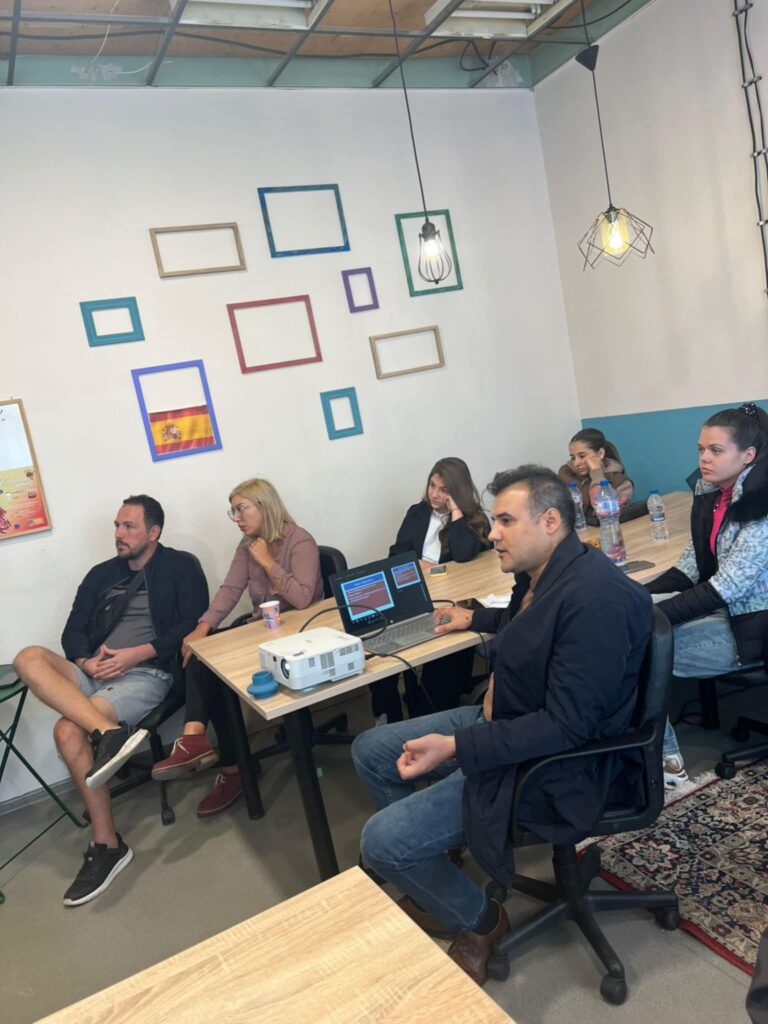
Visiting NESTWORK /coworking community/ Bansko organized by the hosts. https://nestwork.bg/
We visited their coworking spaces, and saw thoughtfully arranged workstations, ergonomic furniture, and plenty of natural light.
Nestwork offers several spaces in the coworking where one can pick their own working space and customize it to one’s likings. Private offices are meticulously designed to accommodate anywhere between 1 and 10 people. At Nestwork Premium Coworking, they understand the importance of a prime location for freelancers’ business. Situated in the heart of Bansko, Bulgaria, these coworking spaces offer the ideal setting for professionals. With two convenient locations, they provide coworkers with easy access to all the amenities and attractions this beautiful town has to offer. The meeting there consisted of two parts. Firstly, the owners and co-founders of NESTWORK gave a
detailed information about how they established and have been running this extremely successful coworking community/space /it was recorded and ‘photoed’/.
The second part was a discussion on Coworking concepts and trends with the participation of the freelancers from Bulgaria, the USA, Portugal , Brazil and Italy.
Workshop 4.
‘Digital Entrepreneurship and Technology we need for remote working’,
given by Mr Daniel Kostadinov from the Bulgarian team, during which we discussed the following questions: What is Digital Entrepreneurship; The Evolution of Entrepreneurship in the Digital Age; Key Characteristics of Digital Entrepreneurs; Digital Business Models and Marketplace Platforms Building Your Online Brand; Marketing in the Digital Space/ The Power of Digital Marketing Common Challenges in Digital Entrepreneurship
Coworking Treasure hunt
A Cultural tour of Bansko
DAY 2.
Plovdiv
Workshop 5
Workshops in the Co-working community of Plovdiv ‘Coworking Space
APRILOV’, organized and delivered by the host.
https://cwsaprilov.wixsite.com/coworkingspace?
The owners and co-founders of Coworking Space APRILOV gave a lot of interesting information about how they established and have been running their coworking community/space. They shared their ideas and perspectives regarding this business, which was recorded. Coworking Space APRILOV is not only a co-working but also a co-studying space, which attracts numerous students from Plovdiv, especially from Medical University.
Workshop 6
‘How to interact&collaborate effectively’, delivered by Dr. Mihail Hadzhiev,
representing RilaPirin NGO. Co-working spaces are a concentration of knowledge production and knowledge distribution, and they provide the chance for the exchange of different concepts between professionals and the creation of collaborations that are particularly important for businesses, especially start-ups that do not have enough resources to operate without any support. Co-working is a joint activity, not a singular one, and it relies on the ability of the participants to understand that co-working rests heavily on how it intersects with other networked activities. Co-working space is the perfect place for young start-up entrepreneurs, venture capitalists, and potential
public policy interventions in cities as it provides everything that is needed for them. The presentation also concluded that building good Network, Social Interactions and good infrastructure is the main reason for using co working space.
Workshop 7
A member of RilaPirin NGO, Ms. Maria Galcheva, delivered a presentation on the Co-working communities in Bulgaria, namely in Sofia, Varna, Burgas, Veliko Tarnovo, Bansko and Plovdiv. A cultural visit to Plovdiv’s historical sights.
DAY 3.
Workshop 8.
The project evaluation. The participants discussed the results of the project work over the period between Mobility 1 in Poland and Mobility 2 in Bulgaria. The partners have to upload all the necessary documents, videos, photos and presentations to the project GoogleDrive. The project webpage should be updated within one month after Mobility 2.
The partners also talked about planning what to do within the next project stage.
Blagoevgrad, the regional centre.
Workshop 9.
Visiting one of the Coworking community in Blagoevgrad including a round table on coworking concepts and trends.
https://www.facebook.com/p/The-Hub-Blagoevgrad-61554372240736/
The owner of the Space, Victoria delivered a presentation on how she came across this idea, what challenges they have faced.
Workshop 10
Co-working rules and the role of the manager – organized by South-West University and delivered by Dr. Ivo Minkov. It also contained a lot of information about Co-working Values and the Importance of Well-being While Working Remotely. It also included Practical exercise: Case Study exploration.
We had three ethical dilemmas:
– First case study: A company has discovered that one of its products has a defect that could potentially harm users. Should they issue a costly recall or continue sales while addressing the problem quietly?
– Second case study: A doctor has one dose of a life-saving drug and two patients who need it. How should they decide who gets treatment?
– Third case study: A tech company has developed a new AI technology that could increase efficiency but might lead also to significant job losses. Should they release it?
Each group discussed the assigned case and tried to identify the potential actions and the ethical implications of each. The questions for consideration were the following:
Which ethical principles apply, and how do they influence the decision?
Finally, each group presented their case study and its analysis, their proposed solution to the members of other groups. As a result, the participants better understood the necessity of the importance of Values and Virtues in our life (when we make decisions), in order to reach the discussion about these significance particularly in a Co-working environment, and generally, in life.
A cultural visit to the Rila Monastery
Workshop 11
Feedback/Evaluation. The participants completed a questionnaire containing the questions devoted to the quality of Mobility 2.
————–
What are the possible consequences of each action?;
Who are the stakeholders, and how are they affected?;
ERASMUS+ KA210 YOU
Mobility 1 ‘Pilot Training’
within the project ‘COWORKING4YOUTH’
2023-1-PL01-KA210-YOU-000114654
Day 1.
The Hotel conference room
Workshop 1. Warm up and integrating activities. The participants took part in several ice-breaking/team-building activities that were organised by the Turkish partner.
Workshop 2. Presentation given by Ali – devoted to the theoretical foundation of the Coworking practices. The presentation title is ‘’Module 1: Managing co-working spaces in rural areas – Part 1.’’. The speaker gave a lot of details on how to establish a coworking community, what are the most common coworking events and activities.
This training module is designed to equip individuals and organizations with the knowledge and skills needed to successfully manage co-working spaces in rural areas. Co-working spaces are becoming increasingly popular in rural communities, providing opportunities for remote work, entrepreneurship, and community development. This module will cover key concepts, strategies, and best practices for effectively managing co-working spaces in rural settings.
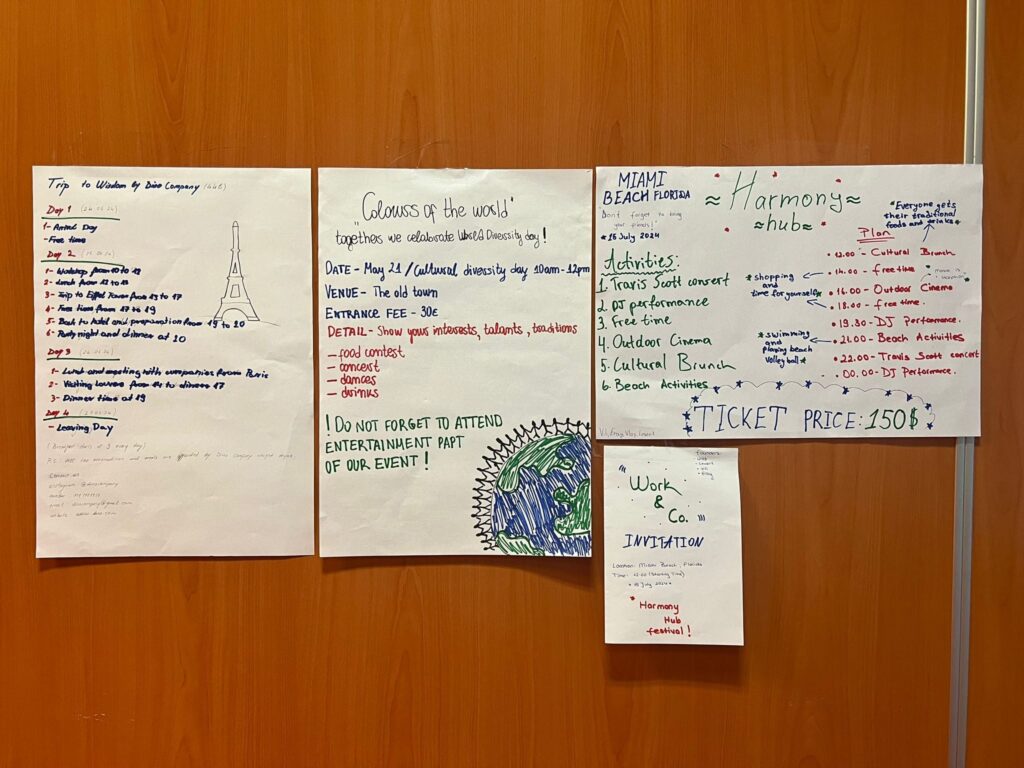
Workshop 3. The participants were divided into three international groups of five and worked on the topic ‘’How to organise coworking events’’ as they had to come up with an idea of such an event and the ways of its successful implementation.
Group 1. ‘A Coworking Festival’, called ‘Cultural Brunch’, that includes a lot of sports activities as well as sampling traditional dishes. There are also several digital activities and the final concert + an after-party. They have created an invitation that contains the place of the concert, the date and time as well. The invitation will be given to the members of our coworking space company as they will be freed from all payment. They are going to promote the event by sharing it on our social media and also making advertisements in YouTube, Instagram, Twitter and our Linked In page.
Group 2. The second group developed an idea of a coworking trip to Paris. The name of the company was “Dino Company”. They wrote the schedule for the co-workers, then we added the price of the trip. We also added the ways that other people from other companies can contact us.
Group 3. Their team project was dedicated to getting together people from different nationalities and giving them a chance to show off their culture and tradition. The event takes place at the old town of Szczecin. The entrance fee is 30€.
If you visit, you will see stands with traditional dishes from every country in world. They will be rated from best tasting cuisine to worst, according to your and popular chiefs’ opinions. Later there will be a huge concert with many popular music stars and dancers, after that you can check out the entertainment area where you can take photos with funny glasses, try on specific clothing pieces from all over the world.
Workshop 4. Module 1-Part 2. ’Managing co-working spaces in rural areas’
Workshop 5. Evaluation.Q&A.
The participants asked questions related to the contents of Module 1-Part 1 as well as carried out a survey in order to evaluate the Module 1 in terms of the concepts it contains, the methods to apply and more.
Workshop 6 /Cultural Workshop
Boat trip on the river Oder
Szczecin – sightseeing
and visiting one of the local coworking spaces
https://www.coworker.com/poland/szczecin/aloha-office-coworking
The All Inclusive office offers high-quality furniture, industrial spaces, A-class building and access to serviced services in common areas. We offer 34 offices arranged for 2 to 30 people.
The walls between the offices were made in the Knauf double-panel system. They provide acoustic damping up to 51 db and the ability to work in full concentration.
An equipped office starts at PLN 1750 net per month. We select the price of your space based on the number of positions your company needs.
DAY 2.
Sczcecin University Coworking Space”
Workshop 1. Warm up and integrating activities organised by the Bulgarian team.
Workshop 2. Module 2 – Part 1. ‘’Career Skills for the Future’’
Theoretical foundations of the domain were presented.
Module Contents include the following:
Topic 1: The Future of Work
Topic 2: The World Economic Forum Skills 2030
Topic 3: Trends and Challenges in the Future of Work
Topic 4: Expected Job Losses in the Future and Future Jobs in Demand
Topic 5: The World Economic Forum Skills 2030
Topic 6: Exploration of the specific skills identified by the WEF for 2030
Topic 7: Why acquiring and developing these skills is essential for personal and professional growth.
The training session also focused on the role of education within this phenomenon emphasising that the role of education, training, and continuous learning in skill development is pivotal in preparing individuals for the demands of the modern job market and fostering their personal and professional growth.
The international groups of five worked on different topics including AI in business, the human rights and AI, AI on the roads/AI traffic police, also including comments on advantages and disadvantages of this phenomenon.
AI lawyer, TSAP (Trafic Special Artificial Police), Prompt Engineer, AI service man.
Multicultural Event
During the lunch time the participants were treated to various kinds of food typical of Poland, Turkey and Bulgaria. The partner teams also presented some talks about the national flags, traditions and customs. They wore national costumes, sanf folk songs and did the national dances.
Workshop 3. Module 2 – Part 2. Career Skills for the Future
A meeting with a Youth trainer and a specialist for coworking spaces – a workshop
Two representatives of the organisation talked about the main issues of social economy and OWES support system, which was established in 2015 and has the accreditation with the Ministry of Family and Education. They work wih 300 entities and 1s00 individuals and initiative groups. They organise a wide range of activiite such as a festival of housewives, donation campaigns, study visits; creating work places for people at risk of social exclusion.
After the presentation all the participants were actively involved in a discussion about coworking spaces, especially for university students, its benefits as well as some ways of becoming a founder or user in a thriving coworking community.
Workshop 4. A guided tour of the university coworking space.
Coworking for NGOs
This coworking space is in compliance with the following questions:
Is your organization looking for a place to work? Do you want to conduct training but have no space for it? Or maybe you are a freelancer and you are tired of working from home? Thanks to the OWES Szczecin offer, you can change that!
They have a shared office and training room where you can rent a workspace for a day, a month or just an hour. We also offer running a virtual office.
The offices are located at the Faculty of Economics, Finance and Management of the University of Szczecin at ul. Cukrowa 8 in Szczecin.
Clear labeling ensures the ability to provide services while maintaining confidentiality.
There is a large, free parking lot and good transport connections due to the large number of buses in the immediate vicinity of the building (no. 60, 61, 62, 241 and 243) and the Bike_S station.
Accessibility for people with mobility disabilities (ramps, elevators, wide passages, adapted toilets, no thresholds).
Workshop 5. Strategies and resources for individuals and organizations to foster skill acquisition
Fostering skill acquisition is essential for individuals and organizations to thrive in the ever-evolving world of work. The participants discussed some strategies and resources that can help individuals and organizations in this endeavor:
Workshop 6. Evaluation.Q&A. The participants completed the online test developed by the Turkish partner.
DAY 3
27th June 2024 A meeting in the job centre in Pyrzyce – future opportunities for young people
Workshop 1. The centre employees presented their ‘’coworking’’ project, which is aimed at the people from 18 to 30 years of age from the Pyrzyce area, registered in the PUP as unemployed or job seekers; people from outside the PUP register, NEET group, people with special needs on the market work.
The point also serves as information for young people aged 15-18 attending secondary schools and for other people interested in youth activation.
The goal is to best prepare the client to enter or return to the labour market, through providing them with non-standard services not yet offered by PUP. Introduction to working with the beneficiary from external specialists, including: psychologist, lawyer, economist, specialists for social, housing and health care will allow for the diagnosis and elimination of barriers, which may have previously been an obstacle to the participant or his employment maintenance.
The “Ready for Work” program consists of 6 two-month activation cycles for 6-person groups, which end with an internship or employment.
Types of support:
– professional activation and career guidance: individual career counselling, diagnosis participant’s resources, including deficits and needs, defining an individual support plan; individual job placement, “Workshop developing job search skills with using digital tools” (preparing your own offer and posting it on portals websites); “Workshop for developing communication skills and self-presentation”;
– information on possible forms of social assistance: “Workshop on the possibilities of obtaining support from social assistance in difficult situations” (scope of assistance, conditions for obtaining, documents) conducted by a social work specialist;
– psychological counseling: “Motivational training, methods of achieving set goals”,
“Training for preparation for change”, “Training for a support group” (creating a support group for the purpose of exchange of experiences and information, mutual assistance in overcoming the same problems),
Workshop 2. Module 3: Entrepreneurship skills. Presentation and collaborative activities on:
1.1. What is Entrepreneurship?
– Definition of entrepreneurship.
– Historical perspective.
– Types of entrepreneurs (e.g., social entrepreneurs, serial entrepreneurs).
1.2. Importance of Entrepreneurship
– Contribution to the economy.
– Job creation.
– Innovation and problem-solving.
2.1. Creativity and Innovation
– Importance of creative thinking.
– Techniques for fostering innovation.
2.2. Risk Management
– Understanding and assessing risks.
– Risk mitigation strategies.
2.3. Business Planning
– Developing a business plan.
– Setting goals and objectives.
2.4. Financial Literacy
– Basics of financial management.
– Budgeting and cash flow management.
2.5. Networking and Relationship Building
– Building a strong professional network.
– Leveraging relationships for business growth.
3.1. Idea Generation and Validation
– Identifying business opportunities.
– Validating business ideas.
3.2. Legal and Regulatory Considerations
– Business registration and licenses.
– Taxation and compliance.
3.3. Funding and Financing
– Sources of funding (e.g., loans, investors).
– Bootstrapping and lean startup principles.
Workshop 3. Module 3: Entrepreneurship skills
Presentation and collaborative activities on:
4.1. Rural Entrepreneurship Defined
– Characteristics of rural areas.
– Why rural entrepreneurship matters.
4.2. Benefits and Challenges
– Advantages of rural entrepreneurship.
– Addressing rural-specific challenges.
4.3. Case Studies
– Examples of successful rural entrepreneurs.
5.1. Globalization and Entrepreneurship
– Opportunities in a globalized world.
– Expanding markets internationally.
5.2. Digitalization and Entrepreneurship
– Leveraging technology for business growth.
– E-commerce and online marketing.
5.3. Adapting to Change
– Strategies for staying relevant in a rapidly changing business landscape.
DAY 4
Workshop 1. The projectpartners presentedpresented their countries, regions and organisations. The presentations should be uploaded to the project blog/website by the partners.
Workshop 2. Project management&implementation matters.
The participants analysed and evaluated all the activities that had been carried out before the Mobility 1 in Poland. The outcomes, produced during the first project stage, received a positive feedback.
Workshop 3. Discussing Plans for Mobility 2.
Mobility 2 is to be held in Razlog-Bansko, Bulgaria.
The coordinators’ online meeting is to be held within a week after Mobility 1.
Visiting a coworking space in Szczecin:
https://www.coworker.com/poland/szczecin/bein-offices-szczecin
BeIN Offices in Szczecin is located in Lastadia Office. The office building has the BREEAM In-Use certificate. The building was warned for its functional, functional and modern features. The unique location provides stunning views of the Cathedral of St. James, the Old Town, the Pomeranian Dukes’ Castle and the Chrobry Embankments. The location near transport links, railway stations, airports and a large free car park allows access to the office building for employees and clients.
Their substance spread of standard work and handling, fully supplied operation. Their offer also includes a wide range of office services, such as reception, common areas, kitchen, bathrooms and lounge areas. They take care of all aspects of the office, from interior design to internet management and cleaning services. The goal is to allow clients to focus on the work, eliminating the need to worry about the details that, as a result of the action, make them organize.
A cultural visit to Świnoujście is a city in Western Pomerania and seaport on the Baltic Sea and Szczecin Lagoon, located in the extreme north-west of Poland.
————–

KA210-SCH – Small-scale partnerships in school education and training
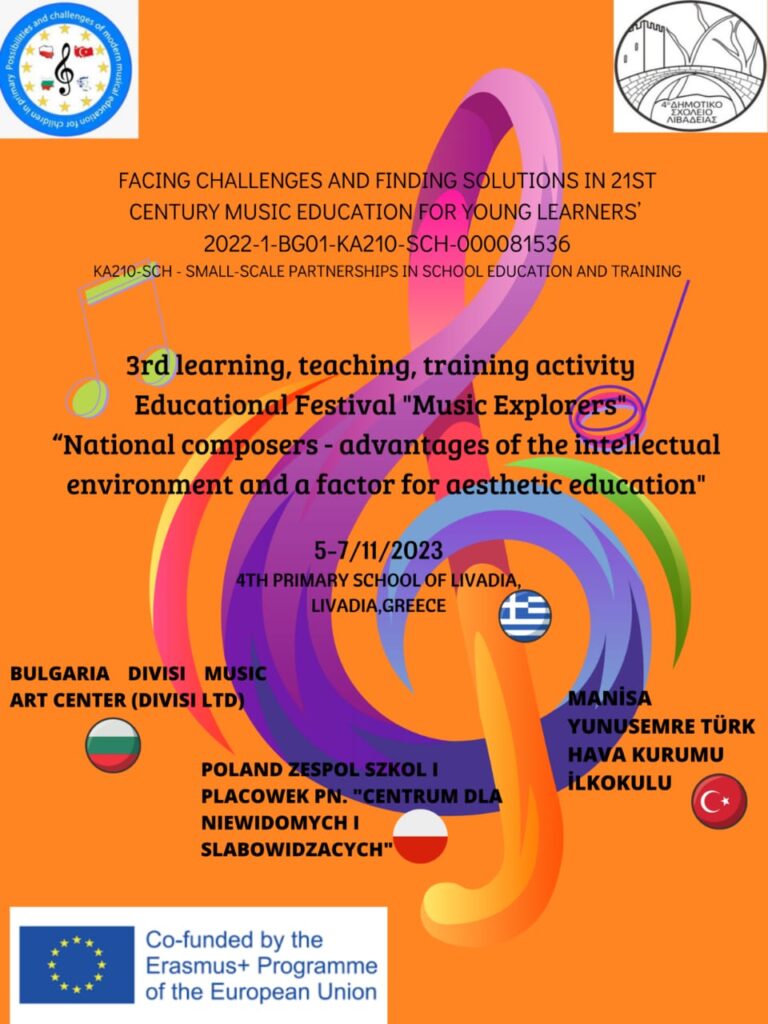
‘Facing Challenges and Finding Solutions in 21st Century Music Education for Young Learners’ 2022-1-BG01-KA210-SCH-000081536
Learning, Teaching, Training Activity 3
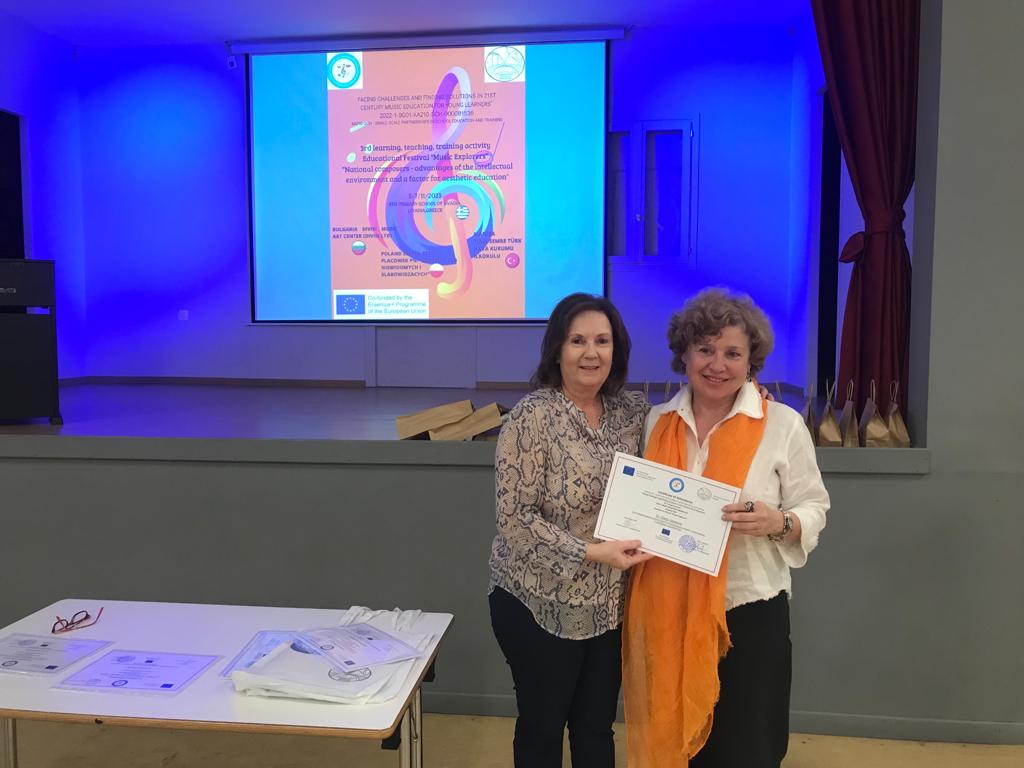
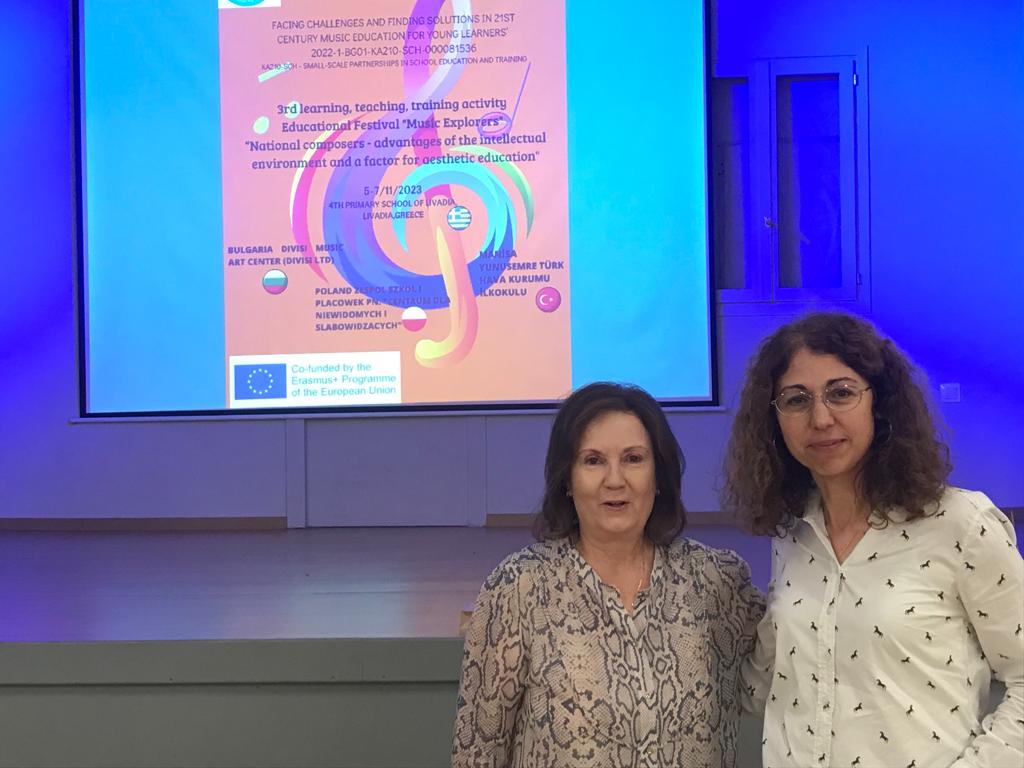
Educational Festival “Music Explorers” under the motto “National composers – advantages of the intellectual environment and a factor for aesthetic education” – Livadia, 5-7 November 2023
1st Day/Sunday/ 5th November
WOKSHOP 1.
The meeting started with a welcoming speech delivered by the school principal, hosting Mobility 3.
The meeting was attended by the Deputy Mayor, several representatives of the Municipality and the local Inspectorate of Education.
The head of the Inspectorate of Education and the Deputy Mayor also gave welcoming speeches talking about the importance of collaboration, the European values, the role of the schools in shaping the world.
WORKSHOP 2. ‘’National classical music and composers – how to properly introduce this national treasure to children aged 6-12’’.
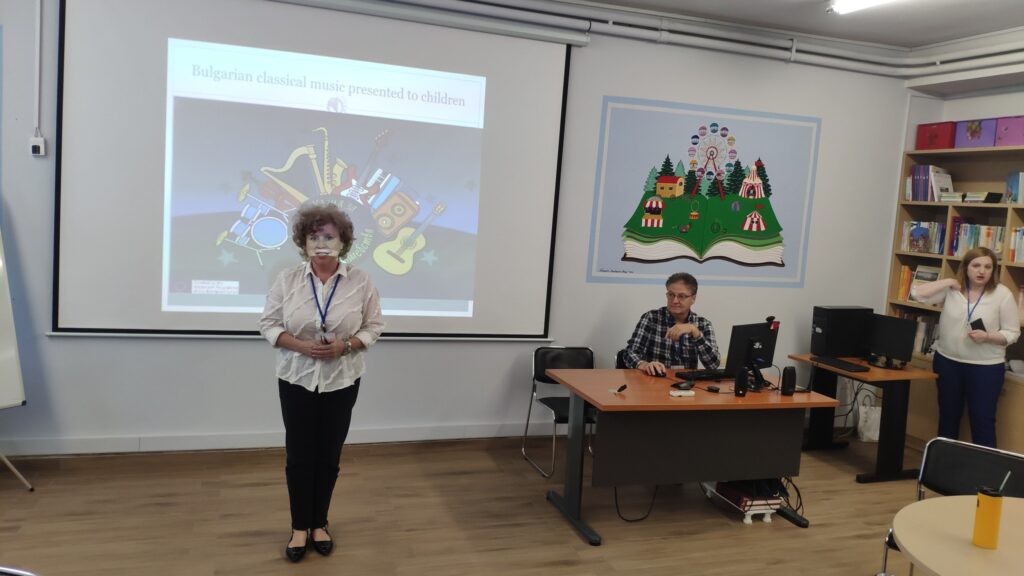
The Bulgarian partner gave 3 presentations on how the Bulgarian classical music is taught in elementary schools.
The 1st one was devoted to the several generations of the Bulgarian classical music composers. First, they talked about Pancho Vladigerov, and then showed a video of a lesson given by Diana Petkova. Marin Goleminov was another great Bulgarian composer and conductor, whose music is part of the music curricular in the country. The lesson video demonstrated how art elements can be included in music classes. The Bulgarian partner also talked about Veselin Stoyanov as the lesson devoted to his musical pieces contained elements of dancing and drama. To teach classical music they often invite musicians and conductors, which lets young children have a first-hand musical experience and better understand sophisticated classical music. Another interesting activity presented by the BG partner was ‘’The Cyrillic Alphabet” flash mob organized in Plovdiv on 24.05.2023.
The 2nd presentation was entitled ‘’The Bulgarian classical music and solfeggio’’ and mainly contained the detailed information about the Bulgarian composers whose works are used while teaching solfeggio. The presentation included numerous short videos showing parts/important elements of such lessons.
The 3rd presentation ‘’Children’s Songs created by Bulgarian composers” was devoted to some classical children’s songs and choirs. The presenter gave a detailed explanation regarding her teaching approach and then showed how it works in reality by inviting the project participants to do the activities.
All the partners attended A CONCERT held by a Music Ensemble playing Greek music from a School of Music accompanied by an orchestra (classical Greek composers).
WORKSHOP 3 ‘’How Music integrates different subjects’’
The Bulgarian partner delivered 3 presentations:
1.1. MUSIC IN THE ENGLISH CLASSROOM, emphasizing that Music is a way to build strong language skills and foster learning. It is well researched and a proven way to foster language acquisition in the ELT classroom. One of the basic principles when learning a language is a repetition. Songs can be used in a lot of various ways. All the skills such as listening, reading, writing and speaking can be practised, the same way as linguistic areas starting with vocabulary, grammatical structures, and ending with rhythm, stress, fluency and pronunciation. From the grammatical point of view, they “provide a natural context for the most common structures such as verb tenses and prepositions.
1.2. How Music Integrates Maths.
The presenter elaborated on Music as a universal language that has the unique ability to transcend cultural boundaries and connect people from diverse backgrounds and that music plays a significant role in integrating various subjects, bridging the gaps between art, science, mathematics, history, and even language. This presentation was focused on how music serves as a powerful tool to integrate different subjects, enhancing cognitive development, promoting creativity, and fostering interdisciplinary learning, i.e. Music and Mathematics Integration.
1.3. PRACTICAL IDEAS ON TEACHING SCIENCE WITH MUSIC
The presentation was rich in PRACTICAL IDEAS ON TEACHING SCIENCE WITH MUSIC as well asuseful sources of the relevant information.
WORKSHOP 4. ‘’How educators include ‘Classical music in cartoons, movies and commercials’ in their teaching repertoire’’.
WORKSHOP 5. Project outcomes.
The Bulgarian team presented the 1st draft of the model of Blended Course Syllabus and the 1st draft of Compendium/Flipbook of Good practices.
The partners got familiarized with these project outcomes and shared their opinion on the products, making useful suggestions for their improvements.
CULTURAL WORKSHOP 6.
A city tour en route to the THOLOTO building.
A Concert given by the musicians from ‘’Trofonio Odeio’’ conservatory of Panagiota Karakousis (Greek artistic classical composers) in the THOLOTO building in Krya.
2nd Day /Monday/ 6th November – Athens
Visit-Tour of the Museum of Folk Instruments.
Visit-Tour of the Acropolis Museum.
WORKSHOP 2 on music in Ancient Greece, delivered by the museum curators.
Visit-Tour to the Hill of the Acropolis.
3rd Day /Tuesday/ 7th November
WORKSHOP 1. “How classical music is presented to a young audience (6-12 years) and the effect of the Musical Environment on the aesthetic development of children”.
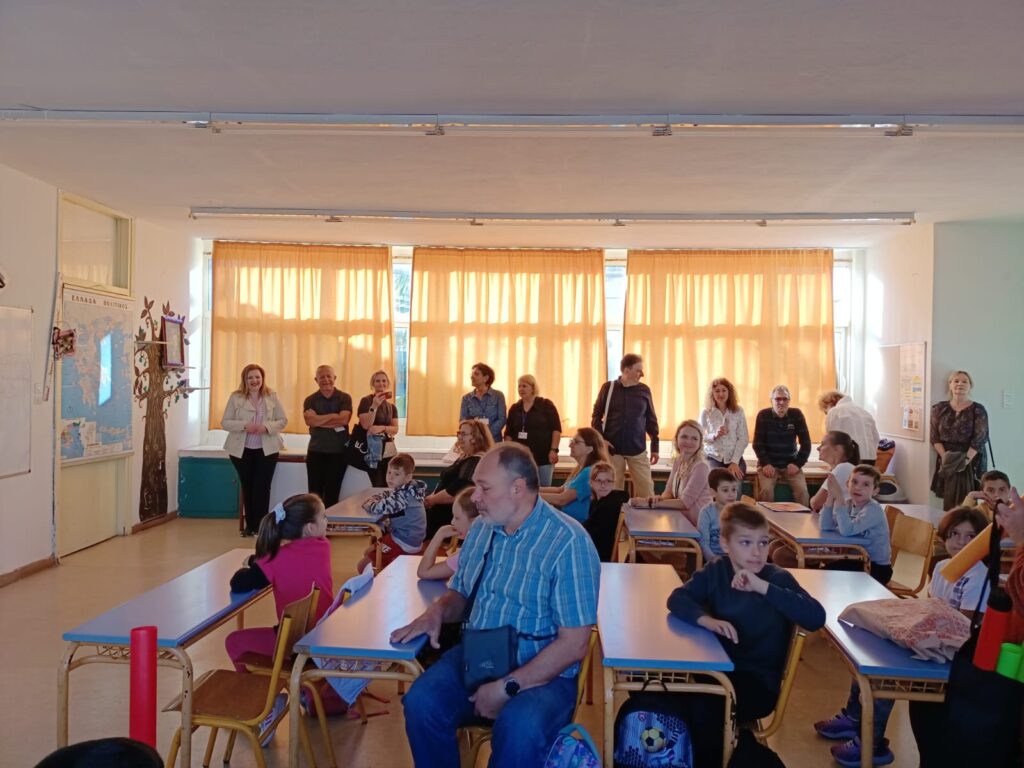
- The partners attended a Music lesson with the students from Year 4. The lesson incorporated using some interesting applications as the students played different types of percussion.
- The partners attended a Music lesson with the students from Year 3. The lesson was devoted to the National holiday and showed a good command of musical literacy. They read notes from the white board and played music /’’Ode to Joy’’/. The teacher used various apps for Music lessons.
- The partners attended another Music lesson with the students from Year 3, focused on singing and reading notes.
- Presentations on the topic: “How classical music is presented to a young audience and the effect of the Musical Environment on the aesthetic development of children” delivered by the partners.
WORKSHOP 2. Music school of Levadia
- A welcome ceremony&study tour of the school
- A Concert held by the students of the school – both the teachers and the students played in the AdoReMus Orchestra, the Folk Music Orchestra as mwell as made some individual performances. The partners also enjoyed listening to the High School Choir and different kinds of music.
- A Round table – Discussion on the possibilities and challenges of Music Education for young learners. All the partners discussed some burning issues that musical education is facing nowadays, including insufficient funding and a shortage of qualified music teachers. All the partners’ organizations have different backgrounds so that it was of significance to exchange the ideas/thoughts/solutions to problems regarding music education in Greece, Bulgaria, Poland and Turkey.
WORKSHOP 3. The workshop was organized by the Greek partner with the participation of their students, who were invited to get their hands on a range of orchestral instruments in a Music Explorers session, with expert guidance provided by specialists. The workshop consisted of a series of interactive activities.
WORKSHOP 4. Visit to the Livadia Philharmonic.
WORKSHOP 5. Panagiota Karakousi from “Trofonio Odeio” conservatory.
WORKSHOP 6. Project Work meeting – the coordinators’ meeting.
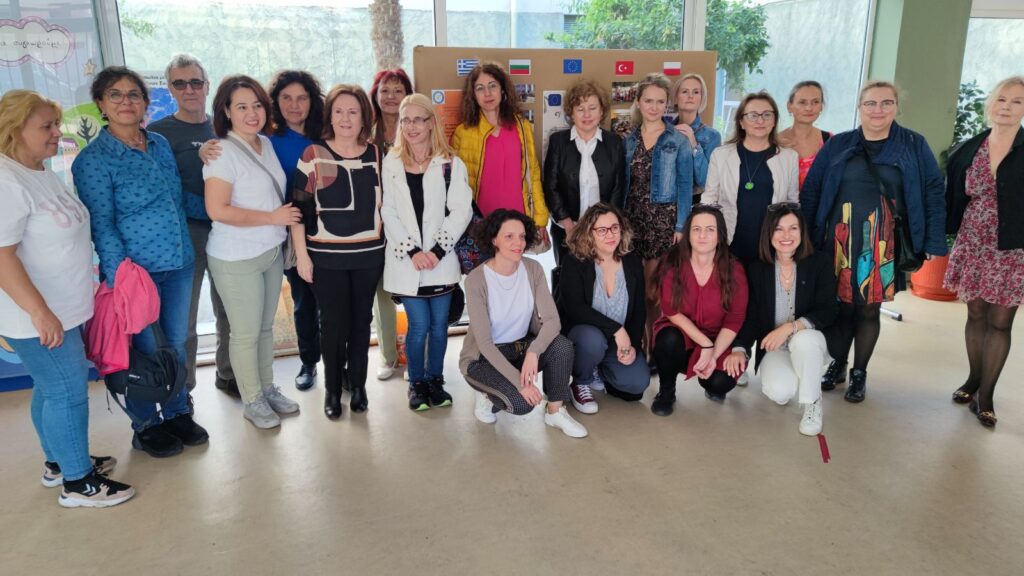
————–
Malta – 09 – 14.19.2023 Erasmus+ project
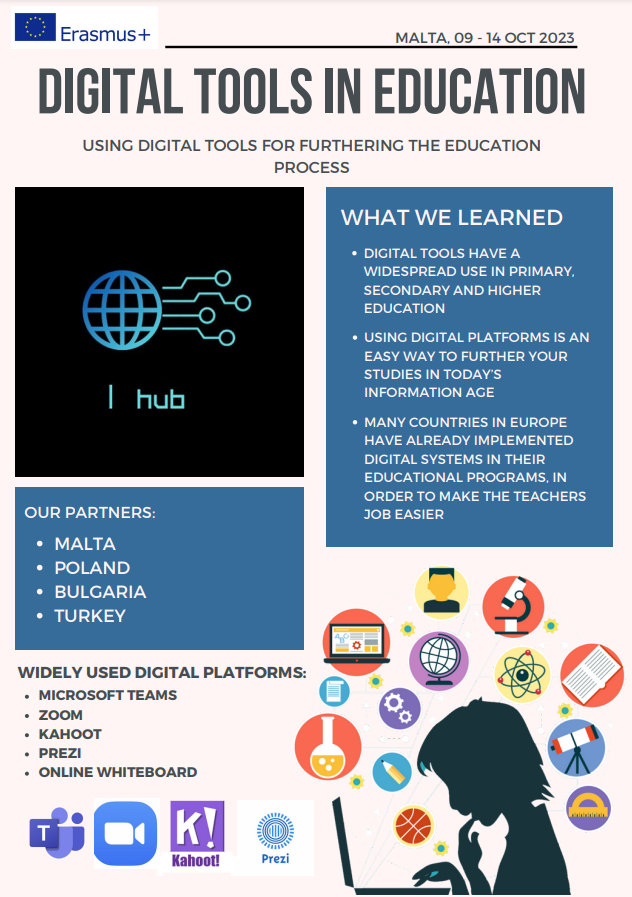
The project took place on the island of Gozo which is the second largest island of the country. Our team arrived in the afternoon of the day before the beginning of the project activities and had a transfer van waiting for us to take us from the airport on Malta to our hotel in Gozo, kindly organised by Mark Causon, our host from Malta.
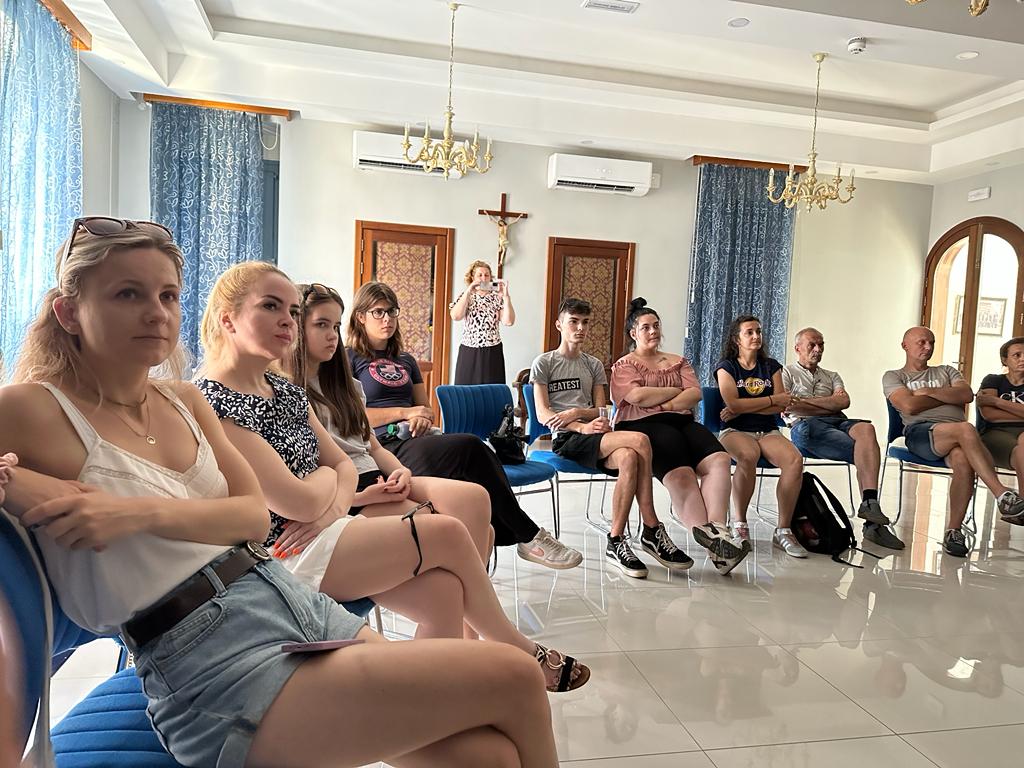
The morning of the next day we met the Turkish group as well as the Polish group which arrived in the afternoon, when we did some preliminary activities in regards to the project subject matter, searching for information about the digital learning in our own countries, and any new developments therein.
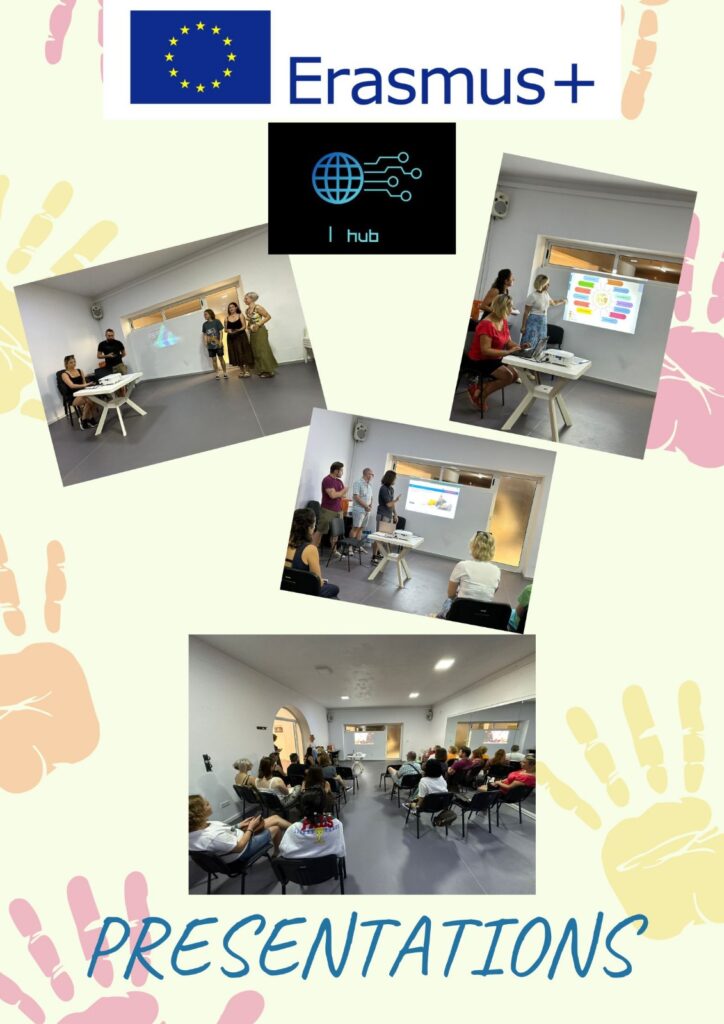
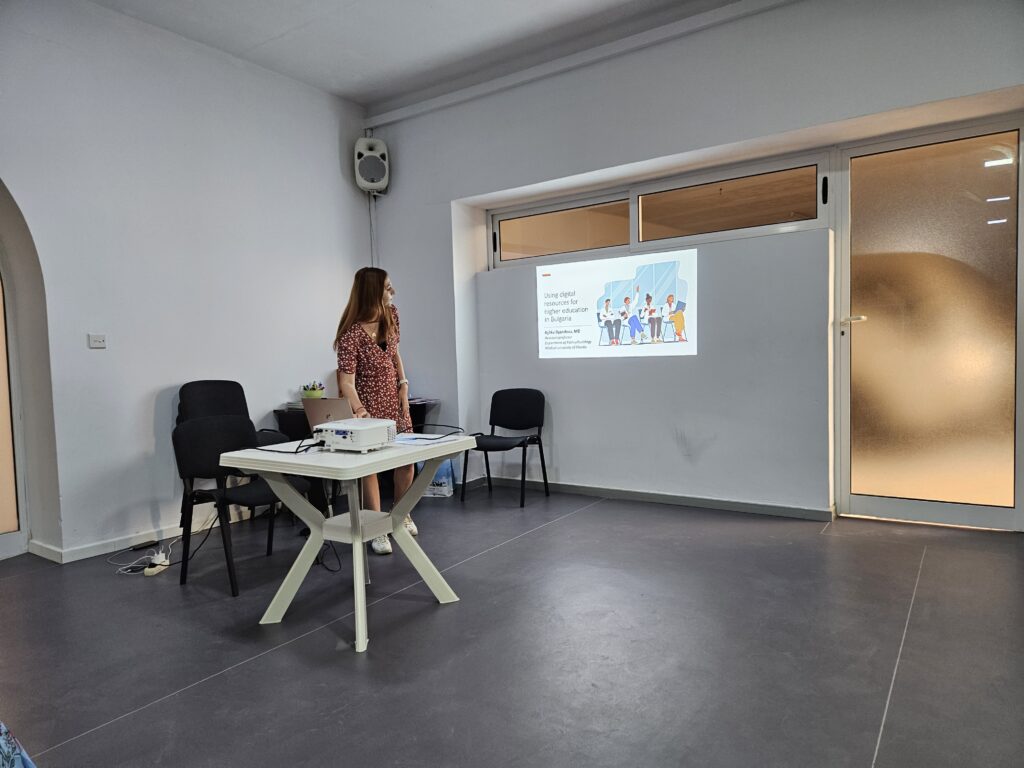
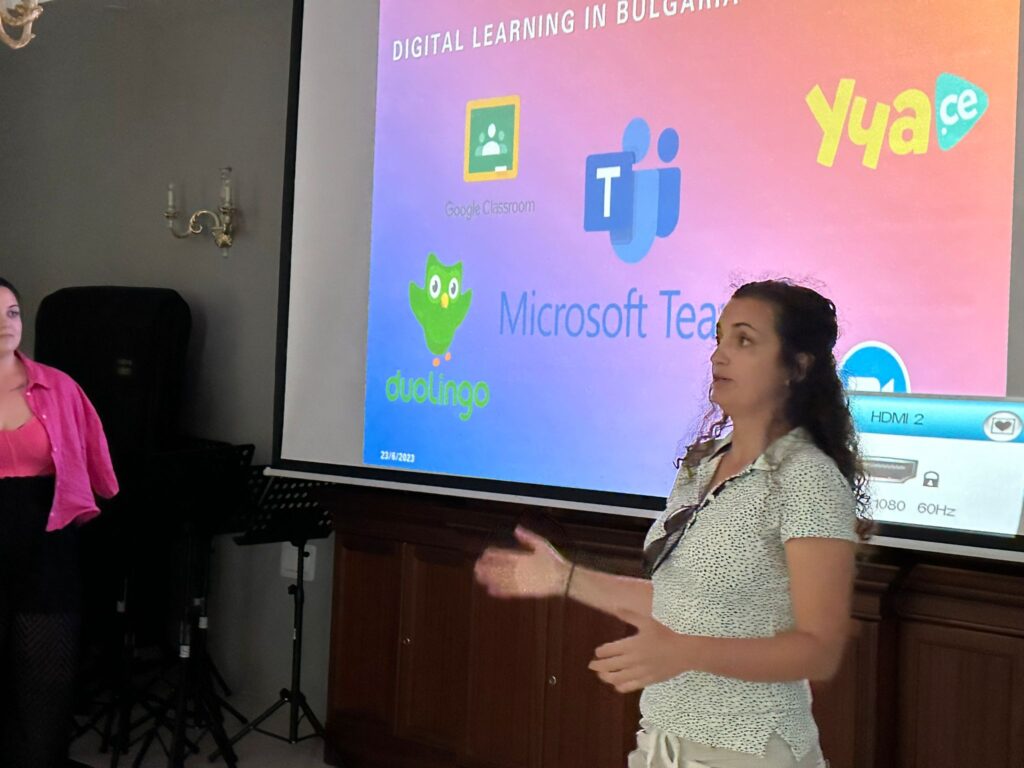
The next day each partner presented the different digital educational systems used in their country on different levels of education ranging from primary school to higher education at university, which was illustrated especially well by our own Dr. Byandova who teaches at the department of pathophysiology at Plovdiv Medical University. We were able to make clear distinctions and similarities in the educational systems of Turkey, Poland and Bulgaria. The presentations of the other two groups gave us insights about the way that teachers can adapt their knowledge in new ways, self-educate themselves or merely expand their knowledge and learn something new on various platforms used by educators around the world.
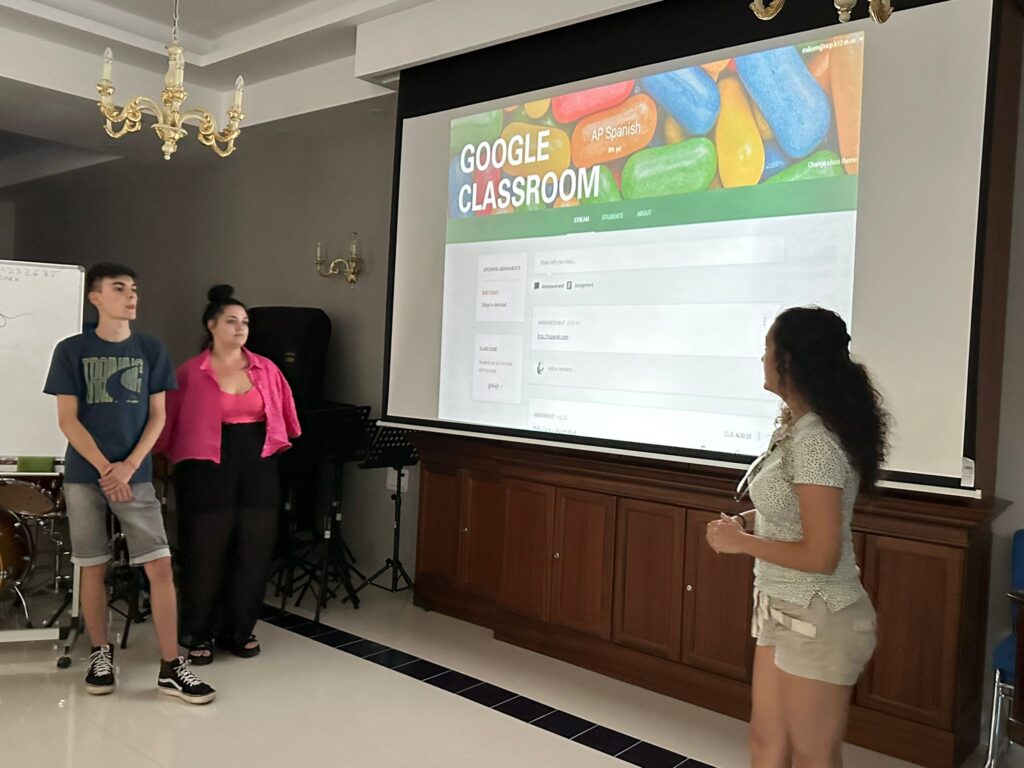
The most common programmes used by students around the world were also commonly used by the participants of this project, which included Zoom, Microsoft Teams and Google Classroom where students can meet with their teachers and have online classes. These apps like Google Classroom and MS Teams, allow for variety of management options, such as assigning homework, conducting tests, sharing files, etc. Duolingo was another ubiquitous learning platform used at the schools in Turkey, Poland and Bulgaria.
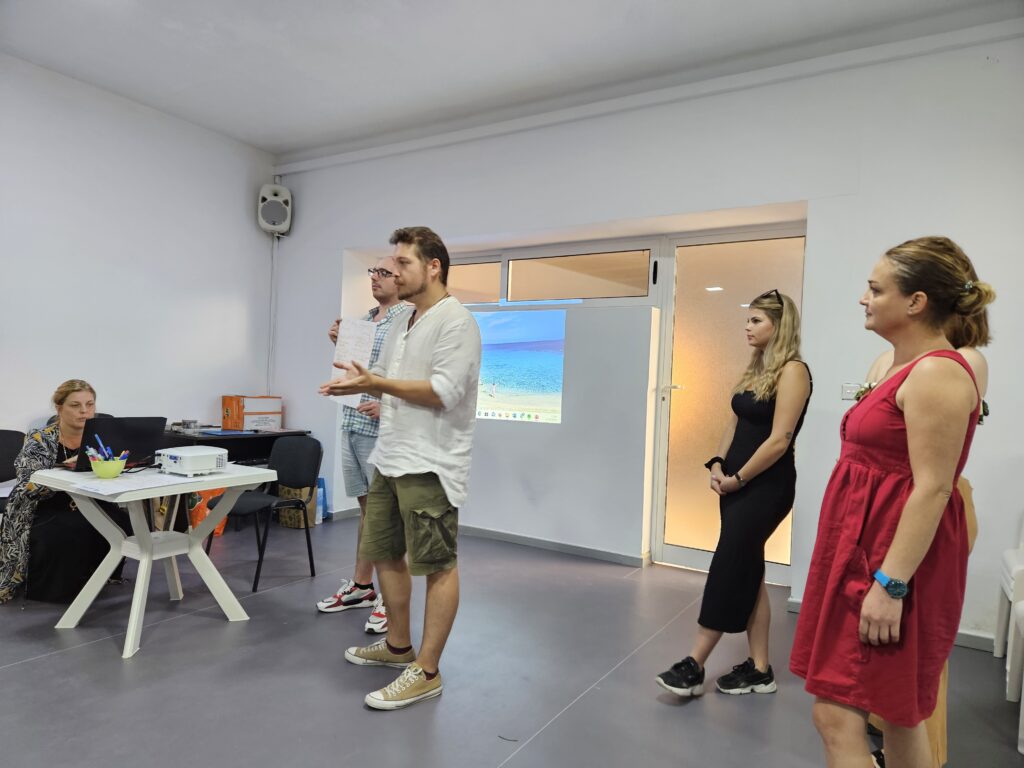
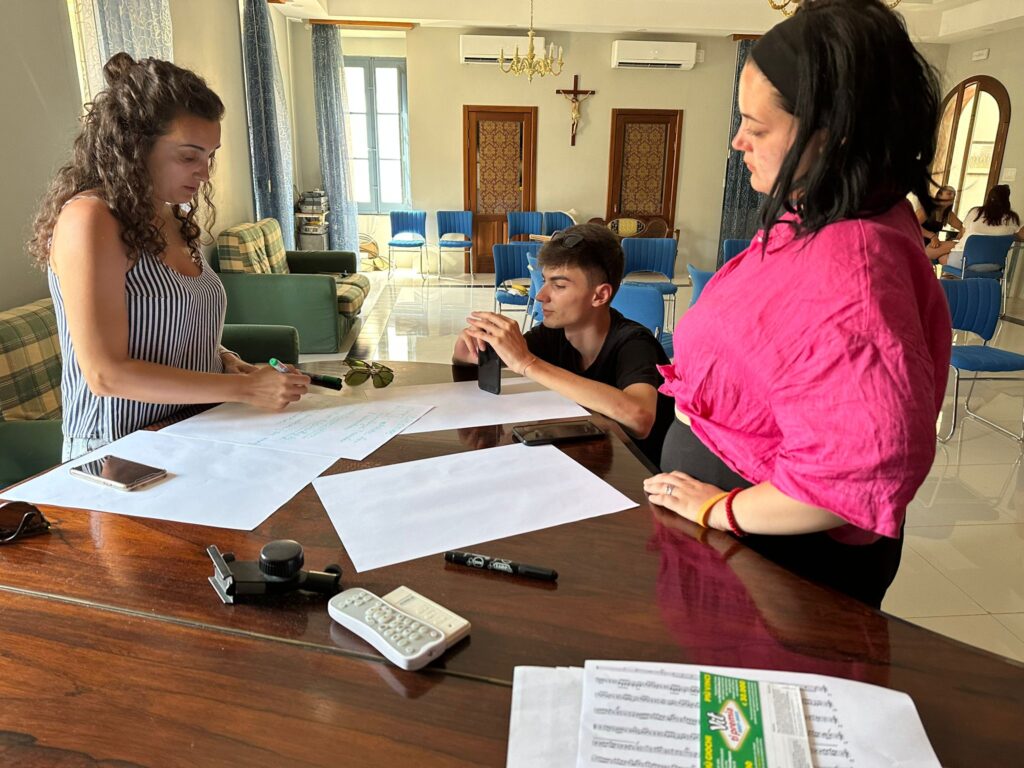
The next project day we had to be part of mixed groups blended between the three nationalities and the task was to workshop digital apps which would improve on already existing concepts in order to help improve the learning experience on various subjects.
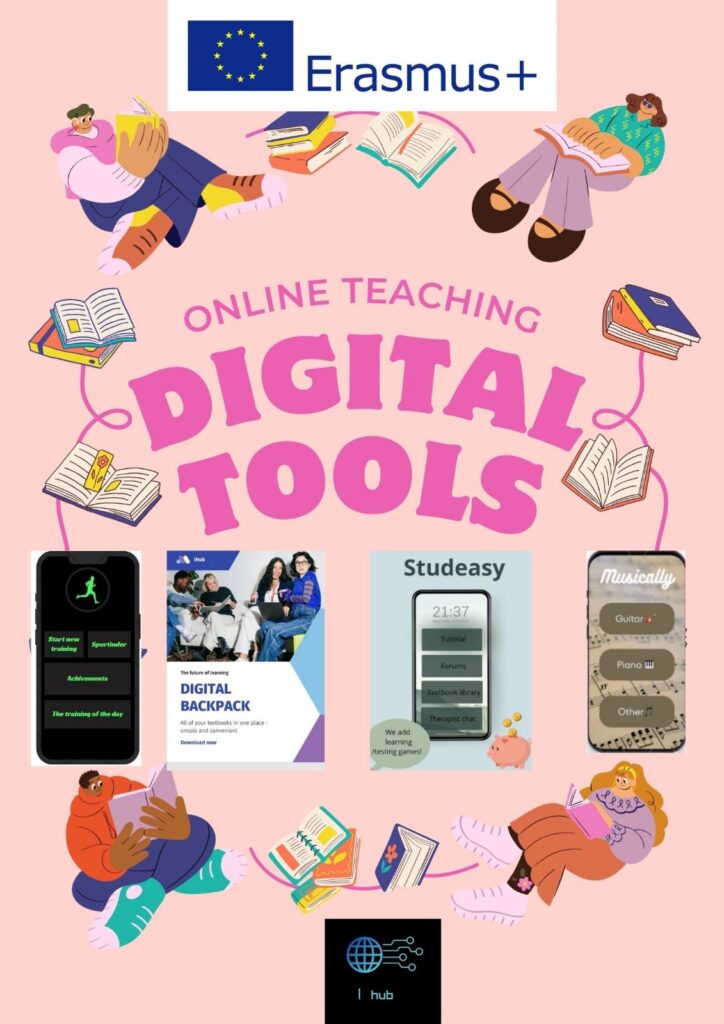
The Bulgarian team presented the newly introduced as of this academic year, starting September 2023, the new digital school system, called the Digital Backpack, which not only gives students the ability to access classes and learning materials online, but also includes a digital gradebook for the parents to monitor the children’s progress, digital medical notes and various other school-related documents.
As the project was approaching an end, all project participants were divided in pairs with the tasks of creating videos, presentations and brochures, summarising the workshoped ideas and benefits of the past few days. Additionally, during dinner on a different day each evening every participating country had a small cultural segment where the rest of the members acquainted themselves better with said country’s culture and traditions.
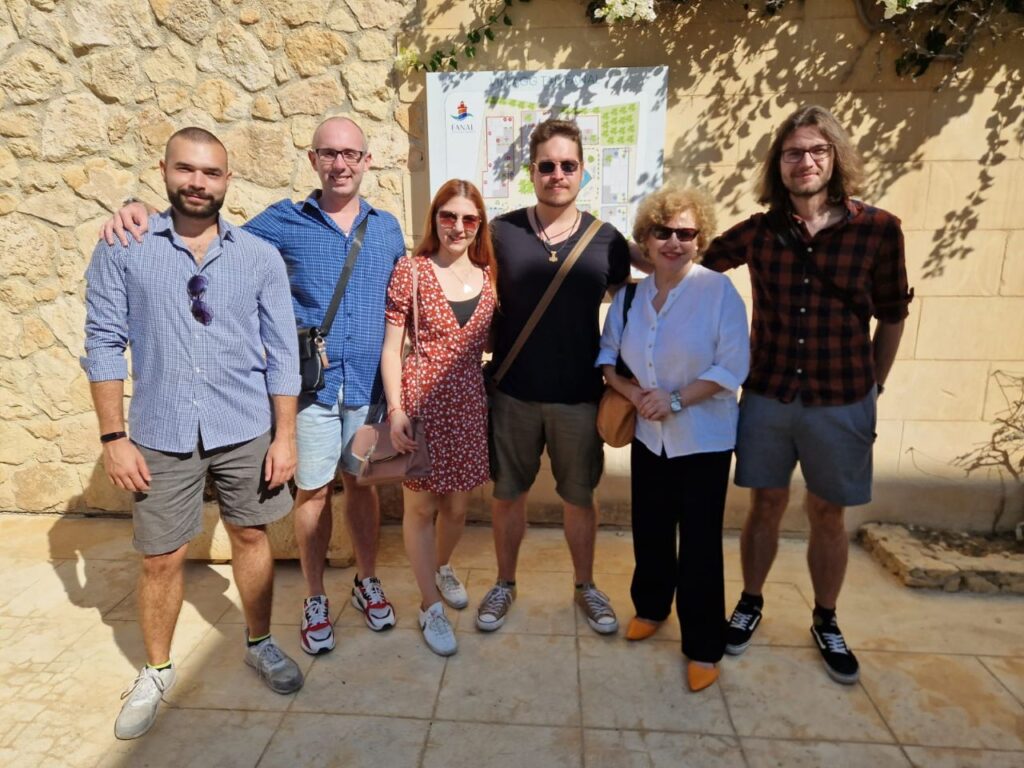
Apart from working hard on the project itself we had a bit of free time to go sightseeing around Gozo and Malta, basking in this atypical European scenery with many hidden natural and man-made gems to witness.
————–
KA210-SCH – Small-scale partnerships in school education and training
’Combatting Media&Information Illiteracy to Raise Good Citizens’
Under agreement N 2021-1-PT01-KA210-SCH-000031494
Manisa, 16th– 20st October 2023
Day 1 – 16. 10. 2023. Monday – Arrival Day
Day 2 – 17. 10. 2023 Tuesday
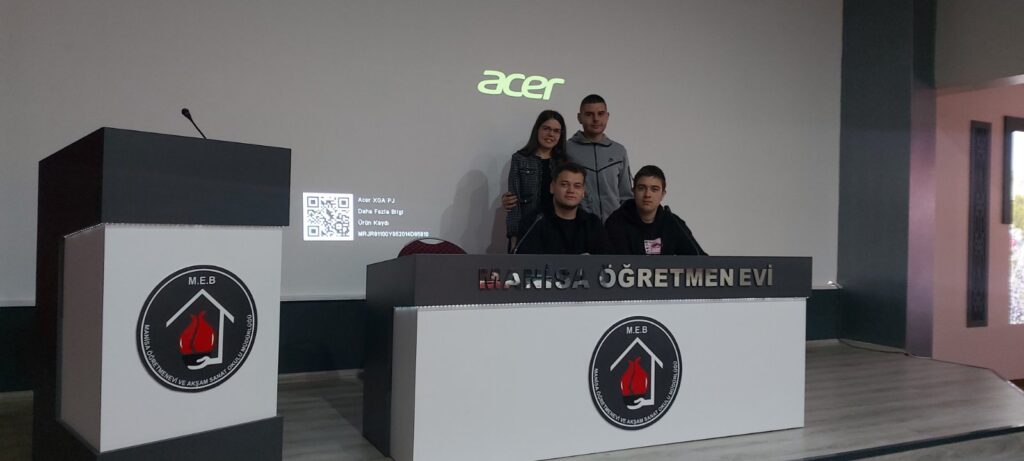
- 9.30. Welcomemeeting in the hotel Conference Hall and Official opening of the meeting.
The opening speech was delivered by Mehmet Gökçe – a headmaster of one of the local schools.
- 9.45. Activity 1 “How do we protect our computers or smartphones from viruses?”- apresentation delievered by Mrs. Rabia Akdeniz.
Mrs. Akdeniz accented on some helpful advice of how to keep individuals’ electronic devises safe, namely:
- Finding good antivirus programs;
- Keeping individuals’ operating systems up-to-date;
- Ability to distinguish fake messages and pop-ups, containing viruses.
- 10:00 Activity 2 “The difficulties of being a columnist, how to make the right news? How journalists fight illiteracy?”
The training session was implemented by a Turkish journalistSeyhan Çağlar Emen. He talked about the expectations of the twenty-first century-readers, namely to read articles, newspapers and other types of information sources that do not contain fake news. He mostly focused on 3 ways of how to get true information, namely:
- both to listen to and communicate with qualified and well-knowledgeable people;
- to make elaborate research on a specific topic given;
- to do a scientific approach.
Mr. Emen also emphasized on the difficulties that nowadays columnist encounter, some of which are:
- efforts to find the right information;
- inability for the columnists to write about everything they want and think;
- non-political engagement because of readers’ different political views;
- the negligence of newspapers and journals because of the increased usage of the Internet;
Next part of the journalist’s speech was devoted on how to make right news. He focused on the fact that it is of great important for each columnist to use several sources of information while making news. For example, journalist should both watch the national TV and read national papers. Furthermore, it is advisable for them to search the kind of news according to readers’ interest. Mr. Emen also talked about the ways of struggling with illiteracy. According to him, the most reasonable ways for individuals to fight illiteracy are to read more articles, newspapers, to participate in NGOs and government organizations.
The training session continued both as a Q&A session and discussion and the students asked a number of questions.
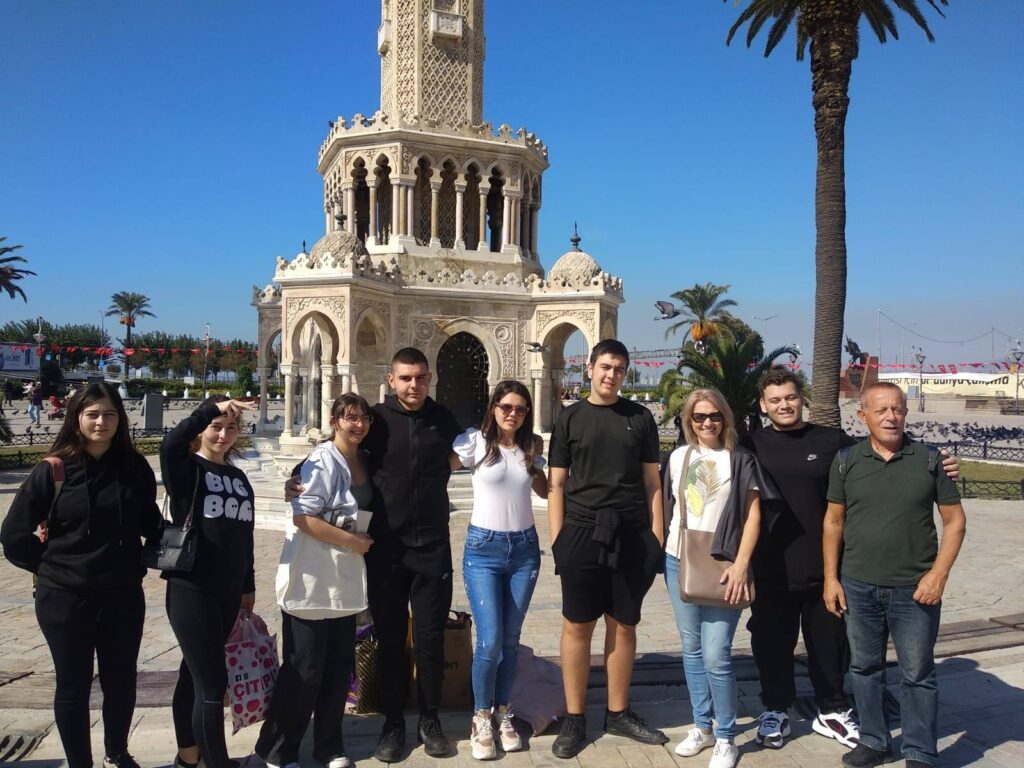
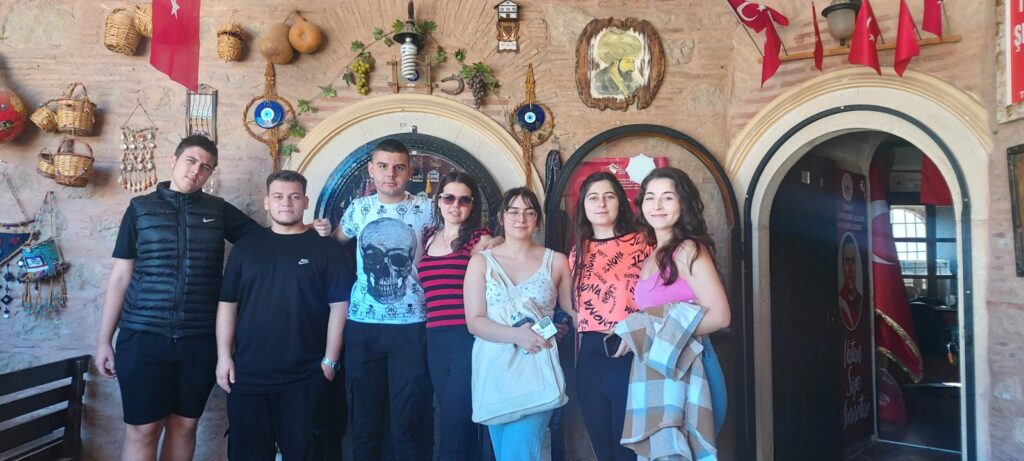
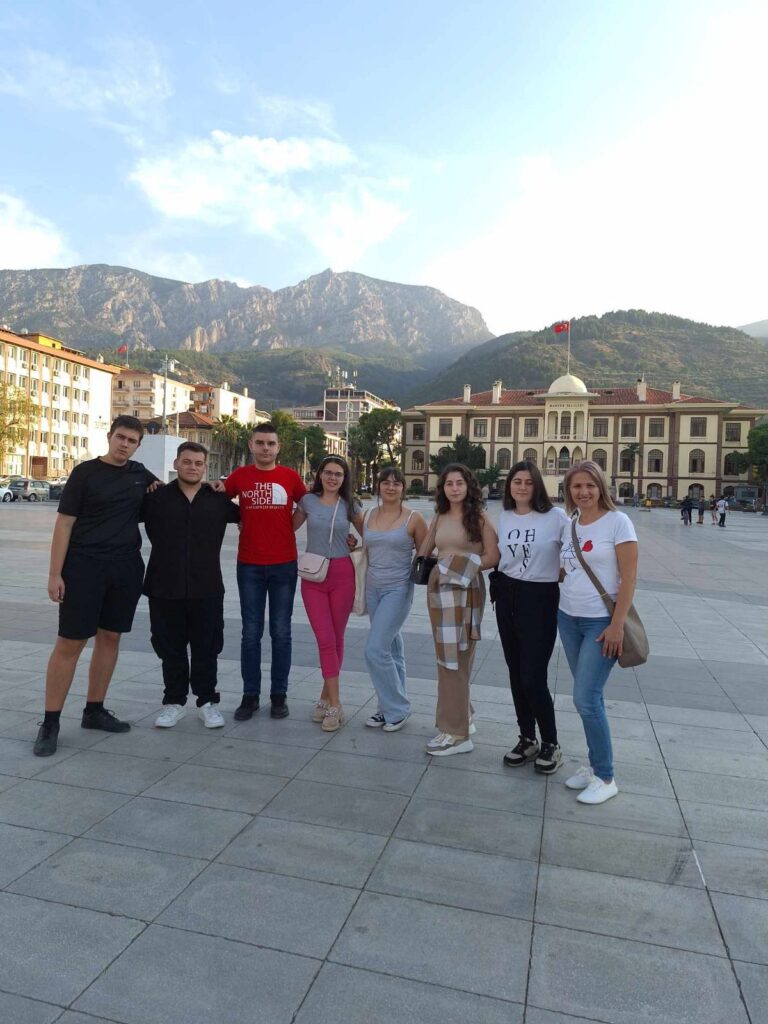
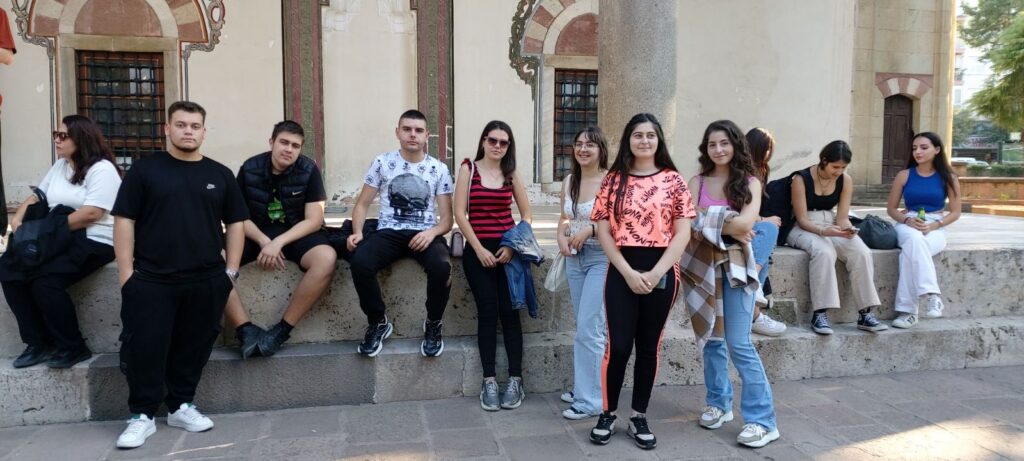
- 14:00. Sightseeing walking Tour in Manisa guided by the Turkish students. The tour included 2 cultural workshops devoted to local traditions and crafts.
- 16.00. Activity 3 ‘Fake News from History’. A collaborative task was implemented by the group of Turkish students.
MESIR PASTE FROM THE OTTOMAN TIME (FAKE OR ORIGIAL?)
Mesir paste tradition (Mesir Macunu in Turkish) is a very old tradition in the history of Manisa, an Anatolian city in the Aegean region, dating back to almost 500 years. Mesir paste was started as a medicine invention during the Ottoman period but later on it became an important part of local festivity in this city.
According to the story about the origins of Mesir paste; Hafsa Sultan, who became the wife of Yavuz Sultan Selim and the mother of Suleyman the Magnificent after her placement from Crimea to the Ottoman Harem in the 16th century, became very ill after the dead of her husband. Unfortunately, doctors couldn’t find a cure thus Sultan Suleyman consulted Merkez Efendi, the head of the theological school belonging to the Yavuz Selim Mosque. He was already making medicines using herbs and spices for the sick people and built a small sort of hospital next to the school. After receiving Suleyman’s letter regarding his ill mother, he mixed 41 different types of plants and spices together to form a medicinal paste and sent it to the palace.
When Hafsa Sultan ate this paste, she was recovered and wanted to share this miraculous medicine with others. As requests from the people increased, the Sultan told Merkez Efendi to distribute the paste to the people every year in a form of festivity. For this, 21st of March was selected because it symbolized the beginning of Spring, and the tops of the Sulton Mosque’s domes and minarets were chosen for its location. The Mesir Celebration began this way in around 1527- 1528. Since then, every year on or around March 21st, which is known as Spring festival Newroz, thousands of people gather in front of the Sultan Mosque to catch the Mesir Paste wrapped in paper and thrown from mosques rooftop. But some years there might be exceptions to the festival date; it can be postponed to mid or end of April due to various reasons such as elections or milder weather conditions, and so on.
All the partners work on the test TRUE or FALSE on the topic.
Day 3 – 18. 10. 2023 Wednesday
- 09:00 Meeting in the Conference Hall of the hotel.
- 09:15-09:30 –Activity 4. A training session about “Disinformation and ‘fake news’; the role of education” was implemented by Mrs. Hülya Türe.
Mrs. Türeemphasized on thedifference between disinformation – deliberately false information and misinformation – fake news or false, misleading information. She also focused on the fact that Media Education can be a meaningful way to counter fake news. According to her, the role of education is crucial, which is why schools must provide students with a solid education on media in order to avoid disinformation. She offered some Special Days and Events related to the subject of Media Literacy and False Information to be organized in different school across Europe.
- 09.30. – 09.45. Activity 5. Mrs. Gönül Algın delivered a speech about “Teachers’ competences for overcoming MIL illiteracy”. Mrs. Algın accented on the following competences, which according to her, are of crucial importance.
- Encouraging students to ask questions;
- Both giving and receiving feedback;
- Ability to recognizing fake news;
- Communication skills;
- Multimedia skills;
- Managing the time skills;
- Making students read more;
- Giving students more collaborative tasks.
- Activity 6. Somepresentations related to MIL were delivered by the Bulgarian team.
- 09. 45. – 09. 55. Ms. Maria Galcheva talked about“Teaching Media&Information literacy in Europe: evidence of effective school practices.
- 09.55. -10.15. The students from the Bulgarian team gave a presentation on ‘How to help students Counter Online Hate Speech.’ They also had prepared a short movie about ‘New Phobias’.
Activity 7.
10.15. – 10.35. The students from the Portuguese team gave presentations on ‘How to introduce Media&Information Literacy to Schools’ and ‘How to Build Critical Thinking Skills Trough Media Analysis.’
11:05/11:25. – Activity 8. The group of the Italian students gave 2 presentations on ‘Conditions for successful implementation of MIL education practices at school’ and ‘Creating traditions of School Festival or Week of Digital Citizenship.
13:30/15:30 – Workshop 1. Student’s activity.
‘Things to do for overcoming MIL illiteracy’ was delivered by the Turkish team with
Pınar Şaşmaz as a facilitator.
Students were divided into 4 groups and some of them were told to find information about celebrities from the Internet as well as to add some fake news to it. The other students had to check if the information provided by their coevals is correct. In case of the information being found wrong or fake, students had to find the true one and to correct it.
Every team reported their findings and all the students actively discussed the results.
13.30-15:00. Teachers’ meeting at Conference Hall of the hotel, devoted to the project documents. The partners viewed and analyzed the project Google Drive. The second part of the workshop was devoted to the MIL Flip book’s publishing as well as to the project webpage as the partners did some work to update the page contents.
19:00 Meeting outside the hotel for Official Dinner in Asmalı Han Restaurant.
Certificates Awards Ceremony.
Day 4 – 19. 10. 2023. Thursday
- 09:00Meeting in the Conference Hall.
- 10.30 Teacher’s meeting. Teachers discussed what has been implemented (till that moment) in accordance with the application form, as well as they discussed some practices on how to make project sustainable.
- 13:30 Meeting outside the hotel. Trip to Ephesus with a Professional guide.
- 15:00 Selçuk Museum: https://izmir.ktb.gov.tr/EN-240792/selcuk-ephesus-museum.html
- 16:00 / 18:00 Ephesus http://www.ephesus.us/
————–
KA210-VET – Small-scale partnerships in vocational education and training
“Up-skilling in Remote Working through Exploring the Relatively New Phenomenon of Co-working”
Grant Agreement &Project Number N 2021IT01-KA210-VET-000037820
Transnational Project Mobility 4 –
a Multiplier Event ‘My Co-working Experience’
AYDIN – TURKEY
Day 1 – 20.09.2023
- Welcome meeting
Workshop ”Trailblazers of the Coworking Movement: Influencers Making a Difference”
The Turkish team provided a lot of information related to coworking ideas, focusing on the importance of this relatively new working practice, its advantages. They also talked about the sense of community it gives.
Workshop on how to organise and host a Coworking events delivered by Alidzhan from the host team.
Then all the participants were devided into several groups as each group had the task of developing a coworking event.
The students presented their Coworking Event ideas.
Group 1 event is ”NATIONAL CULTURAL EXPERIENCE”.
Group 2 event is ”HISTORY in PEOPLE’s HEARTS”.
Group 3 event is ”COWORKERS’ BIRTHDAYS”.
Workshop on the true influencers around the world. The participants were divided into four groups and given the task to find their rople model and present them to the others.
Group 1 – Clare Carpenter , passionate about people and performance |exploring & discussing the future & impact of leadership, teams, strategy and culture through coaching.
Group 2 – Ashley Proctor, the founders of the first coworking places.
Group 3 – Cat Johnson,
Group 4 – Pouline Roussel, a specialist in brand management and creative strategy, 360 promotional campaign strategy and development, an expert in developing and producing short-form projects.
Workshop ”COWORKING EVENTS BUILD COMMUNITIES”
Project Coordinators’ meeting /only the four coordinators/
Visiting a coworking space in Aydın
All the other participants visited a coworking space in the area of Aydin
DAY 2. 21.09.2023
Cultural visit to EPHESUS –HOUSE OF VIRGIN MARY
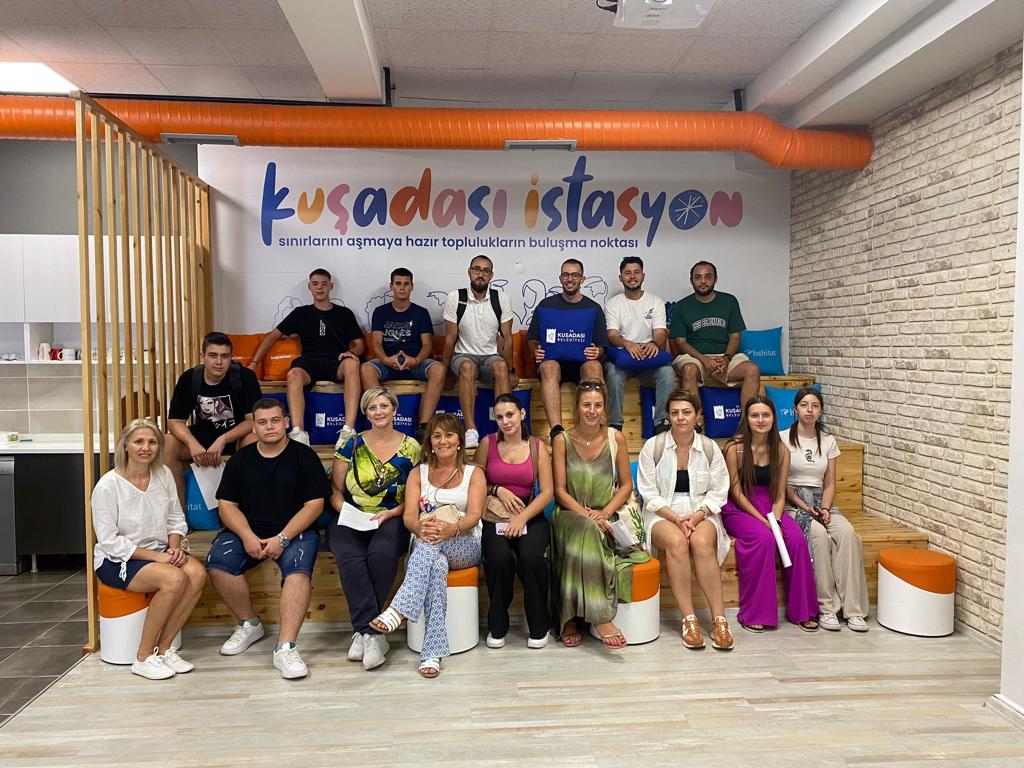
12:00. Visiting Kuşadası Municipality coworking space : Kuşadası İstasyon – https://kusadasiistasyon.org/
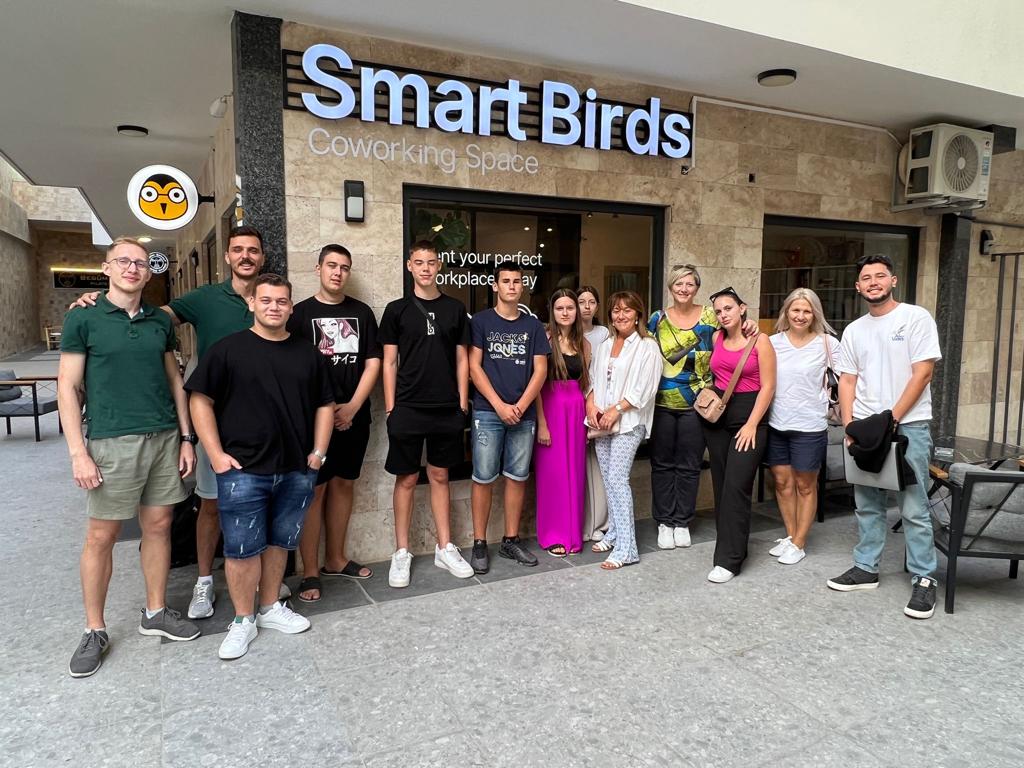
16:00. Visiting SMART BIRDS Coworking space – https://smartbirds.com.tr/
Day 3 : 22.09.2023 CONFERENCE DAY
9.00 – 17.30 Multiplier Event Activity
The conference was attended by 20 project participants and 20 guests who represented the local educational bodies, the Municipality of Aydin, some local business reps.
Each partner shared their experience they gained during the project life cycle with a presentation, TED talk, a video, etc.
The conference was opened by Mrs Nilufer Dalkran, who welcomed the perticipants and the guests.
Then Dr Elena Sayanova gave a welcome speech, summarising the maid points/highlights of the project.
Bulgaria
Video ”Coworking Experience in Bulgaria” / summary of the 2nd project meeting held in Bansko, Bulgaria
PPT ”Coworking Wellbeing” – Petar
Pictory Video story ”Coworking Growth Trends” – Levent. Levent gave some tetails on how he created this AI-assisted video.
Video ”Coworking Experience in Croatia”/summary of the 3rd project meeting held in Vukovar, Croatia
Feedback/Q&A
Croatia
Two students from the Croatian team showed a video that summarises their findings for the all the project mobilities and project tasks. The video was accompanied by detailed explanation delivered by the students.
The other two students from the Croatian team gave a PPT type presentaion on the benefits of coworking.
They also showed a video with photoes and short clips.
Feedback/Q&A
Italy
The Italian coordinator
The Italian student gave a presentation on the Italian contribution to the project.
The second video was devoted to an interview with a coworking-space-founder from Salemi, Sicily.
Feedback/Q&A
Turkey
A representative from the Turkish Youth team delivered a presentation devoted to all the work carried out by the Turkish partner.
Feedback/Q&A
One of the event attendees fromTurkey talked about her personal /successful/ experience gained within the Coworking project.
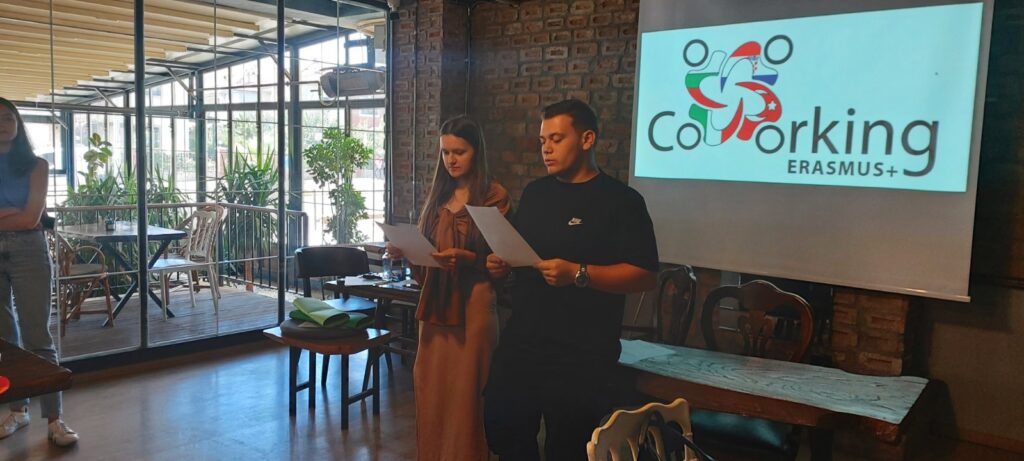
Nilufer presented a new Erasmus Youth project on the Coworking phenomenon.
The conference finished with Certificate-awarding ceremony.
Farewell Dinner.
————–
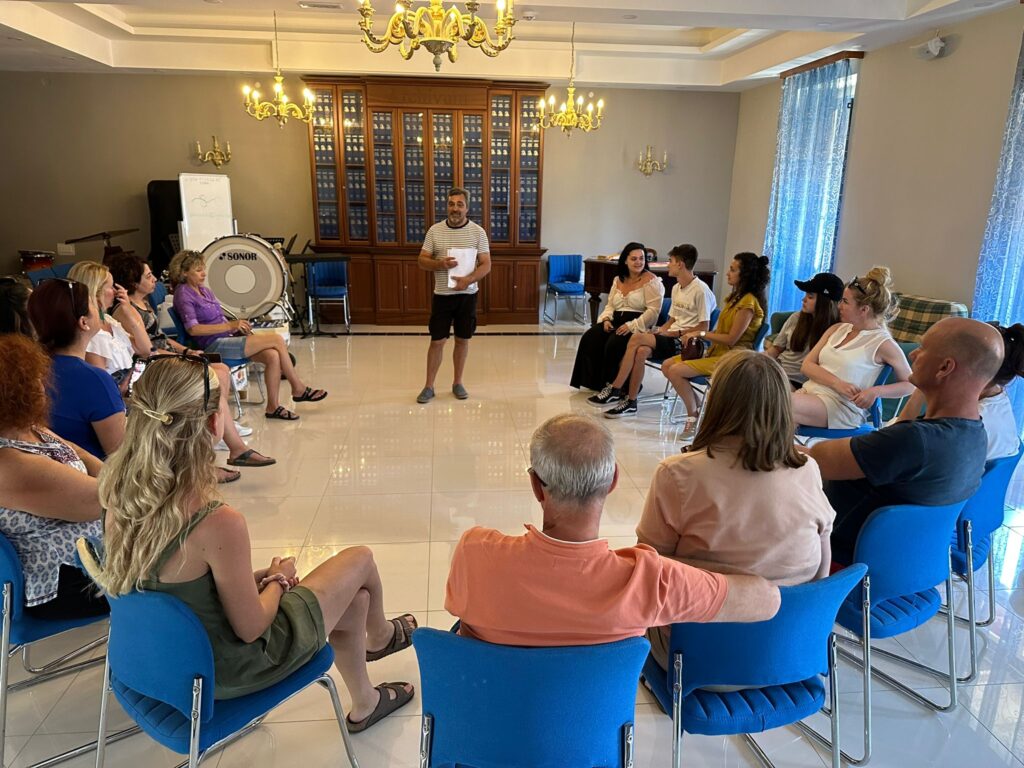
Malta – 21-28.06.2023 Erasmus+ project
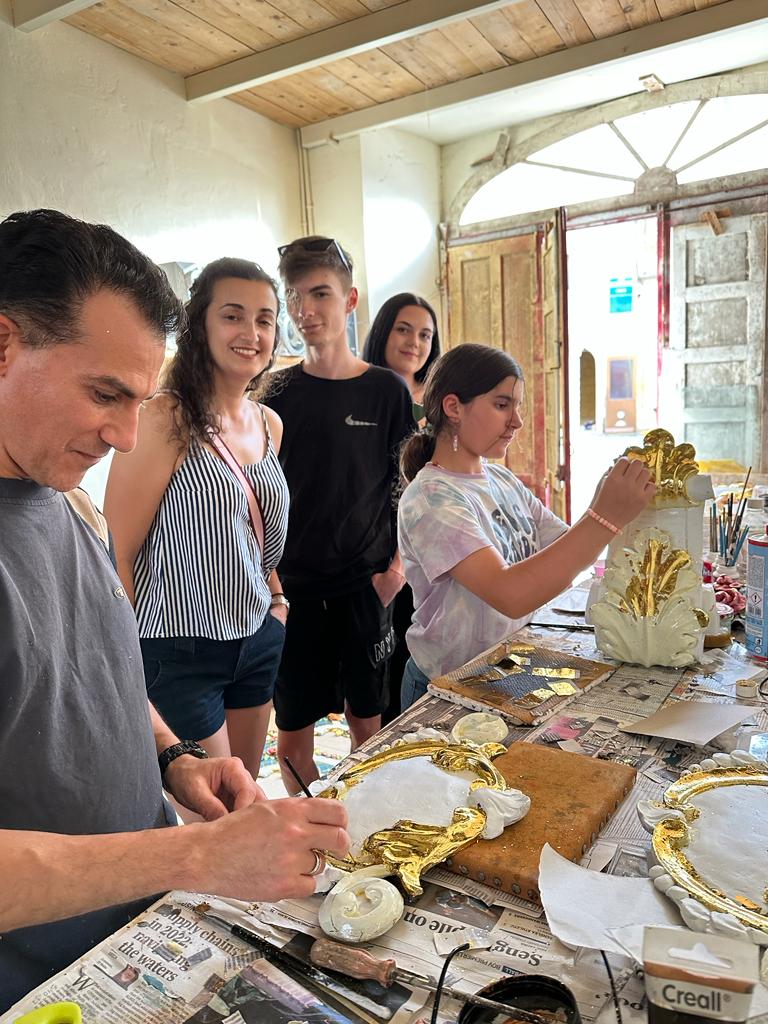
Upon arrival we were able to take some time just for us before the actual work on the project started. We enjoyed the local atmosphere by walking around the city, visiting a local craftsman preparing some details for the coming fest and we also enjoyed a delicious dinner after the walk.
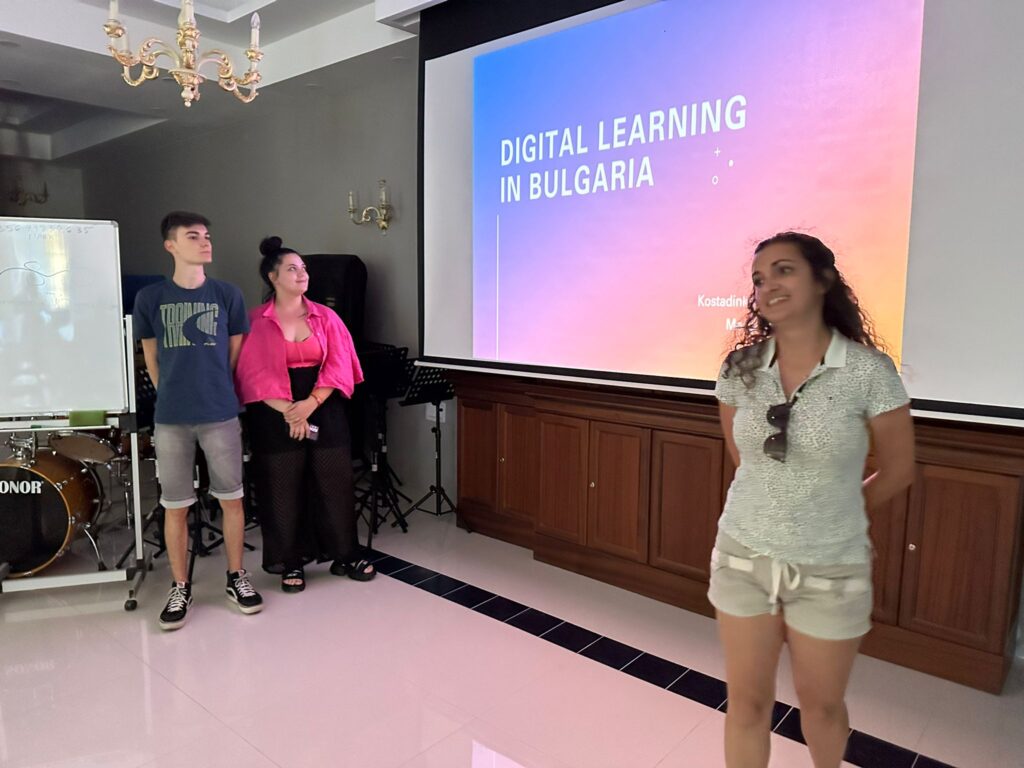
The actual work for the project started on the second day of our stay on the island of Gozo. We met with the other two groups coming from Turkey and Poland at breakfast in the restaurant close to our gathering point for the project. On that day we were about to work in country groups, searching for information about the digital learning in our own countries, aligned everything on the presentation and presented it the other two groups.
The same day we were also able to spot the differences in the educational systems between Turkey, Poland and Bulgaria. The presentations of the other two groups gave us insights about the way that teachers can refresh their knowledge, self-educate themselves or merely expand their knowledge and learn something new on the platform Oba, governmentally funded by the Turkish ministry of education. Another good practice we detected enroute with Turkey was a platform, again governmentally founded and funded, called Eba where students can log in and watch educational videos. There they can be assigned with homeworks. Unfortunately, both platforms are not adapted for other than Turkish language speakers.
The common ground we had with the other members presenting were platforms such as Zoom, Microsoft teams and Google Classroom where students can meet with their teachers and have on-line classes. Google classroom, on top of giving the chance to meet on-live, provides the opportunity for the students to be assigned with homeworks. Duolingo was another ubiquitous learning platform used at the schools in Turkey, Poland and Bulgaria.
The Bulgarian group shared about the start-up company/platform Ucha.se where after a small subscription fee students can get access to sheer brilliantly explained educational subjects.
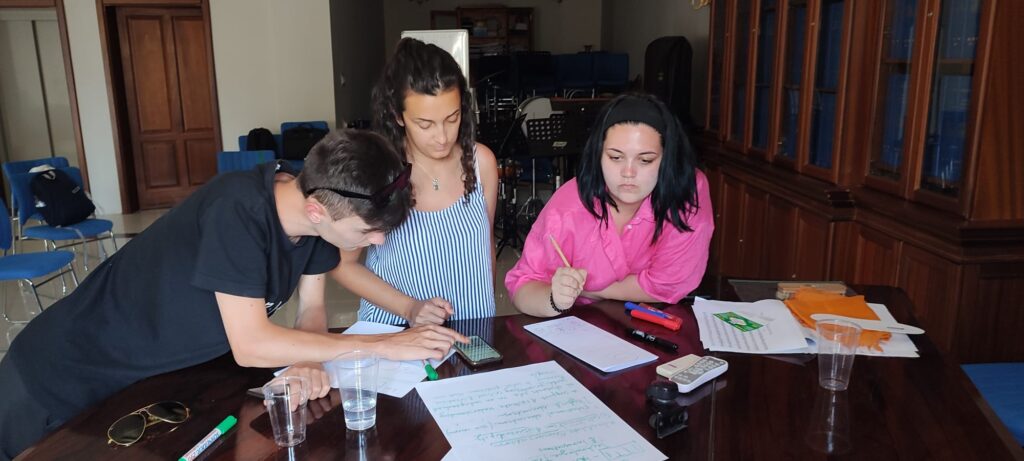
The next project day we had to be part of mixed groups blended between the three nationalities and the task was to search for digital apps, which can be used for training purposes as a tool in their youth work. Here, the groups had some mutually used apps such as Kahoot to keep the student’s’ attention and Canva to inspire the creativity in the art classes. The different apps presented were 1) Quizlett popular in Poland, it is used as a replacement of Kahoot and 2) Lumocity (presented by the Bulgarian group) which in not so popular at schools, however as an app implementing different types of games it can be used to boost memory, attention to the detail, flexibility and a skill looked for by the recruiters – problem solving.
On Monday a presentation about practical skills and information on how to run a volunteering project based on digital skills to empower youths for employment opportunities, was presented
by the hosts.
As the project was approaching an end, the groups had one last task to prepare a leaflet about the project and present it. Here we summarized the material we had previously shared in just a more elegant way. Apart from the hard work we poured our hearts at we also grasped every chance to enjoy the sheer staggering beaty of the scenery of some famous places on the island such as the Dwejra Bay, Ramla Bay, the local magnificent cathedrals, Weid il-Mielah natural arch and other places of toourists’ interest.
Apart from the international night, which was held at the Polish farmhouse, we usually spent the nights together at the local restaurant owned by the church, for a splendid traditional dinner and nice conversations accompanied with the music from the ongoing fest. At the international night all of us were delighted to try different sweets, drinks and appetizers from the other countries.
————–
TRAINING EVENT ‘DIGITAL CITIZENSHIP’
KA210-SCH – Small-scale partnerships in school education and training
’Combatting Media&Information Illiteracy to Raise Good Citizens’
Under agreement N 2021-1-PT01-KA210-SCH-000031494
Verona, 27th– 31st May, 2023
27th May, Saturday
Arrival Day
28th May, Sunday
8:30 – 9:30.
Workshop 1. During this workshop the educators discussed all the issues related to the Mobility. There have been some slight changes made to the original programme.
09:30 – 12:30.
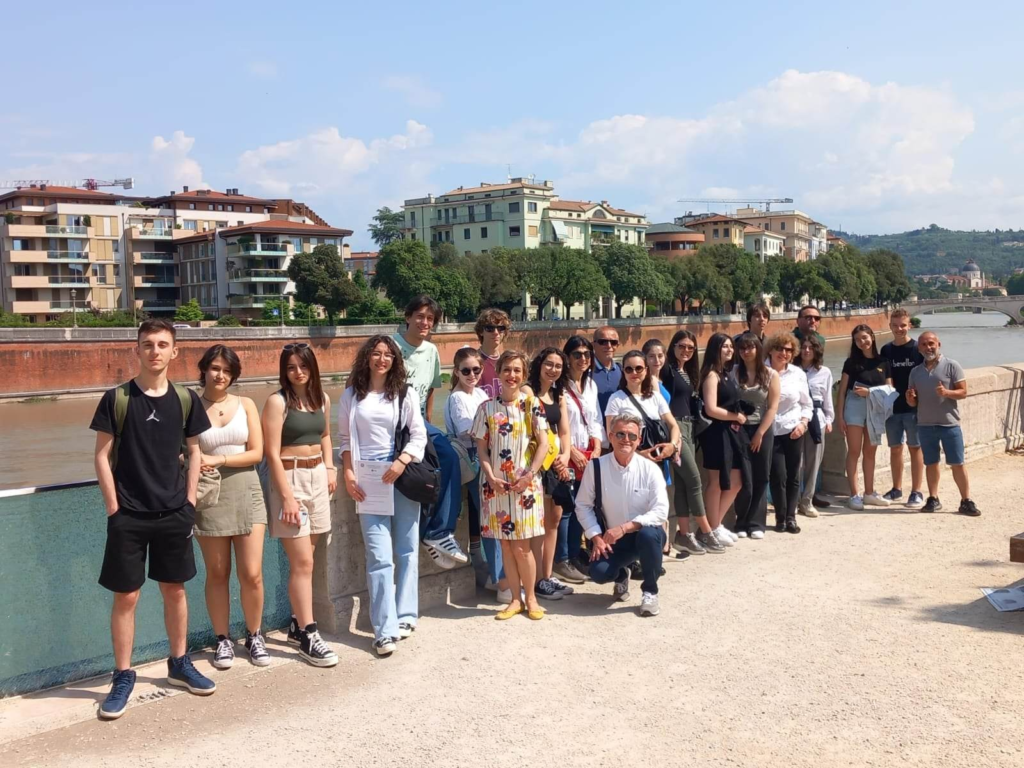
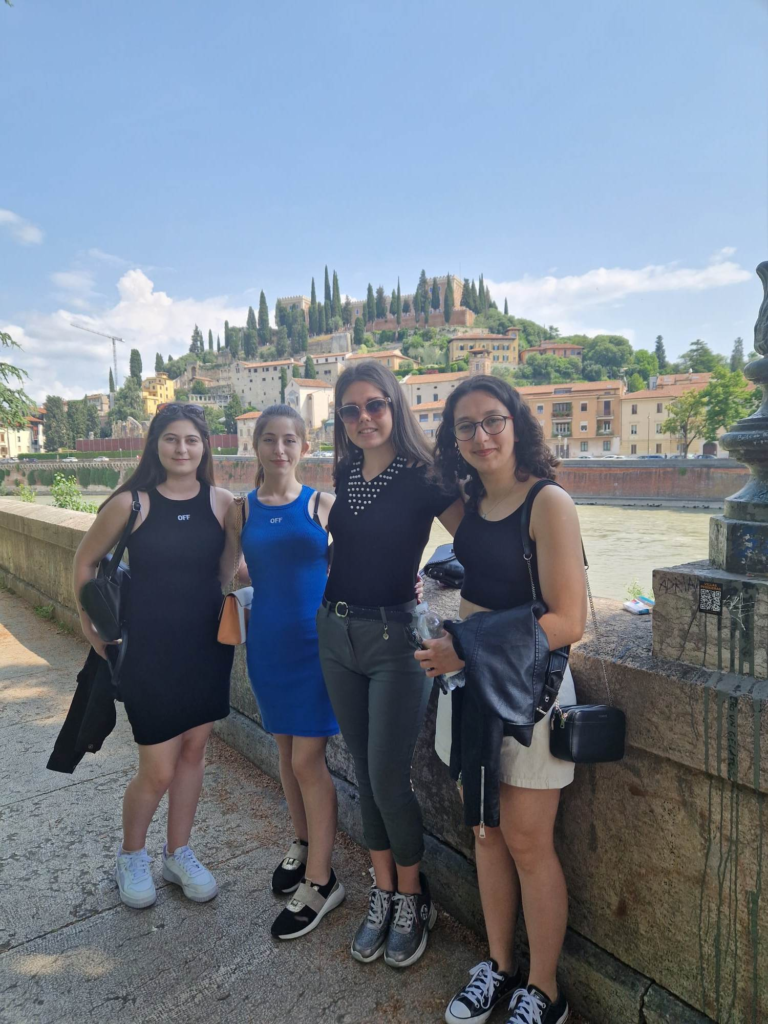
Sightseeing walking Tour in Verona with professional guide in English.
14:30 – 16:00.
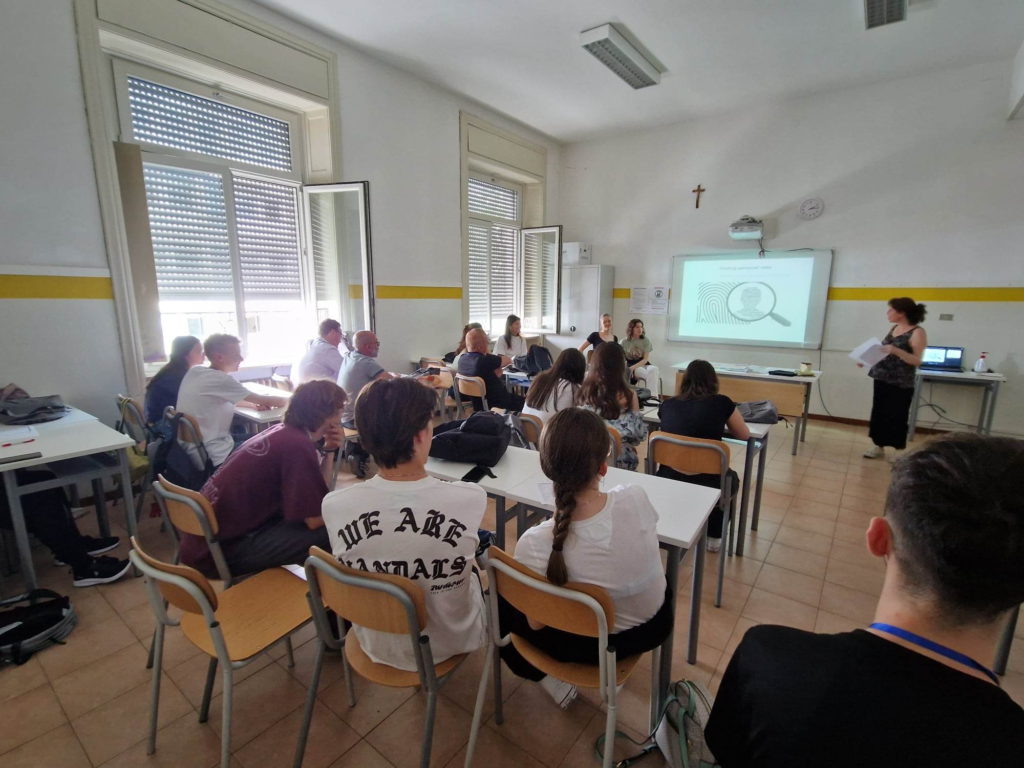
Workshop 2 ‘Fake News from History’.
This collaborative task was implemented by the group of Italian students and the tour guide.
Shakespeare and Fake
The English playwright had a deep understanding of political mechanisms: almost all of his works explore the theme of power, par5cularly the obsession with acquiring and preserving it, just think of Hamlet or Macbeth. And power has always been accompanied by cunning, deceit, and slander. In the second part of “Henry IV,” for example, Shakespeare introduces a bizarre character named Rumour (which in English means exactly voice, gossip) who wears a costume painted with mouths and tongues. Rumour addresses the audience arrogantly: “Open your ears! Who among you will stop listening when the deafening Rumour speaks?” The character boasts the power of his words, which are “carried by the wind, from East to West”. Nothing can stop his calumnies, “The which in every language I pronounce/Stuffing the ears of men with false reports”.
He also says: “I speak of peace, while hidden enmi5es disguised as smiles harm the world,” Rumour adds, proudly claiming powers that apparently nothing can resist. “I am a tool that blows out hypotheses, jealousies, conjectures, and so easy to use that the rough monster with countless heads, the mul5tude always uncertain and in disagreement, can play it.” So Shakespeare already perceived the irresis5ble rise of fake news in all languages, fueling discord, easy to use for the mul- 5tude: in short, Facebook and TwiUer.
The students had to complete the questionnaire.
16:00 – 18:00.
Workshop 3. Teachers’ meeting devoted to the project documents. The partners viewed, analysed the project GoogleDrive. The second part of the workshop was devoted to the project webpage as the partners did some work to update the page contents.
29th May, Monday
08:45 Meeting in the Conference Hall and registration
09:00 Official opening of the Training Event.
The school principal, Mr Mario Bonini, gave a welcome speech.
09:15 All the participants were taken on a tour of the school.
10:15 Coffee break
11:00 – 12:30.
Workshop/Tutorial 4 ‘Fake News Phenomenon’ – Part 1.
The training session was implemented by a journalist Dr Francesco Prando. He mostly focused on how to debunk fake news, introduced the main techniques of manipulating people’s minds and explained how to promote awareness of disinformation.
Mr Prando provided numerous valid examples of fake news compaigns in terms of the current affairs. He elaborated about computational propaganda – the use of algorithms, automation, and big data to shape public life – “is becoming a pervasive and ubiquitous part of everyday life.” He provided some interesting evidence of “organized social media manipulation campaigns” in different countries mentioning that political disinformation campaigns more than doubled in the last two years.
Mr Prando emphasized that Facebook remains “the platform of choice for social media disinformation,” and organised propaganda campaigns were found on the platform in 56 countries. Through social media disinformation campaigns, various actors are leveraging social media to “shape public opinion, set political agendas and propagate ideas,” He also drew our attention to the the fact that it is not just the general public that falls victim to a disinformation campaign. The media that traditionally had the role of acting as gatekeepers for true and verified information nowadays struggle to fight the disinformation. In fast-paced newsrooms of today, while exposed to an interrupted flux of information on the internet, both ‘new’ (digital) and ‘old’ (radio, TV, and print) media journalists sometimes struggle to spot false information. On the other hand, over the past years, we have witnessed the rise of media specialised in debunking and fighting fake news. Across the globe, many traditional media outlets have formed special teams dealing only with spotting and exposing misinformation.
He also talked about the consequences of the introducing AI.
The transformative impact of artificial intelligence on our society will have far-reaching economic, legal, political and regulatory implications that we need to be discussing and preparing for. Determining who is at fault if an autonomous vehicle hurts a pedestrian or how to manage a global autonomous arms race are just a couple of examples of the challenges to be faced. Will machines become super-intelligent and will humans eventually lose control? While there is debate around how likely this scenario will be we do know that there are always unforeseen consequences when new technology is introduced. Those unintended outcomes of artificial intelligence will likely challenge us all. Another issue is ensuring that AI doesn’t become so proficient at doing the job it was designed to do that it crosses over ethical or legal boundaries. While the original intent and goal of the AI is to benefit humanity, if it chooses to go about achieving the desired goal in a destructive (yet efficient way) it would negatively impact society.
Workshop/Tutorial 4 ‘Fake News Phenomenon’ – Part 2.
During the second part of the workshop Mr Prando concentrated on the necessity of fact-checking information.
He provided some good tips to keep in mind while working as a journalist/while being a smart&responsible news consumer:
1. Before writing your text, while reporting on the field, ask yourself “how will I prove this piece of information to the fact-checker?” It is important to keep track of your work: record your interviews and conversations, take pictures of the places you visit and geo-tag those photos in order to prove where exactly they were taken, make print screens of the websites you visit (because websites or their content can be deleted) and, more generally, take notes of every step of your research.
2. Be sure of your sources. For every element of your story, make sure you have at least two independent and reliable sources confirming the information. Keep in mind that journalistic articles are in general the worst source, so use them only for research.
Always check the primary sources, such as Yellow pages, available public databases, Social Media statements – FOI requests and so on.
3. Once the text is written, the fact-checking process kicks in. The fact-checker should be a person that doesn’t know the story and that can question your assumptions and information with a fresh pair of eyes. Ask someone to read your text before publishing (if you are working alone).
4. At this point, if you are fact-checking someone else’s story, take your time, don’t rush. Fact-checking takes time, but it is worth double-checking every single piece of information rather than realizing too late that you committed a mistake.
5. During this process, keep in mind some useful tools and software available that can help you fact-check your information.
6. Finally, once the article is published, be as honest and transparent as you can with your readers. That means you shouldn’t be ashamed of admitting possible mistakes to the
public: add a footnote if the text has been edited, do not remove or change parts without informing your readers. This will create more trust in your work and in journalism in general.
The workshop continued as a Q&A session and discussion as the students asked a number of questions.
14:00 – 15:15. Workshop 5 ‘Safeguarding Data and Online Privacy’, organized by prof. Deborah Gennaro from the host organization.
The workshop started with a video/a TV commercial in several languages with the message ‘Your entire life is online’. Then the teacher gave a presentation on the online privacy.
Then the students were given handouts with people’s names and asked to find some information about them / the aim of the task is to show how easy it is to find one’s personal data/. After spending 10 minutes on this activity, the students presented and discussed the results.
The participants discussed what Personal data includes.
After watching another engaging video on using personal data, namely GDPR, the students were involved into an interactive activity devoted to GDPR.
15:30 – 16: 45. Workshop 6 ‘Finding balance in the digital world’, given by prof. Deborah Gennaro.
The students were given questions to discuss in groups and present their outcomes:
- What are the benefits of being connected 24/7?
- What are some of the benefits of doing things offline (that don’t involve digital media)?
- What do you think is the best way to balance – both using digital media and doing things offline?
The students enthusiastically voiced their opinions / in turn / so everybody stood the chance to participate and join the forty-minute discussion.
17:00 – 18:30. Workshop 7 ‘New Phobias’ was delivered by the Bulgarian team with Ms Maria Galcheva as a facilitator.
The students were divided into 4 international teams and asked to do some research into the following:
Survey and Data Analysis: Conduct a survey among students or the broader school community to gather data on the prevalence of new phobias and their impact. Students can collect and analyze the data, draw conclusions, and present their findings to the class or the school community.
Support Resource Compilation: Assign students the task of compiling a list of helpful resources, such as websites, hotlines, or apps, that individuals with new phobias can use to seek support or access information. They can create a digital or physical resource guide to share with others.
Podcast Series: Have students work in groups to create a podcast series focused on different new phobias. Each episode can explore a specific phobia, including discussions on its origins, symptoms, and strategies for managing and overcoming it.
Peer Support Network: Facilitate the creation of a peer support network within the class or the school community. Students can volunteer to be peer supporters, offering a listening ear, providing information, and sharing strategies for individuals experiencing new phobias.
Every team reported their findings and all the students actively discussed the results.
The students from the Turkish team gave a presentation on Digital well-being.
30th May, Tuesday
8:00 – 10:00. Workshop 8 ‘The Project Teaching/Learning Open Resources’
The partners presented their teaching/learning materials for the MIL Course:
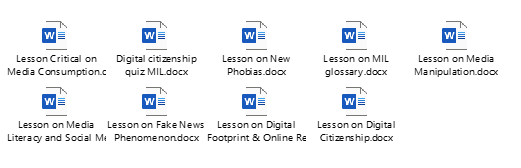
- The Bulgarian partner presented the Syllabus for Media Literacy Course
as well as 8 lessons + 1 quiz
10:30 – 12:30. Workshop 9.
The workshop was devoted to the project developing as the educators discussed what had been implemented /till that moment/ in accordance with the application form.
They also discussed what should be done before the next meeting in Manisa, Turkey and decided on the dates for that meeting.
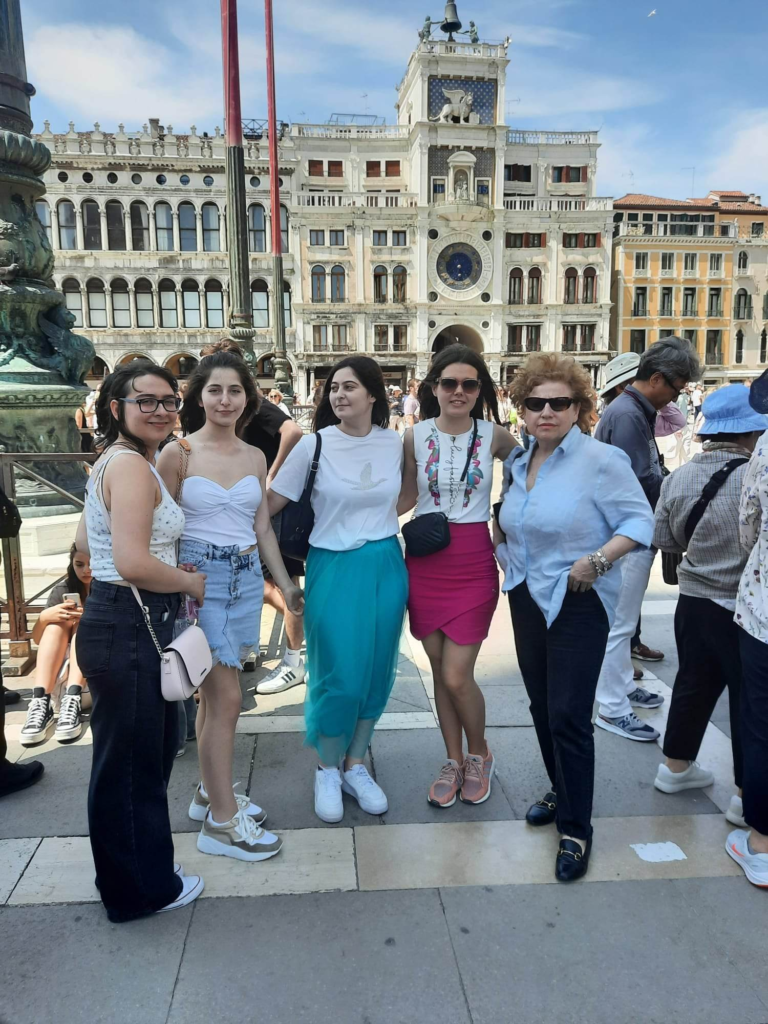
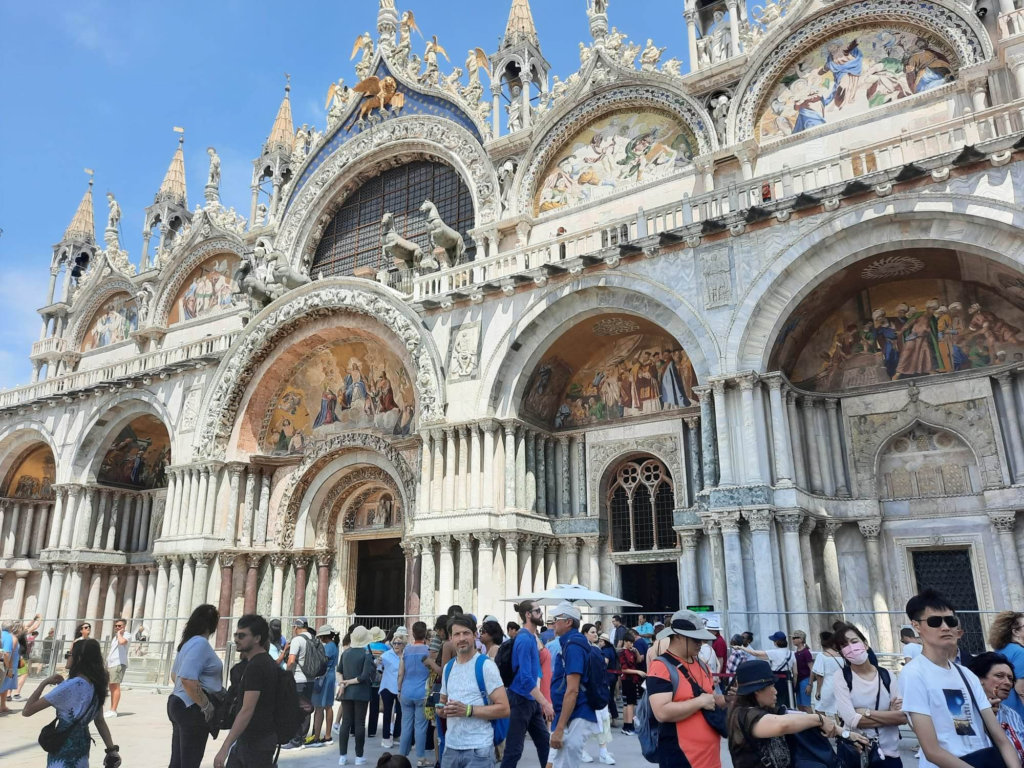
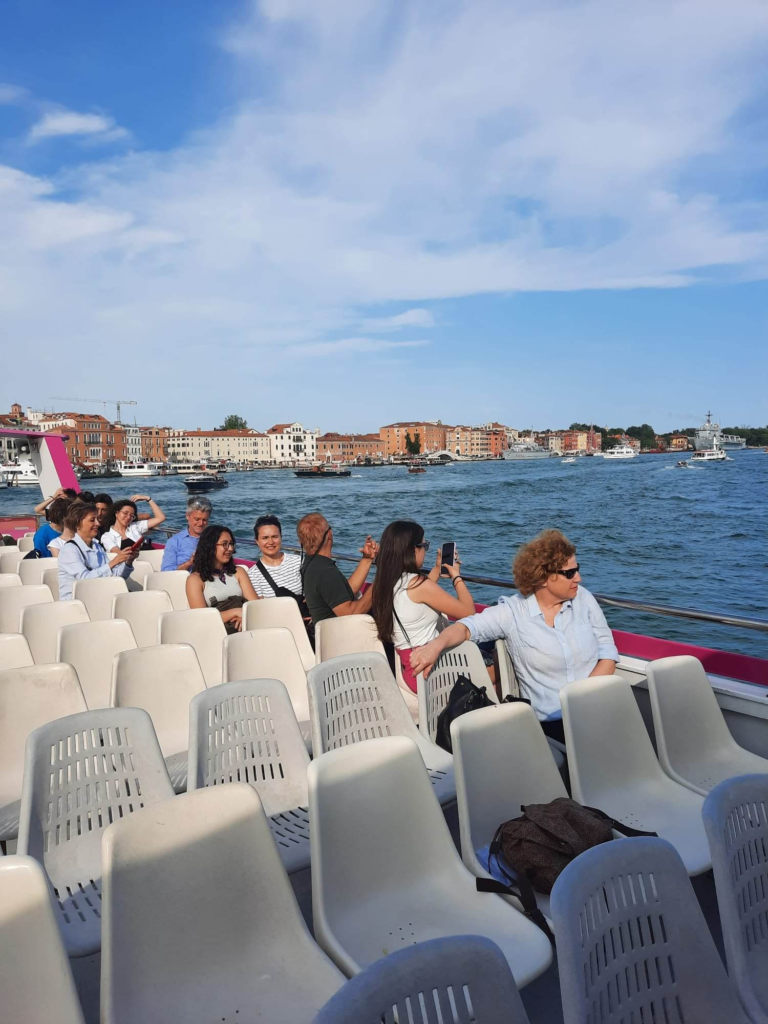
13:00 – 20:00. A cultural trip to Venice.
The trip included 2 cultural workshops devoted to the local traditions and crafts.
31st May, Wednesday
Partners’ departure: all partners leave from BGY
————–
KA210-VET – Small-scale partnerships in vocational education and training
“Up-skilling in Remote Working through Exploring the Relatively New Phenomenon of Co-working”
Grant Agreement &Project Number N 2021IT01-KA210-VET-000037820
Transnational Project Mobility 3
Field Day Event “Rural Co-working”
held in Dalj, Croatia
Day 1. 01.05, 2023, Monday – Arrival Day.
- Arrival of partner teams; check in Villa Martini, Vukovar
Day 2. 02.05.2023, Tuesday
- 9.00. Departure from the hotel.
Welcome meeting at SŠDalj; a tour around the school.
- 9.30. Workshop 1.“Analysis of the project development“ – the project webpage / Croatia/ and the project FB page /Turkey/.
https://www.facebook.com/groups/447710400567840
- 11.15. Workshop 2. “Analysis of the project development“ – the project GoogleDrive.
All the partners are obliged to upload all the project materials as well as all the project mobility documents to a corresponding GoogleDrive folder.
After the detailed analysis and discussion, the partners produced a list of what has to be done in terms of the project GoogleDrive.
- 12.00. Workshop 3. Visit to BIOS Osijek (Coworking center) – a guided tour with presentation (https://inkubator.hr/)
First, Ms. Tatjana Čepo, the organization lawyer, gave a detailedpresentation about the Uncubator and how they apply ideas of coworking there.
Next, all the participants were taken to different coworking spaces available there, where they got the chance of first-hand communication with the members of this Coworking community.
There was a lot of talking/learning about this relatively new working practice. Of great interest for the project participants was visiting the Hard lab with numerous stat-of-the-art equipment, including 3-D printers and the like.
Finally, all the participants eagerly participated in the Q&A session with the coworkers.
- 15.30. A sightseeing tour of Osijek (city center, old town Tvrđa)
- 18.00. Workshop 4. “Analysis of the project development“ – learning and teaching resources deloped by the project partners.
- The Bulgarian partner presented the first draft of the Coworking syllabus.
They also shared a lesson plan / a series of lessons/tutorials/ devoted to Coworking Growth trends/strategies.
- The Croatian partners presented their lesson plans on Coworking Spaces.
- The Italian partners presented their lesson plans on Coworking Amenities.
- The Turkish partners presented their lesson plans on Coworking Events.
Day 3 Wednesday – 3 May, 2023
- 9.00. Departure from the hotel to SŠDalj
- 10.00. Workshops at KZC Milutin Milanković Dalj
- Workshop 5 „Rural Co-working“
The student in international teams of 5 people /randomly chosen/ did some research into Rural Co-working concepts and then shared and discussed them.
- Workshop/Tutorial 6 „Workation“ /what is Workation, how to organise it, essential amenities for people on Workation / the students’team work/.
- 11.45. Workshop 7 for students: Students’ Hackathon – a contest on creating Coworking spaces.
The students worked in international teams of 5 people and designed their own working spaces. The outcomes of this activity are to be uploaded to the project webpage /the Croatian partner/.
The Hackathon was organized as a contest – there was a jury that after a short discussion reached a decision and announced the winner Group 2.
- 15.30.Workshop 8 for teachers/trainers/educators ”Elaborating on the model course syllabus and contents “Co-working as a New Working practice”.
The Bulgarian partner presented the Course Syllable draft
- 16.30. A sightseeing tour of the Municipality of Erdut.
Day 4 Thursday – 4 May, 2023
- 10.00. Meeting in the hotel.
- 10.30. Workshop 9. Visit to BIC Vukovar
(http://bic-vukovar.hr/web/bic/index.php/en/ )
The project participants got familiarised with another Vukovar Coworking Community thanks to a guided tour and a detaled presentation about one of the coworking communities in Vukovar.
BIC – Entrepreneurship Incubator Vukovar, the project was co-financed from the European Fund for Regional Development within the Regional Competitiveness Operational Program.
The general goals of the project are to contribute to the sustainable economic development of the Vukovar-Srijem County by encouraging the growth of small and medium-sized enterprises and to increase employment opportunities in the City of Vukovar.
The specific goal of the project is to create and increase the capacities of the regional entrepreneurial support infrastructure through the development of an innovative entrepreneurial incubator, which will provide space and services to encourage the development of small and medium-sized start-up companies.
The target groups of the project are: small and medium-sized start-up companies, small and medium-sized innovative companies, the unemployed and students.
The expected results of the project are:
– a developed and fully operational innovative business incubator;
– trained human capacities for managing the business incubator and start-up process;
– increased number of small and medium-sized enterprises that are educated, equipped and prepared for competition on the market;
– ensured visibility of the project, business incubator and entrepreneurial opportunities.
Furthermore, in a period of up to 5 years after the completion of the project activities, the project will result in the opening of 30 new small and medium-sized enterprises and the creation of 120 new jobs.
- 15.00. Workshop 10. Coworking communities Around the World.
- The Bulgarian partners gave 3 presentations:
- Coworking in Bulgaria was given by a student who used ChatGPT to develop this presentation;
- Coworking in Poland and the Baltic countries.
- Coworking in Romania, Hungary, Czeck Republic.
- The Italian partners talked about:
- Coworking in Italy.
- Coworking in France, Spain and Portugal.
- The Turkish partners elaborated about:
- Coworking practices in Turkey;
- Coworking practices in China, Japan, South Korea, Afghanistan and Russia.
- The Croatian partners provided information and showed a video about a Coworking community in Mikrin and talked about coworking in the US and Canada.
16.00. Workshop 11. Preparation for Mobility 4 in Turkey (plans, dates, tasks to do)
Mobility 4 is to be held in Adyn, Turkey “A Multiplier Event ”My Co-working experience”Day 5 Friday, 5 May, 2023 – departure day
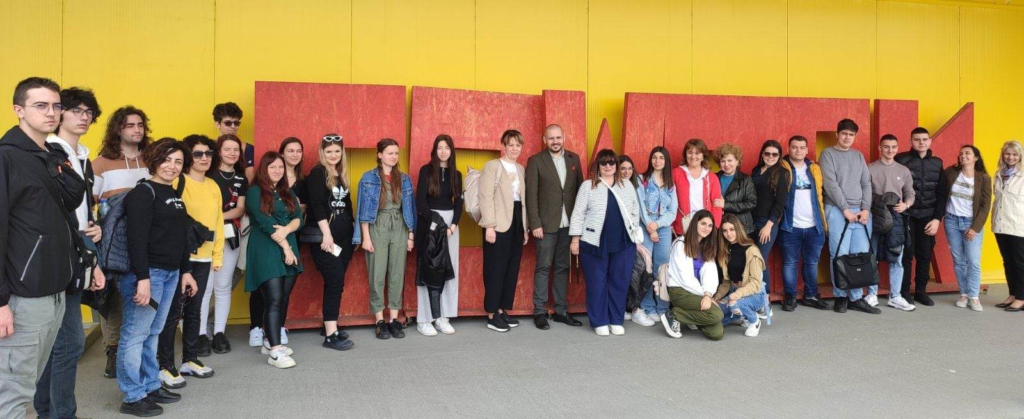
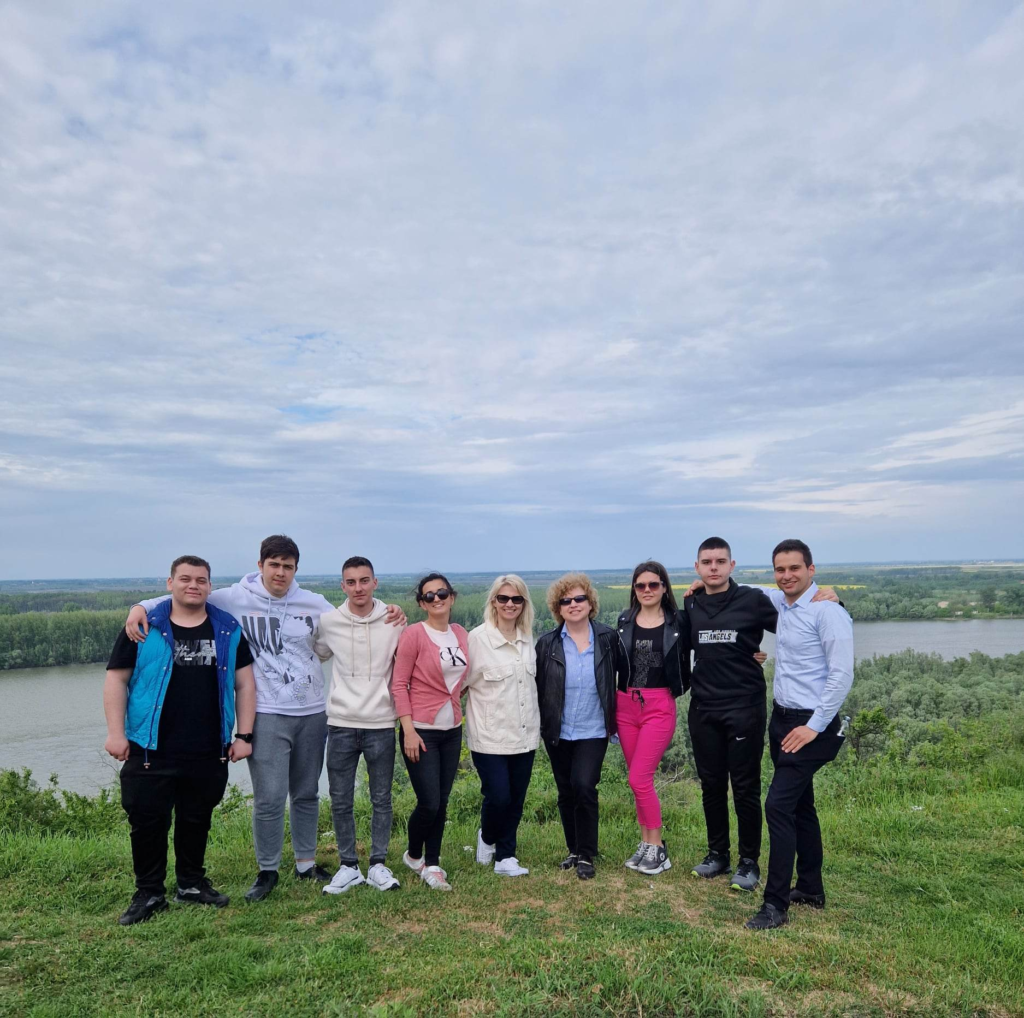
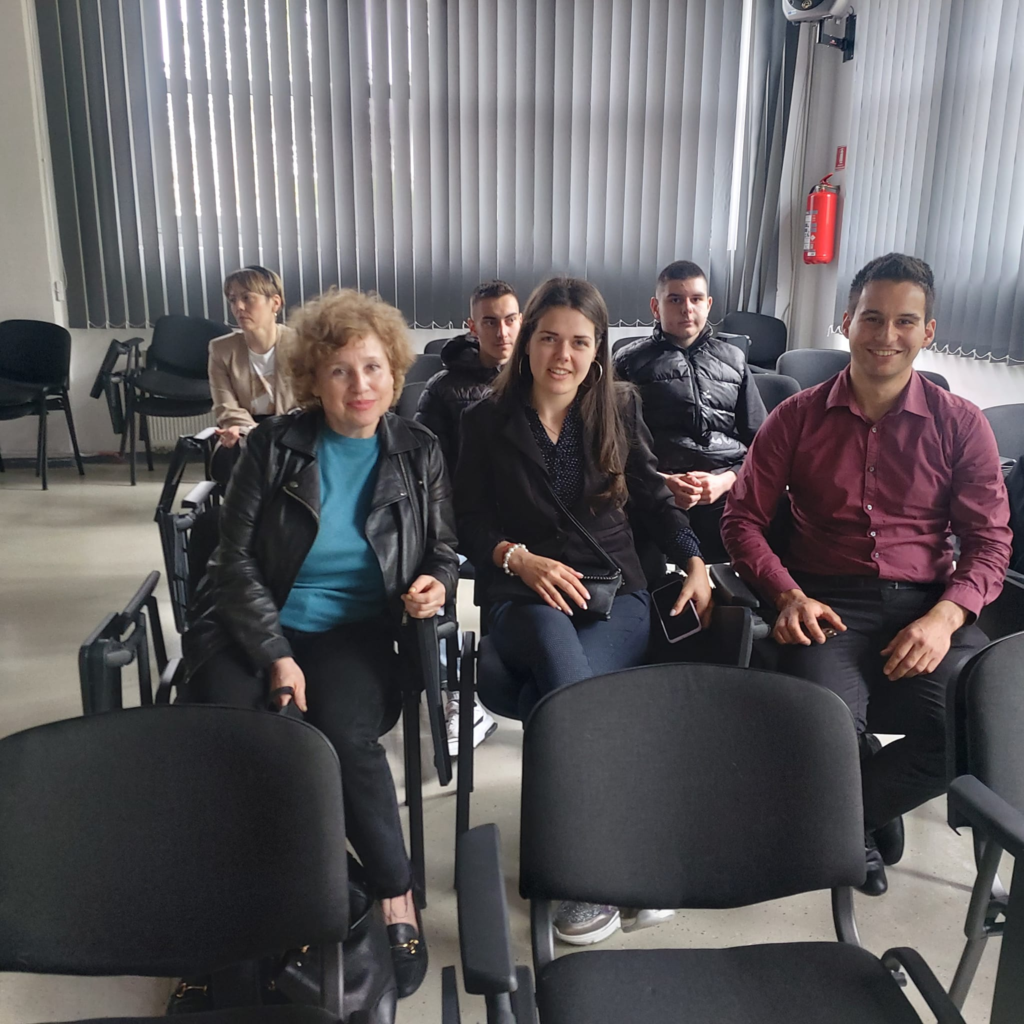
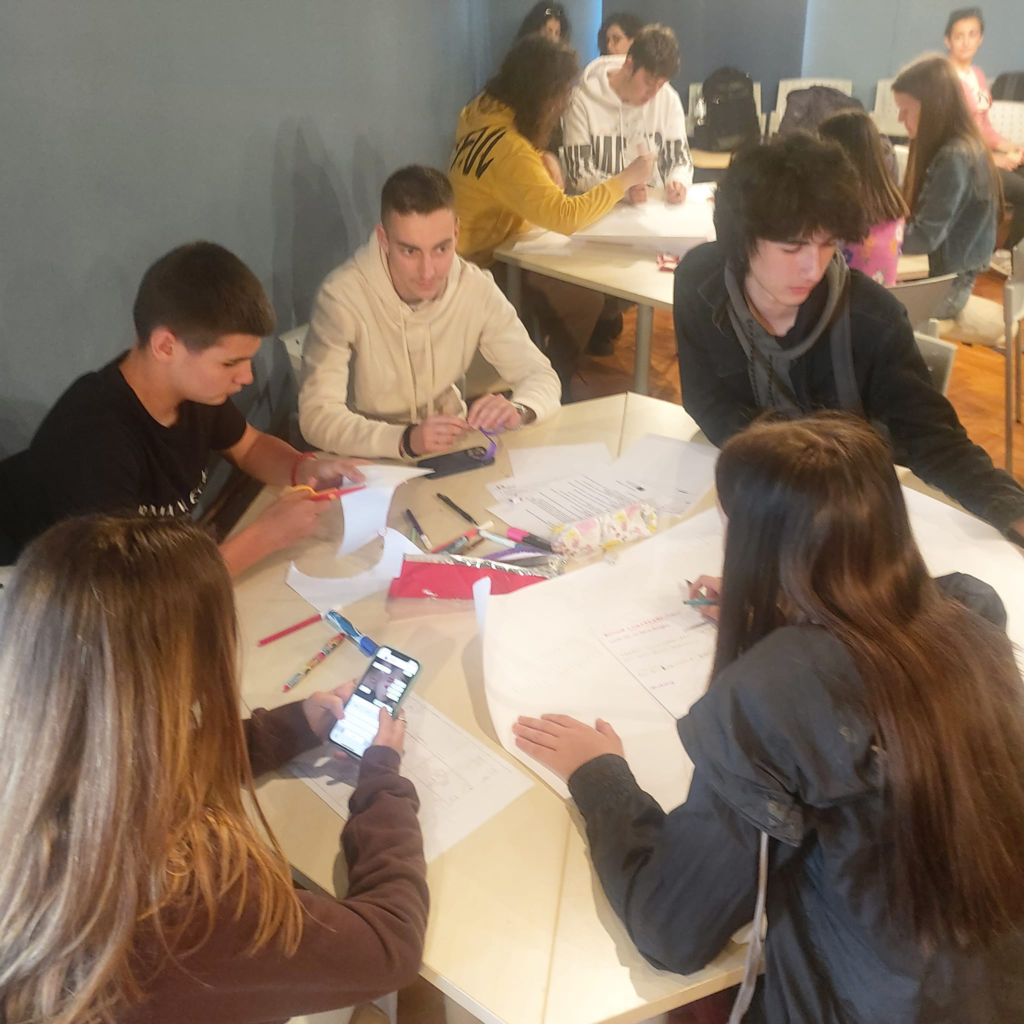
————–

KA210-SCH – Small-scale partnerships in school education and training
’Facing Challenges and Finding Solutions in 21st Century Music Education for Young Learners’ N 2022-1-BG01-KA210-SCH-000081536
01.04.2023/arrival day – 05.04.2023/departure day
Manisa, TURKEY
Final Report
Day 1.
- Welcome session and ice-breaking activities.
- Workshop 1. Every partner gave presentations on using modern technology in the formal/informal music education in the partners’ countries.
All the presentations are to be uploaded to the project GoogleDrive.
The Bulgarian Partner
1.‘Application of Music Technologies in Music Education in Elementary schools’. The presentation was delivered by Senior Teacher of Music, Dr Diana Petkova. The presentation focuses on:
– 2 types of music technologies – Educational and Specialised:
– Application models of Educational software – games;
– MusicScore app;
– Elements of music Expressiveness;
– Performance of Polyphonic work;
– Short video clips showing the students using the music apps;
Makey Makey and Scratch technology
2.Online violin tutorial with the music teacher Albena Byandova
The Polish Partner
‘Using Modern Technologies in Music education’ – social media /Messenger, WhatsApp, etc./ YouTube
They provided a lot of information on how to develop tutorials for teaching:
– the organ playing;
– Braille Music Editor software;
– Studio One;
– special smartboard /e-blackboard/ for writing/learning musical notation;
– e-kreda/e-chalk;
– Dur-moll; Nearpod; MuseScore and more;
– organizing online concerts;
The partners discussed advantages and disadvantages of the distance learning.
The Greek Partner presented the following:
- the app ‘Create your own rhythm’, which includes interactive activities and uses percussion instruments and the voice;
- the MuseScore 4 programme application;
- Webex platform used in their schools contains a lot of music class activities, which were also presented in detail.
The Turkish Partner
They provided some theoretical background to teaching Music in this day and age. They also talked about
- interactive classroom activities;
- electronic keyboards/sound cards/ sound editors.
- Using social media channels in Music tclasses.
- Apps to boost students’ musical skills through Music Theory Companion application.
Workshop 2. ‘What a Wonderful World’ – teaching music to children on
how to play digital /not only/ instruments delivered by Music Teacher Caner Dumaner.
The workshop was devoted to playing various types of musical instruments, playing digital instruments, notation software.
In this workshop the participants learned how to take their pupils on a musical journey around the world, exploring and comparing the music of different cultures. The participants managed to find out how young children could explore the building blocks of music and create melodies and rhythms inspired by the music that they had heard.
Workshop 3. Ethnographic Museum
A tour of the exhibition.
Tutorial ‘’National Music Instruments’’.
One of the local musicians familiarised the project participants with the Turkish Baglama, the Turkish String instrument belonging to the lute family. The Baglama is one of the core instruments found in Turkey’s folk ensembles and orchestras. It can even be heard on many modern popular music songs today. As the Baglama can be tuned in a variety of different ways, this makes it such an interesting instrument for a variety of Turkish styles, both within traditional and popular music. The Baglama is built with three main parts, the Tekne (the large back shaped like a bowl), the Gogus (the instrument’s soundboard), and the Sap (the neck of the instrument). There are a variety of woods used to make the Baglama, including juniper, spruce wood, or walnut for the Tekne, spruce wood for the soundboard and beech or juniper for the Sap. The use of different woods enhances the amazing tone of this unique instrument.
Workshop 4. ‘’Professional musical environment as an educational centre for early formal and informal education of children.’’
The workshop was held at the Atatürk Youth Center. We attended the following lessons /short visits/:
Piano lesson
Violin lesson
Guitar lesson
Music recording
Workshop 5. ‘Cultural institution – a place for pedagogical interaction’.
Traditional Folk Dance
Drama interactive activity/Developing stories through music
– Özcan OKTA
Day 2
Workshop 1 on Notation Software / peer learning/
– a lecture on the subject of notation software;
– practical tutorials on the subject involving all the participants both as teachers and learners.
Workshop 2 ‘Digital instruments’ – showcasing different digital instruments, used by the partners in musical education, sharing positive experiences, issues and solutions in hybrid-style education/blended learning – in a physical and online environment.
Tutorial ‘Teaching music online’, focused on online musical tasks, games and use of digital musical instruments.
play.kahoot.it/v2/gameblock?quizid=16d0d5c2-7c9d-4541-961e-605760a4c08d
- The Polish team presented their Music game in Nearpod
The Polish partner also showed a video of an organ music class /delivered online/.
- The Bulgarian team presented their Music game in Kahoot on the musical literacy /Albena Byandova/
and two interactive games on various types of orchestra musical instruments and a recognition of classic music pieces /Diana Petkova/
A show made by the group of students with special needs and the discussion on that topic.
A Folk Dance Show given by the host school ensemble.
Workshop 3 ‘Teaching music in the 21st century’,
The Bulgarian partners presented their videos
/ masterclasses /
- Teaching solfège and playing musical instruments online – using various tasks /True-False or Sentence completion and doing crosswords /Stoilka /
- Fairy tales heroes in music – a game where students have to associate a piece of classic music with the name of a fairy tale hero. The second game was also based on sound associations – a sound and a musical instrument /Stella/.
The Greek partners presented the video devoted to
- an educational game on matching the right picture /out of two/ that represents the music/musical instrument they can hear;
- a game where students have to correct the names of the musical instruments.
The teachers from the Turkish team presented 2 live lessons.
DAY 3
Cultural and historical tour in the Efes – Şirince
Workshop ‘Project Implementation and Project Reporting’
The partners discussed some important issues related to the project implementation and reporting.
- The project GoogleDrive + all the presentations have to be turned into PDF format in order to compile our Compendium of Good practices – the Bulgarian partner.
- The project Website – the Greek partner.
- The project Dissemination Strategy + European School Education Platform – the Turkish partner.
- Mobility in Greece.
- The Turkish partner familiarised the other partners with the project dissemination strategy and its results for the time being.
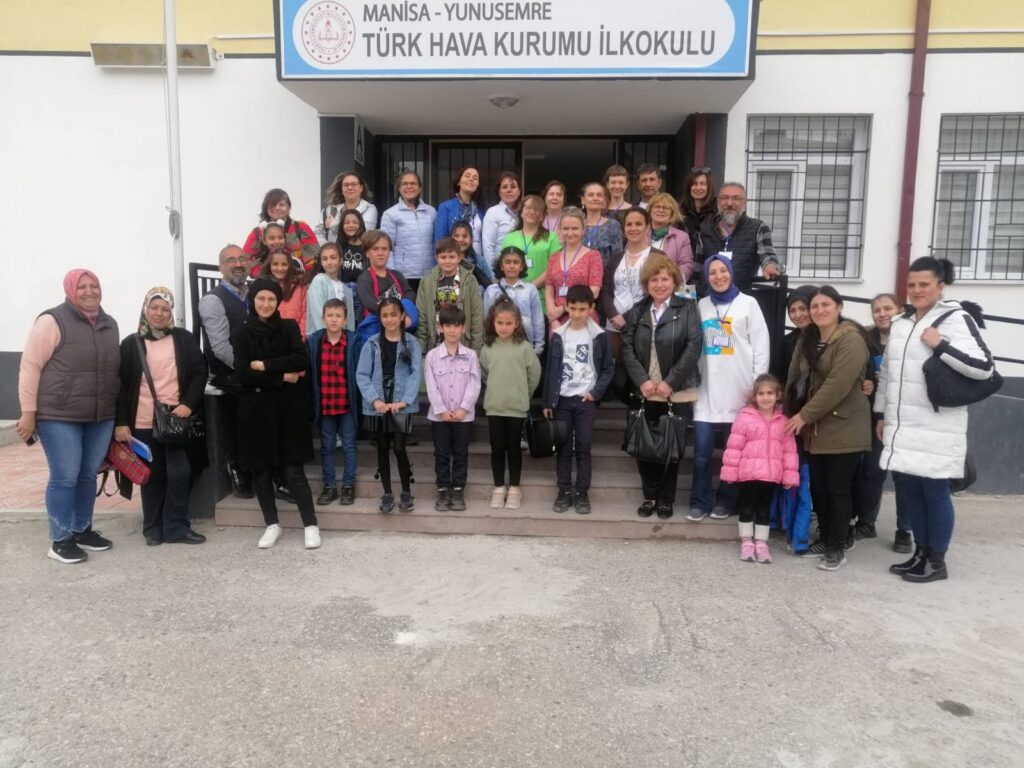
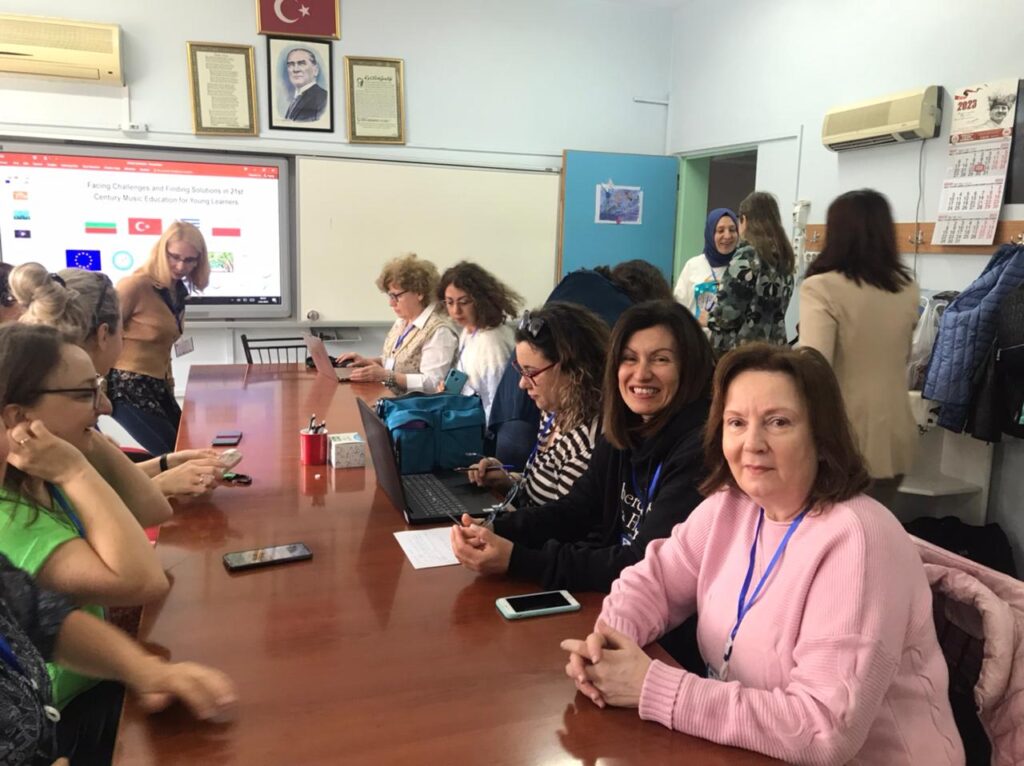
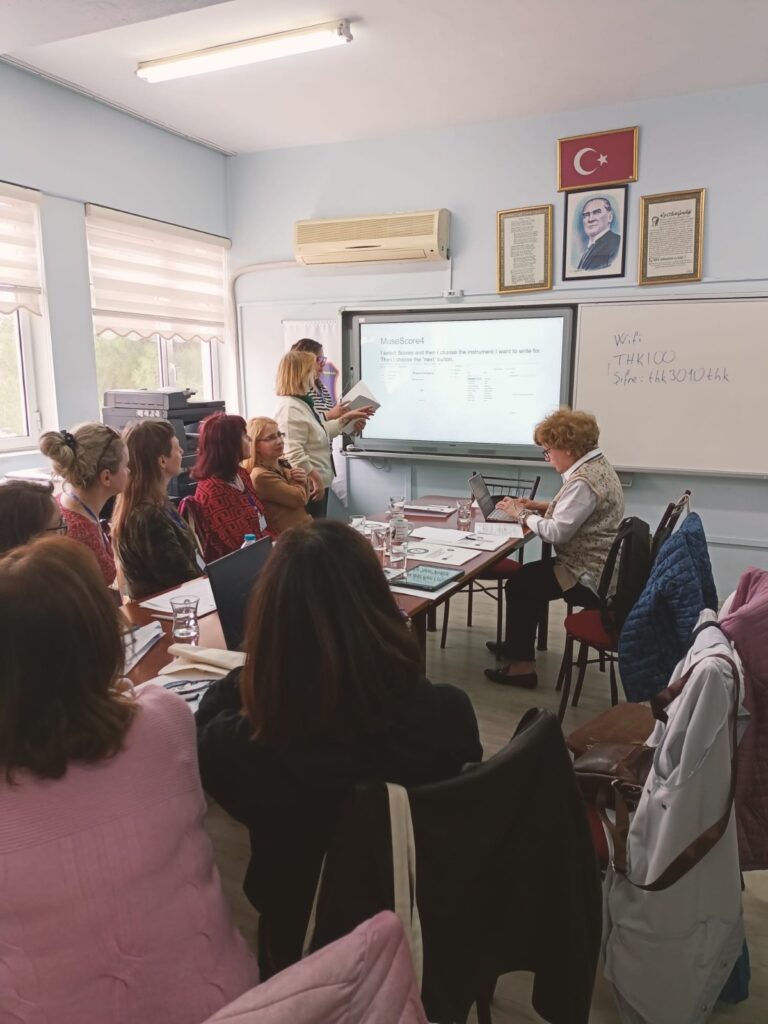
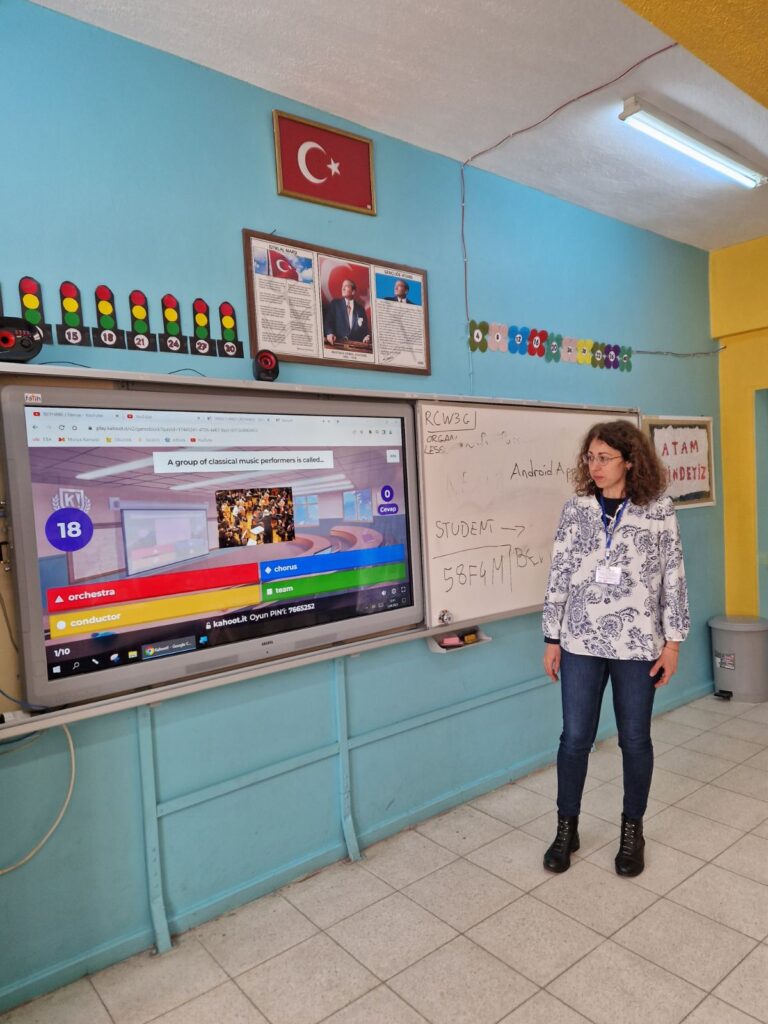
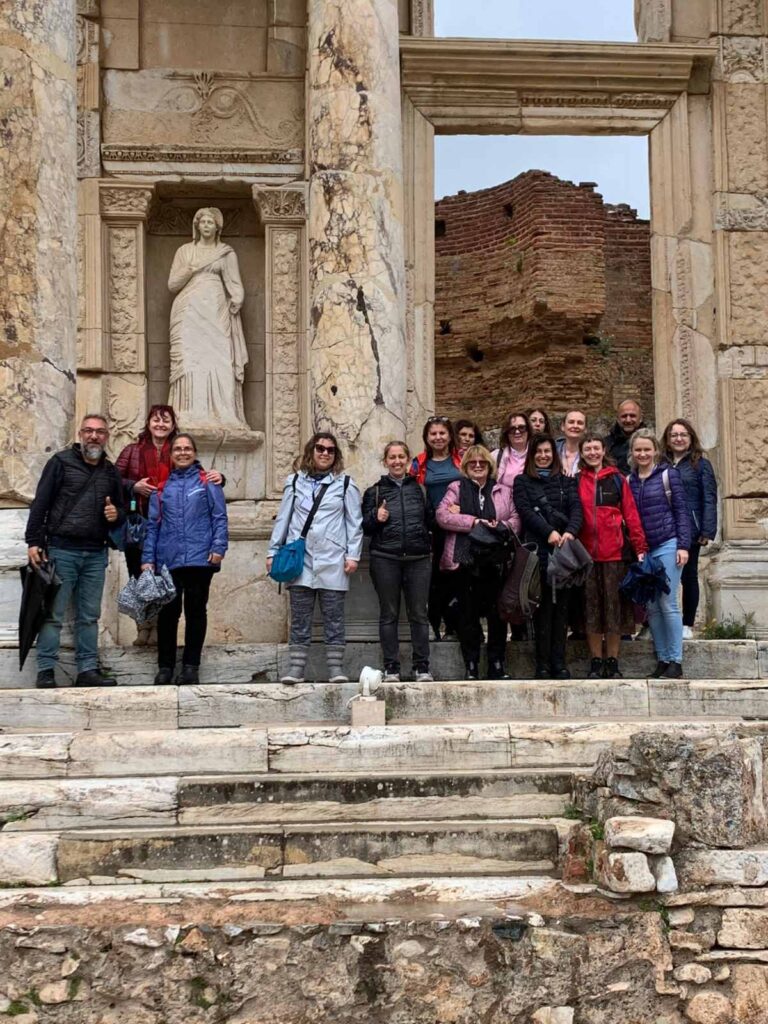
————–
Mobility 2 – Agueda, Portugal
February 2023
- Preparation stage
Online meetings to discuss the the festival scenario – educators. Collaborative tasks connected to the event in Etwinspace – learners.
II. A series of events held to celebrate World Press Freedom Day. The event should be held within 3 days. The festival will include various workshops on Media&Information literacy, issues of press freedom and media ethics – journalists’ talks, debates, and the like.
1. Round-Table “Information as a Public Good” will be hosted by the local journalists . This event is to affirm the importance of treating information as a public good. To emphasize the importance of information in our online media environment, we will focus on the following key topic: Media and Information Literacy (MIL) capacities that enable
people to recognize and value information as a public good. We also plan to invite some officials from the Portuguese Commission for Data Protection. for the definition of them. They will present us their work and some interesting cases on hate speech and fake news.
2. Activity “Hunters of Good News” for learners – looking for, producing and posting only good pieces of news followed by a
discussion.
3. Training session “Young people make media” within which students will be instructed by journalists
4. Workshop ‘Heroes – a tribute to journalists killed in the line of duty” – students’ posters and presentations.
5. Contest ”No to hate speech” /ideas to address harmful digital speech while protecting freedom of expression/. The students will be invited to prepare theit Ted-style talks in advance. Both educators and learners will be involved in this activity.
III. Follow-up activities
Designing and distributing the fliers to point media & information literacy issues – e-version only /thinking green/. Every partner is to organise a Contest ”No to hate speech” in their regions.
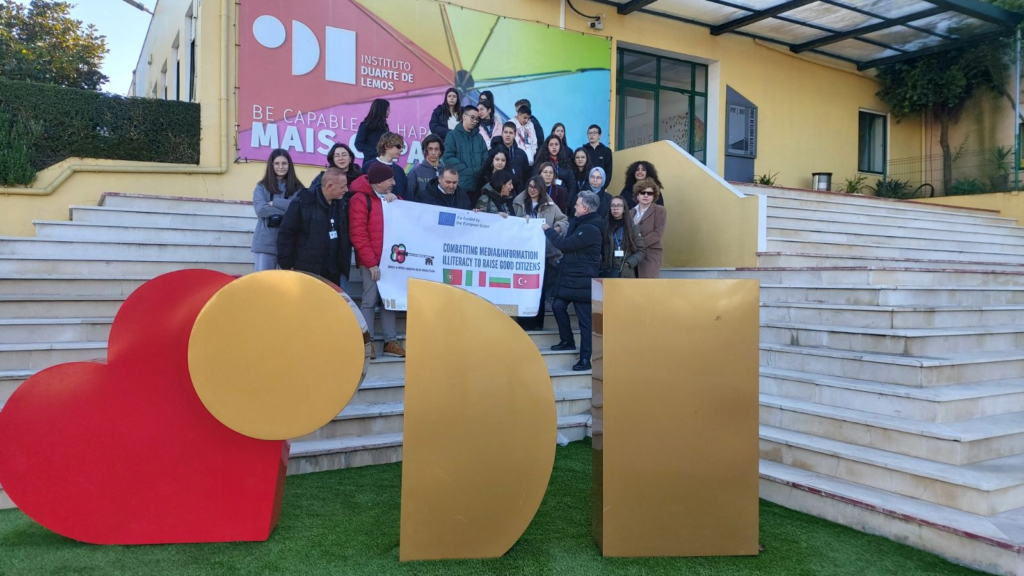
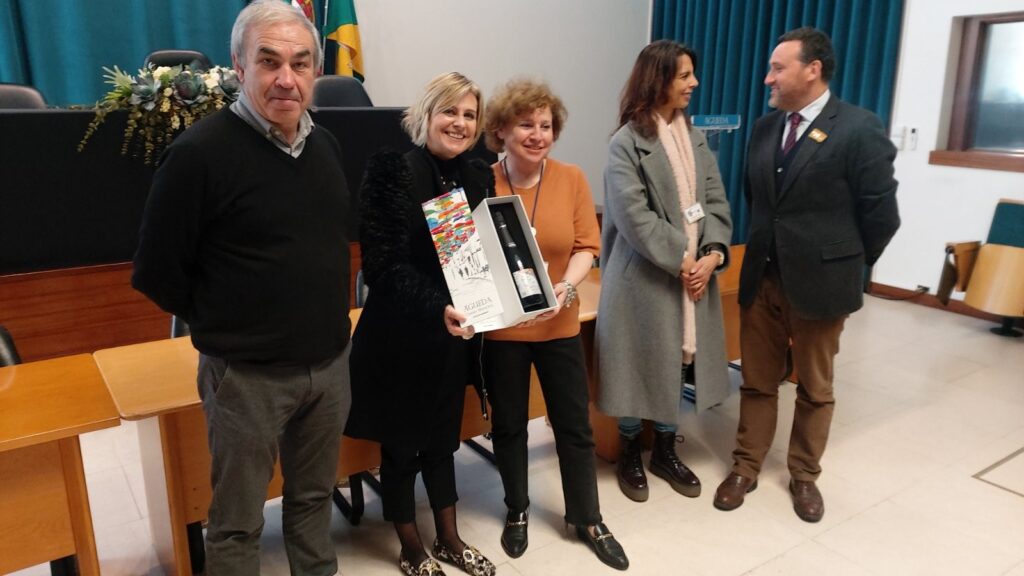
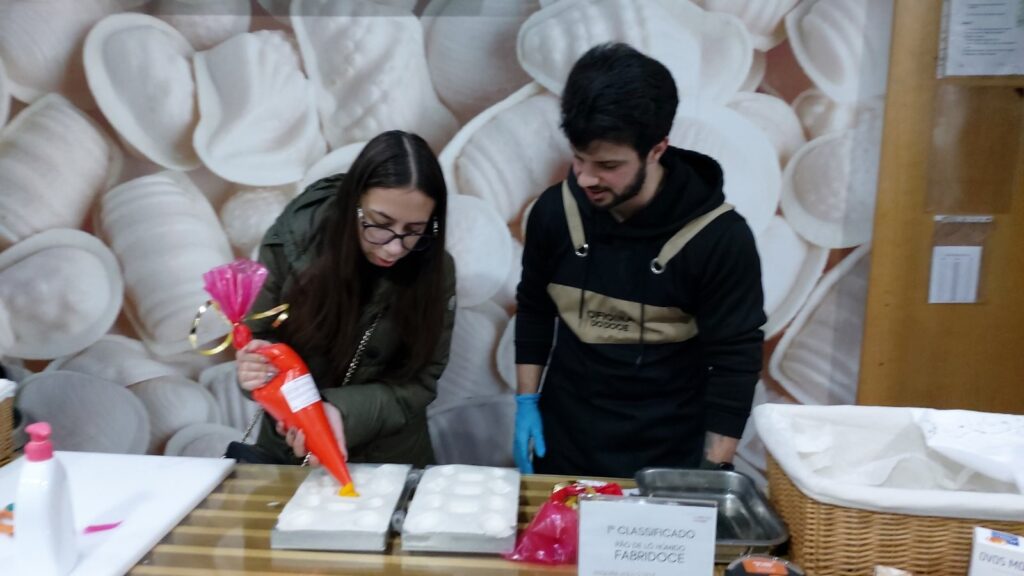
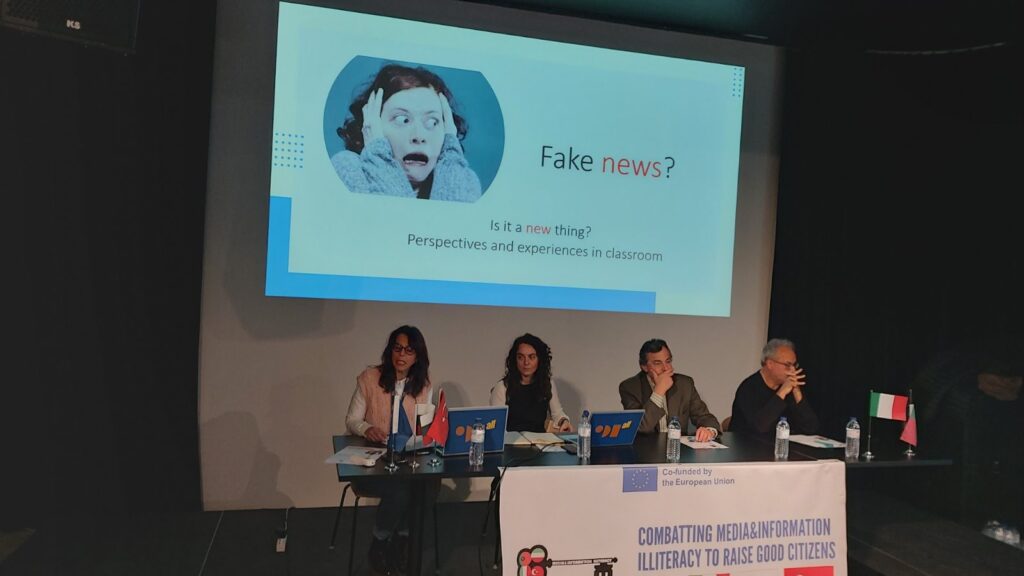
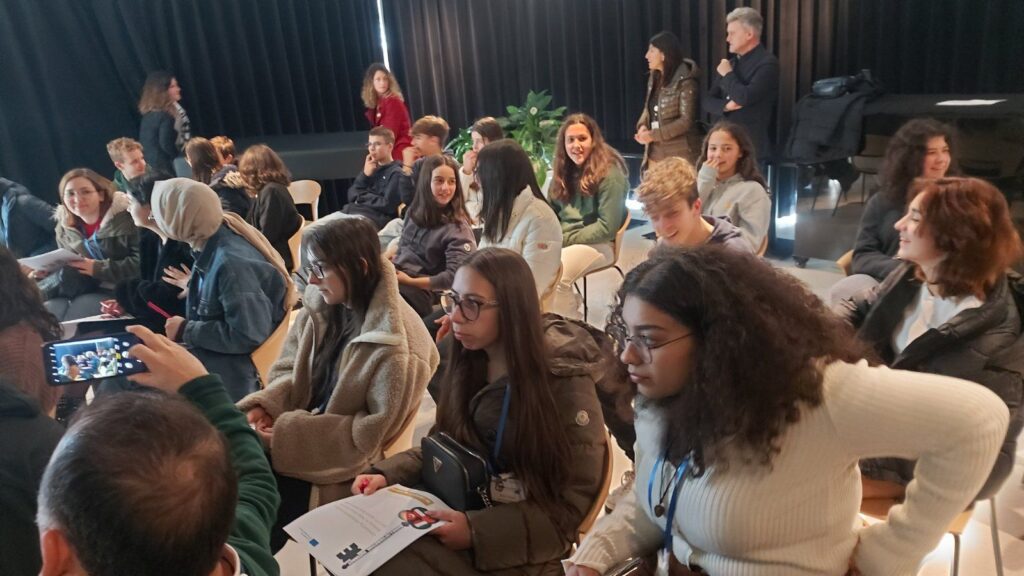
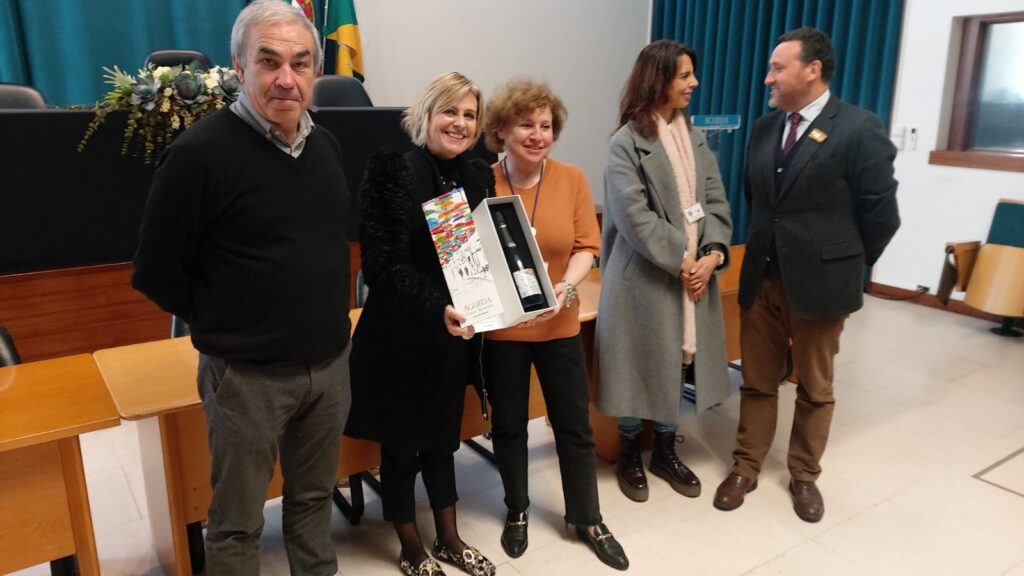
————–
Rila-Pirin Enhancement Initiative is an associated partner in KA210-SCH – Small-scale partnerships in school education and training ’Facing Challenges and Finding Solutions in 21st Century Music Education for Young Learners’ N 2022-1-BG01-KA210-SCH-000081536
Three NGO members actively participated in:
Training Event “How to Make Cultural Institutions our Educational Partners”
29.10.2022/arrival day – 2.11.2022/departure day
Plovdiv, Bulgaria
МУЗИКАЛНА КЪЩА ДИВИЗИ- ДИВИЗИ ЕООД, ПЛОВДИВ, БЪЛГАРИЯ
MANİSA YUNUSEMRE TÜRK HAVA KURUMU İLKOKULU- MANISA , TURKEY
4TH PRIMARY SCHOOL OF LIVADIA – LIVADIA, GREECE
ZespolSzkol i Placowekpn. “CentrumdlaNiewidomych i Slabowidzacych” w Krakowie – KRAKOW,POLAND
DAY 1. 30.10.2022
- Welcome session and ice-breaking activities.
- Mihail Hadzhiev /Rila&Pirin NGO/ organised 2 ice-breaking activities: ‘Detecting ’True/False facts about your interlocutor’’ and ‘’Finding 3 similarities among the group’’ as all the participants worked in international groups.
- Presentation of the partner’s countries and organizations:
The Bulgarian partner showed a video about Bulgaria, https://www.ricksteves.com/watch-read-listen/video/tv-show/bulgaria, after which Aglika Byandova gave a presentation on Divisi Art&Music Center and its achievements.
The Greek partner presented their country and organization by talking about Greece and Livadia, in particular, – its history, the natural surroundings, the main places of interest and cultural centres.
After that they showed a video devoted to their school – the 4th primary school of Levadia.
The Polish partner showed a video on Krakow and its historical significance. Then they talked about their school for visually blind children, which was accomponied by short videos. The partners delivered a brief tutorial explaining how they teach children with poor eyesight and showed musical notes for such students – Braille musical notes.
The Turkish partner delivered a presentation on Turkey, their region and the city of Manisa talking about the most interesting places for visitors. They also showed a video devoted to the major cities in the region. Finally, they presented their organisation – MANİSA YUNUSEMRE TÜRK HAVA KURUMU İLKOKULU, a primary school.
All the partners’ presentations are supposed to be uploaded to the project GoogleDrive, created by the coordinator.
- The Project Logo contest.
Every partner presented 2-6 logos and the partners chose the best project logo for better visibility of the project.
The winner is one of the logos created by the Turkish team.
- Workshop “Adventures by notes” – musical literacy in early childhood.
Presenter – Dr. Diana Petkova
The workshop was aimed at young learners aged between 3 and 5 as some authentical/authors’ techniques were applied. The whole workshop was based on interactive learning/teaching and involved dancing, jumping, playing the piano, writing musical notes and more.
/the workshop scenario is to be included into Compendium of Good Practices and the video is to be added to the project masterclasses/.
- Workshop – ‘’Basic techniques for playing the recorder/a kind of flute’’
Presenter – Stoilka Pencheva
The educator started by explaining the advantages of learning how to play the flute.
The educator was helped out by her student Emma, aged 10.
All the participants have been involved into the workshop and have been taught how to play the flute as the educator used some interesting teaching techniques.
- Ethnographic Museum – a guided tour of the museum.
- Workshop at the Ethnographic Museum
The cultural institution – a place for pedagogical interaction.
“Rhythms of fire” – dance drama “Nestinarka” – M. Goleminov – interactive activity.
Nestinarstvo is one of the oldest Bulgarian customs, which in the past was also practiced in Thrace of the White Sea, and today it is preserved in only a few villages on the Strandzha mountain: Kosti, Rezovo, Brodilovo and Bulgari.
Once, nestinari was a hereditary title that was passed from mother to daughter. The nestinari were in charge of guarding the normality of life; they had a whole secret calendar of rituals they performed throughout the year.
The masterpiece, included in the list of the intangible cultural heritage of UNESCO since 2009. May 21 St. Constantine and Helena . This day is associated with the Nestinarstwo – an old custom of people dancing barefooted on live coals. The aim is to provide welfare and fertility for the village. The custom is a masterpiece, included in the list of the intangible cultural heritage of UNESCO since 2009.
It is still preserved in its authentic form in the village of Bulgari in the Strandzha Mountain, where it is performed on the day of St. Constantine and Helena according to the old calendar – 3 June. Early in the morning all the villagers, led by the icon of the saints, head to the holy spring to consecrate it. Later the Nestinari, retreat to the chapel till the evening as they listen to the beating of a drum. During the day a big fire is set on the square. As it gets dark, the embers are spread in a circle with a diameter of 2 meters and with of 5-6 centimeters. The Nestinari come, walk around the circle three times and pass through it in a cross. Then the real dance begins. They enter the fire circle with loud shouts. One of them is with the icon of St. Constantine and Helena in hands. While dancing the Nestinari reach a religious state of trance and often make predictions. It is unique that after the dance their feet are not burned.
Goleminov’s compositions draw heavily on the traditional rhythms and melodic patterns of Bulgarian folk music, while also exploring more modernist classical trends. Created in 1942, the dance drama “Nestinarka” is an extraordinary example of how a masterpiece in the early years of Marin Goleminov seemed to program his entire future work, even in purely instrumental works – with the typical Goleminov’s laconicism, with clarity – timbre , harmonious, with the bright expression in all his work – a great combination of feeling and thinking.
/the workshop scenario is to be included into Compendium of Good Practices and the video is to be added to the project masterclasses/.
DAY 2. 31.10.2022
- Workshop at the National Library of Plovdiv ‘’Ivan Vasov’’.
Round table “Current problems of music education” devoted to the following topics: “Today’s challenges in music education in state and private organizations”; ‘’Musical activities in a digital environment’’; ‘’Cultural institutions – partners in the musical education process’’.
Every partner presents their Music Education systems.
1.1. The Polish partner gave a presentaion of the entire system of Music Education in Pland including elementary and secondary levels. Then they provided some details on how to teach music to the students with disability, namely to visually impaired children.
1.2. The Turkish partner presented the music education system of their country and concentrated on various fields they work on, namely folk music.
1.3. The Greek partner talked about delivering music education in Greece in great detail focusing on the typical teaching/learning activities in this shere.
After that there were a series of talks delivered by the Bulgarian experts in the area of Music education.
1.4. Ms. Zheliazka Belchilova /from the Municipal Children’s Complex – Plovdiv/ gave a presentation “Today’s challenges in music education in state and private organizations”, focusing on teaching music in the current period of Covid and other worlwide problems. She also showed some videos of her singing lessons/tutorials.
1.5. Ms. Yana Deliradeva /from the Academy of Music, Dance and Visual Arts “Prof. Asen Diamandiev’/ delivered a talk on the current state of music education in elementary school and provided some information on how they train primary school teachers and students and for their future jobs as music teachers and how they work with children’s choirs. She also concentrated on some pedagogical techniques on how to use human bodies in teaching/learning activities and familiarised the participants with a couple of teaching approaches such as Alexander’s method and Feldencrais’s method.
1.6. Dr. Boris Mirchev /from the Academy of Music, Dance and Visual Arts “Prof. Asen Diamandiev’/ presented the experience of the Academy’s faculty and students in the area of musical education within ‘Erasmus+’ programme and shared a lot of useful ideas, thoughts and challenges they have encountered.
1.7. Dr. Diana Petkova, who works for both Divisi Music&Art Center and the Academy of Music, Dance and Visual Arts “Prof. Asen Diamandiev’ gave a presentation on how to make various cultural organisations schools’ educational partners. She talked about various activities that can be implemented in school lessons as well as extra-curricular activites. She focused on how to collaborate with museums, libraries, opera houses and phylharmonies by presenting the projects that have been implemented and are being implemented – ‘’BGBravissimo’’, ‘’Children in the Orchestra’’ 1 and 2/.
1.8. Workshop delivered by Mr Micho Dimitrov, the concertmaster from the State Opera-Plovdiv, a violinist and a music educator, gave a masterclass sharing his experience of teaching music to youngsters and playing the violin in front of the project participants.
1.9. Q&A session with the Bulgarian educators.
- Workshop ‘’Project Development and Project Reporting’’ – Dr. Elena Sayanova /the project coordinator/.
The project participants were familiarised with how to deal with the project management, project implementation and project reporting in compliance with all the requirements of the Erasmus+ programme. The presenter also provided information about different document samplers, such as Certificates of Attendance, Subsistence Costs Declaration Form, Lists of Attendance, and the like.
There were also several project-related questions to answer.
- Workshop at the Plovdiv State Opera – 1. ‘’Professional musical environment as an educational centre for early formal and informal education of children’’.
The participants attended the rehearsal of the State Opera orchestra with one of the greatest Bulgarian conductors Mr Emil Tabakov. It is an activity that is organised by Divisi Music&Art Center on a regular basis, when the children are invited to the orchestra rehearsals. Before the rehearsal starts, 3 or 4 musicians present their musical instruments and give a lot of information related to playing these instruments.
- Workshop at the Plovdiv State Opera – 2.
The project participants attended a singing tutorial delivered by Yana Deliradeva from the Academy of Music, Dance and Visual Arts “Prof. Asen Diamandiev’, who showed a few innovative approaches she applies while teaching children /aged 8 to 15/ including some breathing exercises and many other interesting techniques.
DAY 3. 01.11.2022
The activities took place in the Children’s Department of the National Library.
- Workshop “Musical Proshtypulnik” aimed at the individual introduction to musical instruments hosted by the teachers of Divisi Art&Music centre.
The activity demonstrated how to attract and motivate very young children to get interested in various musical instruments including the violin, the harp, the piano, the bagpipe, the drums.
The educators played the instruments, told interesting stories and did their best to involve young children into the activity by asking numerous questions and allowing the children to get some first-hand experience of musical instruments.
/the workshop scenario is to be included into Compendium of Good Practices and the video is to be added to the project masterclasses/.
- Workshop “Music for small children” – an interactive activity for children up to 5 years old, delivered by Stella Konsulova.
The activity is based on story telling, listening to different sounds, singing melodies, dancing and more.
/the workshop scenario is to be included into Compendium of Good Practices and the video is to be added to the project masterclasses/.
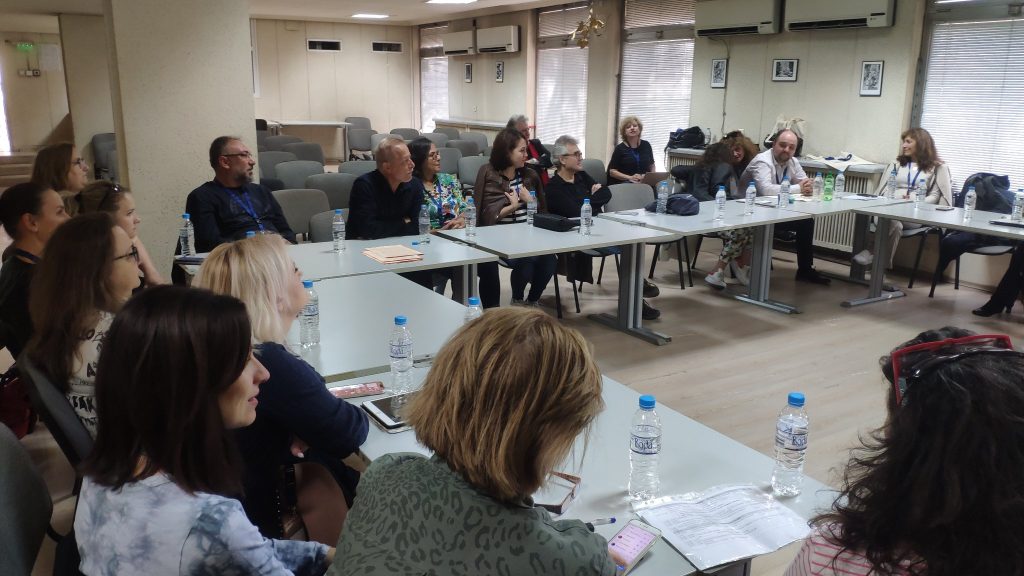
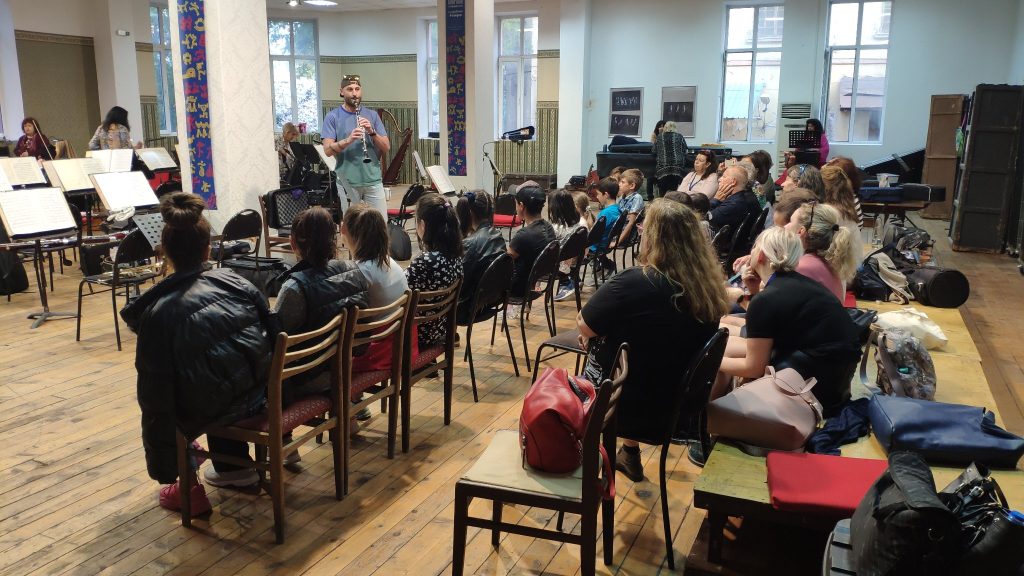
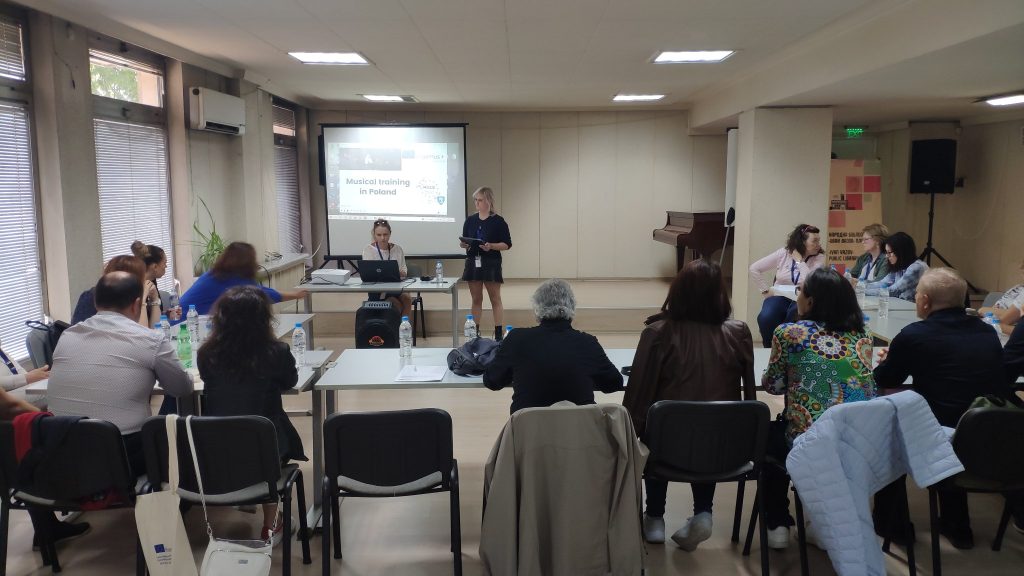
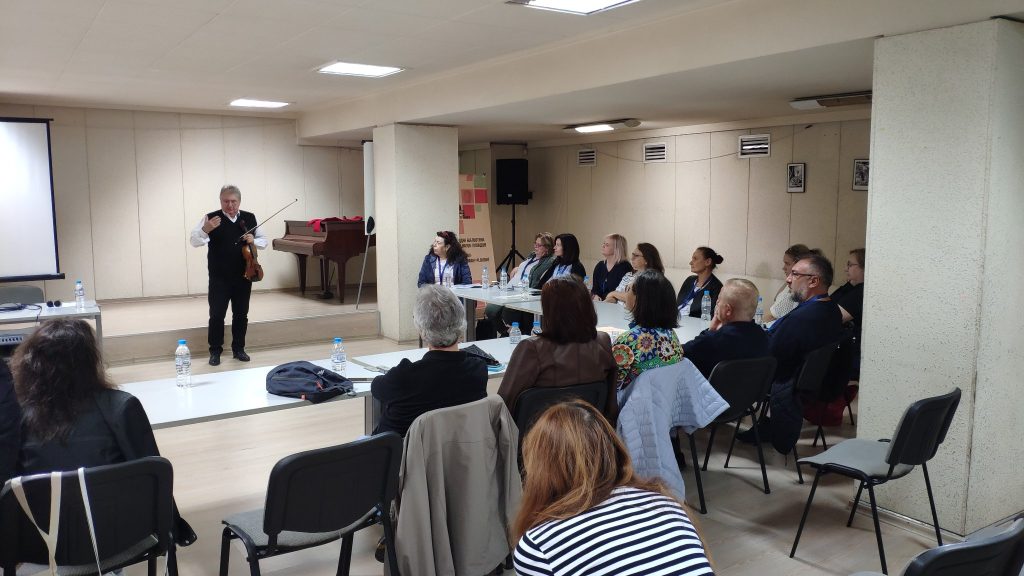
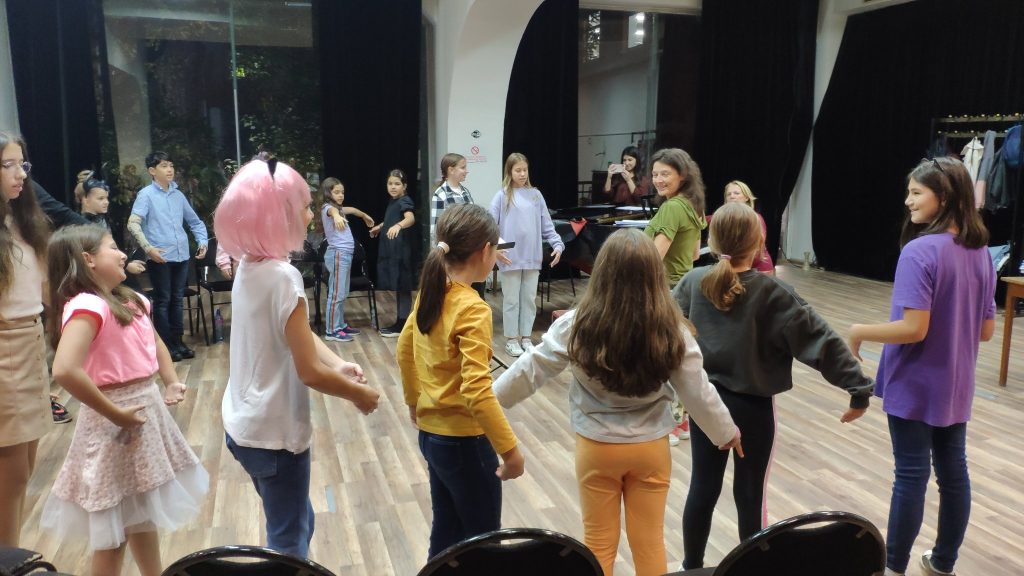
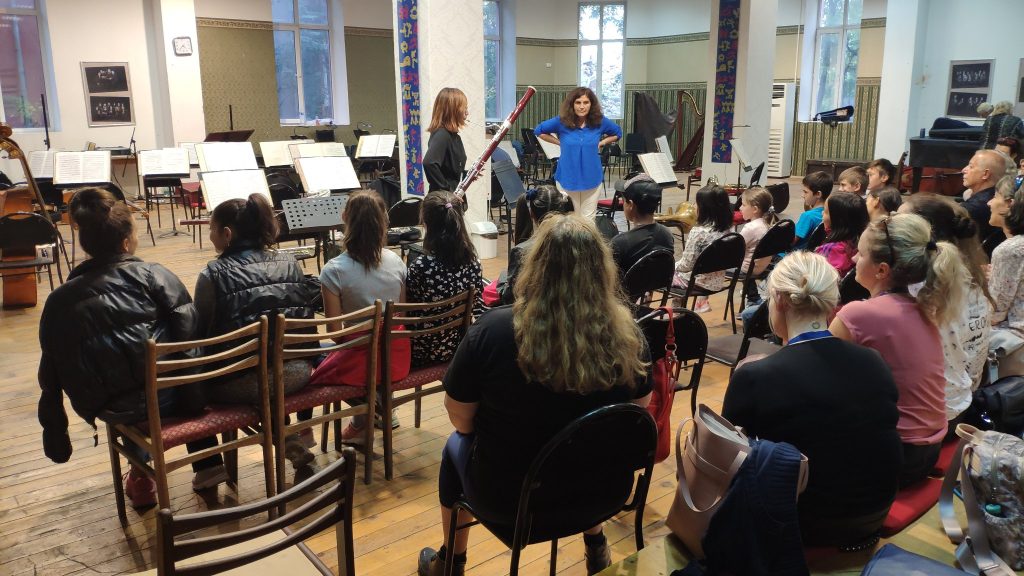
————–
ТЪРЖЕСТВЕНО ЧЕСТВАНЕ НА СВЕТОВНИЯ ДЕН НА ФИЛОСОФИЯТА В ЮГОЗАПАДНИЯ УНИВЕРСИТЕТ
17 ноември 2022 г.
Югозападният университет организира тържествено честване на Деня на философията – форум, в който по покана на академичната общност, РУО – Благоевград участие взеха ученици и учители от различни градове на югозападна България. Разложка професионална гимназия „Никола Стойчев“ беше представена от учителя по философия и гражданско образование – д-р Анета Тумбева и ученичките от 12а клас, специалност „Организация на хотелиерството“ – Елица Гахова и Ивана Гюрова.
В своя доклад д-р Анета Тумбева представи философията като предизвикателство в нашето съвремие, което дава нови възможности пред днешната философска мисъл, както и разкрива нови проблеми – токсичната медийна среда. Това е поле, което дава една нова насока – работа по европейски образователни проекти, които да свързват различни организации с университетската общност и да създават условия за „Възпитаването на добри граждани чрез формирането на медийна грамотност“, както гласи името на един от проектите, върху които работим заедно с местното НПО „Рила и Пирин – инициативи за растеж”. Според д-р Тумбева, учителят по философия има важна и специална мисия – възможността да даде знания, да помогне на учениците в техните личностни аргументирани избори, да формира и насърчи критичното мислене и да докосва сърцата.
Ивана Гюрова представи есе на тема: „Какво е за мен философията?“, в което изразява идеята ,че философията, като форма на общественото съзнание, отразява и изразява универсалната човешка дейност и отношението на човека към този свят.
За Елица Гахова За Елица Гахова философията ни изгражда като отделни личности и съвестни граждани на модерното общество, като показва потребностите и потиква сами да си поставим цели и да ги изпълняваме. Също така помага да изградим смисъла на нашия живот, както и да се отнасяме с любов и грижа към близките ни.
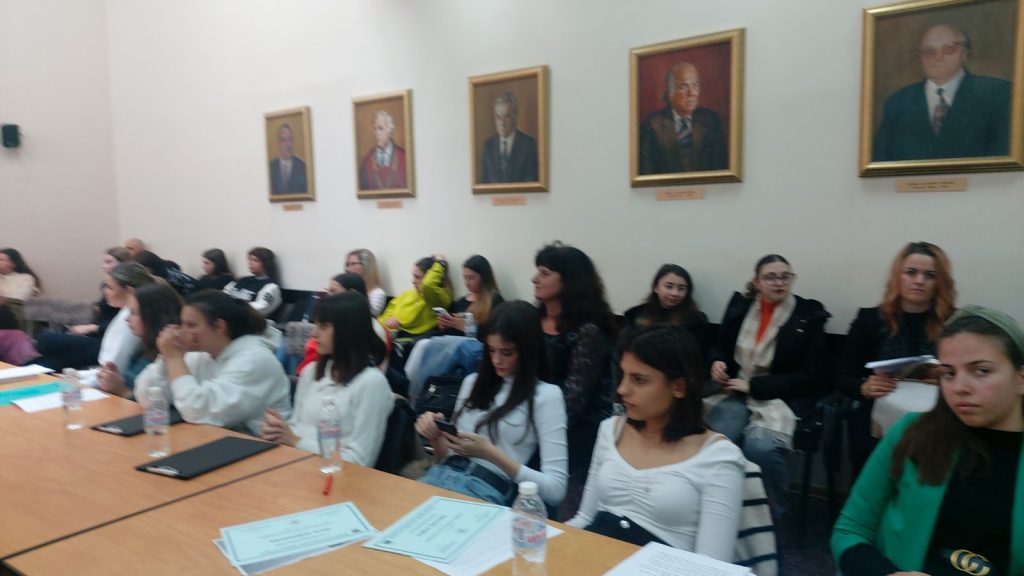
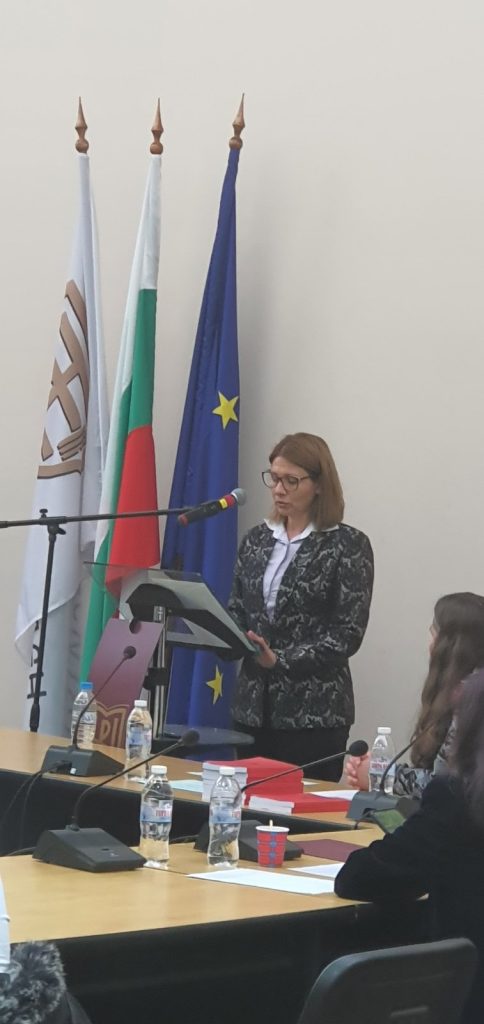
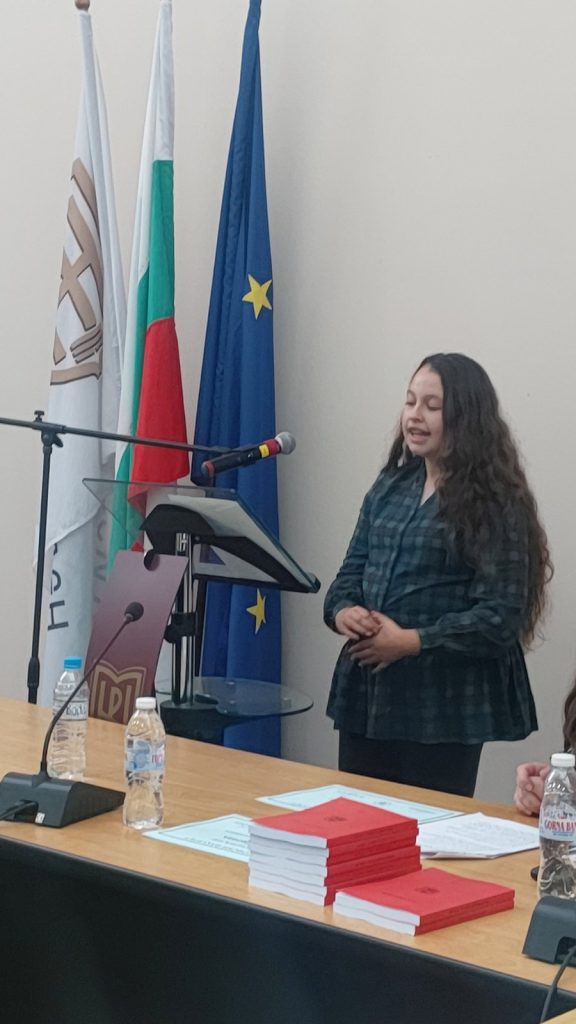
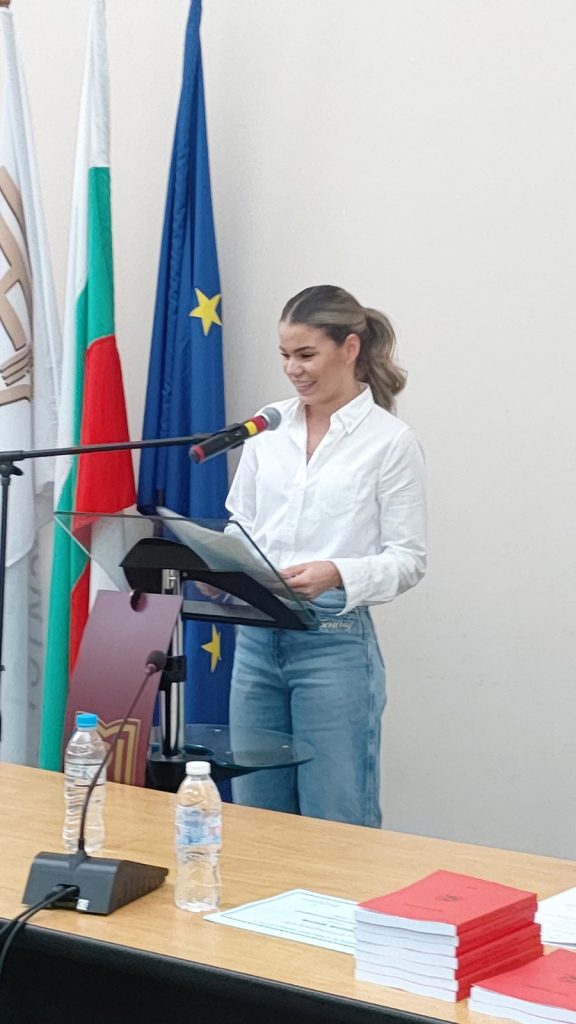
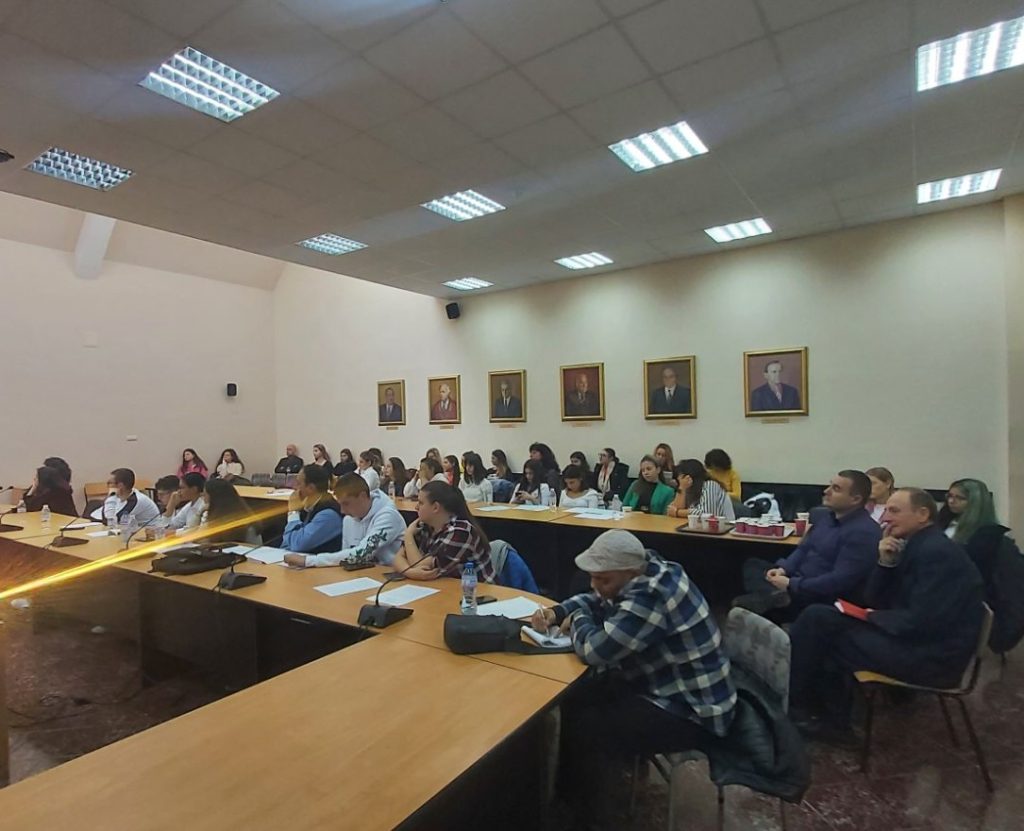
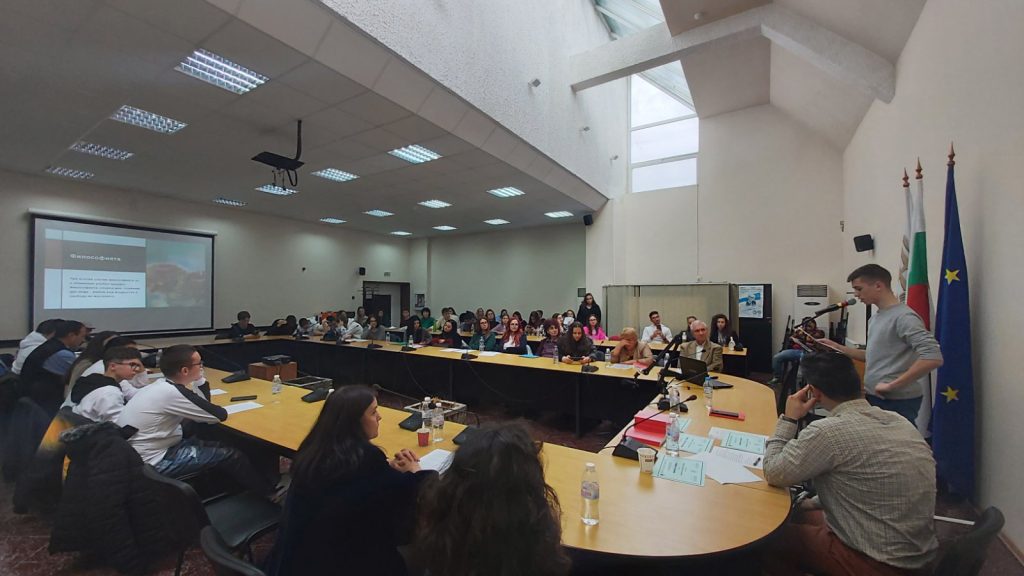
————–
Teachers/Students Exchange ”The phenomenon of Co-working – Good practices”,
KA210-VET – Small-scale partnerships in vocational education and training
“Up-skilling in Remote Working through Exploring the Relatively New Phenomenon of Co-working”
Under Grant Agreement
2021IT01-KA210-VET-000037820
held in Salemi, Italy
on the 30thMarch -3rd April, 2022
Day 1.
Workshop 1
Welcome ceremony.
The students’ presentations – groups of students from the partner schools gave presentations devoted to their countries, regions, cities/towns and organizations.
All the presentations will be uploaded to the project blog.
Workshop 2
Discussing the project application contents in greater detail, including the financial matters and partners’ agreements.
Workshop 3
Presenting the ideas of the project logo/poster of the project as prior to the meeting every partner organisation had such a task. The partners chose the logo and poster created by the Italian organisation.
Day 2.
A visit to the Co-working centre in Partanna.
We had a series of talks with the members of this Co-working community, got the picture of how they collaborate. The students participated on some tutorials, including working with 3-D printers.
Il FabLab Palermo è un HUB (centro) d’unione per makers, artigiani, smanettoni, hobbisti o semplicicuriosi ed appassionati. FabLab
Palermo è attivosulterritorio al fine di passaredall’ideaall’oggetto secondo iprincipidell’open peer to peer design o dell’open source, il tutto animato dalla volontà di chicondivide principi, idee, metodologie e tecniche all’interno di questa retemondiale di creatività e innovazione.
Day 3.
Workshop 1. Trends in Remote working, including its benefits and challenges.
The presentation was given by Dr Elena Sayanova, Bulgaria. The presentation was followed by a discussion to clarify some aspects of the Co-working phenomenon.
The presentation is to be uploaded to the project blog.
Workshop 2.
Glossary of Co-working terms.
The educators worked on the list of Co-working terms. This work is planned to be finished until the next project mobility.
Workshop 3.
Students worked in international teams.
4 teams x 4 people from every partner country
Task 1 ‘History of Co-working’
Task 2 ‘Co-working Values’
Task 3 ‘ Advantages of Co-working’
Task 4 ‘Co-working Spaces and Events’
The outcomes are to be uploaded to the project blog.
Workshop 4.
The educators started their work on developing a rough draft of Co-working Course Syllabus together with the distribution of responsibilities among partners in accordance with the thematic areas.
This workshop also included evaluation, feedback, specifying+distributing tasks to carry out. Every partner is expected to organise a seminar/an FB live meeting for educators in their regions to share the knowledge of the most important Co-working concepts discussed within the mobility event they attended. Mounting exhibitions presenting our project stuff in every partner school/organisation is advised, if possible.
The main target group for this activity were educators and students from every partner country. We tried to involve both educators and learners to participate on an equal footing, on equal terms. We did our best to turn it into a type of collaborative learning that involves educators and students working in small groups to discuss relevant issues or develop project outcomes. Thus, all the beneficiaries, regardless of their age and position, were able to exercise higher-level thinking, oral communication, self-management, and leadership skills. Equally important, this type of project work helps to promote to student-practitioner/teacher successful interaction, increase young people’s retention, self-esteem, and self-reliance. Being equally responsible for the work results also leads to exposure to and an increase in understanding of diverse perspectives and better preparation for real life, social and employment situations.
The expected results of Activity 1include:
1. A Compendium of existing Co-working practices. The Compendium is to include
good Co-working practices from the partners’ countries – detailed descriptions of the Co-working communities in Italy, Bulgaria, Croatia and Turkey based on the finding of the partners’ research/survey/interviews with the Co-working communities.
2. A rough draft of the Co-working
Course Syllabus together with a detailed plan to efficiently delegate responsibilities among partners in regards with the thematic areas. All the partners got a clear picture of what tasks they are going to carry out, what part of the Co-working course syllabus as well as course contents they have to develop
– presentations of Co-working communities from the designated region;
– descriptions of good practices in the partners’ countries;
– glossary of Co-working terms.
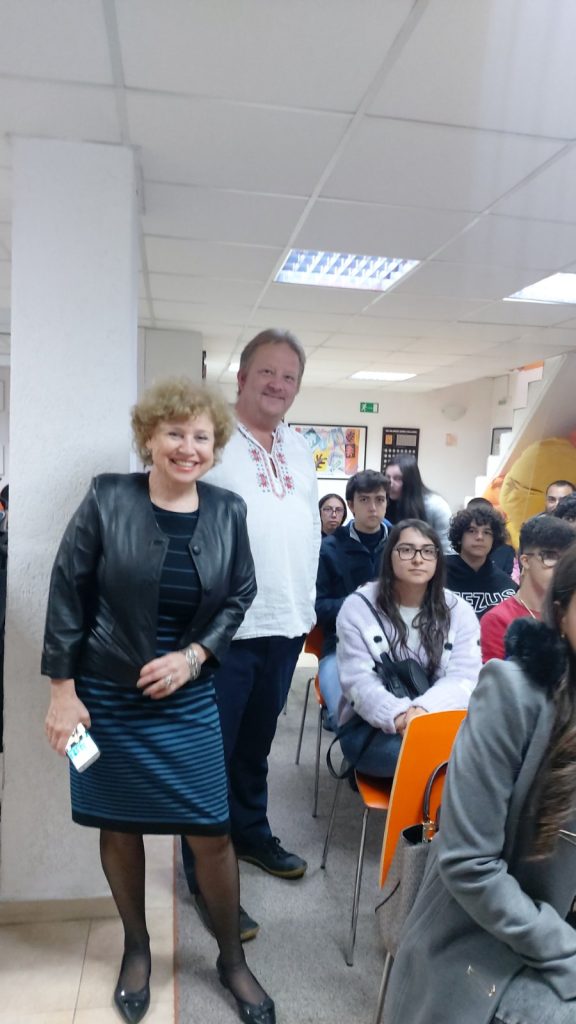
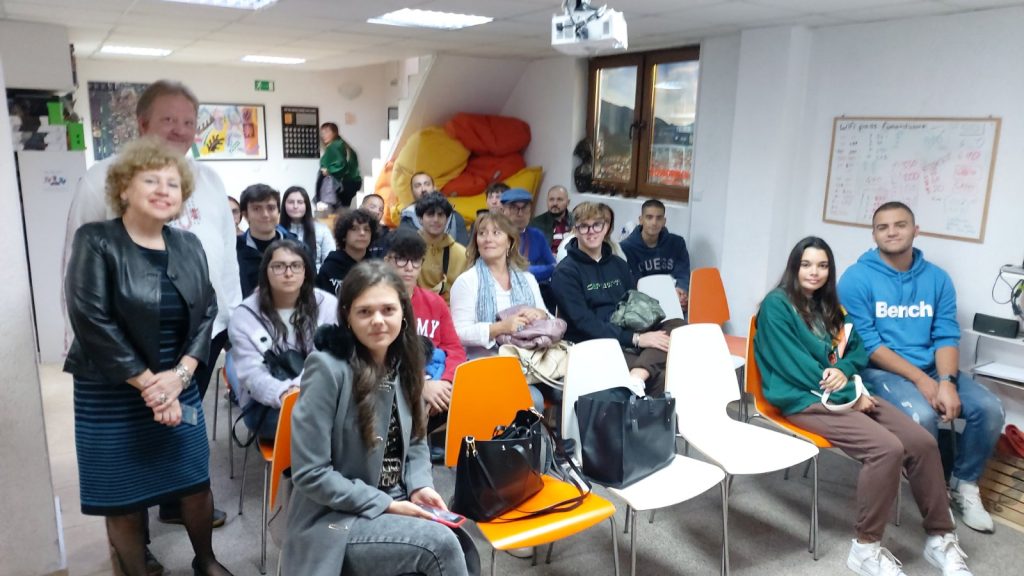
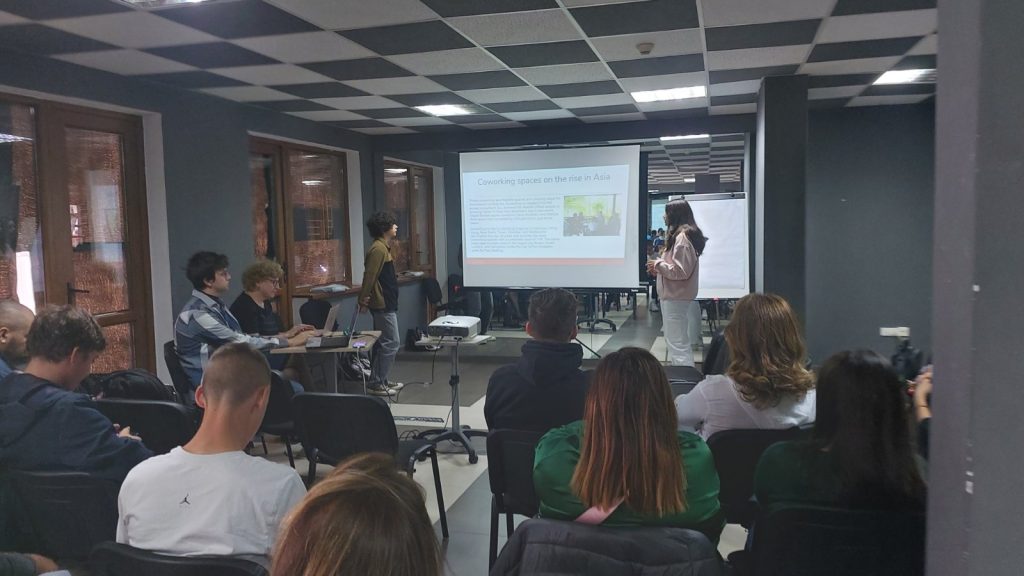
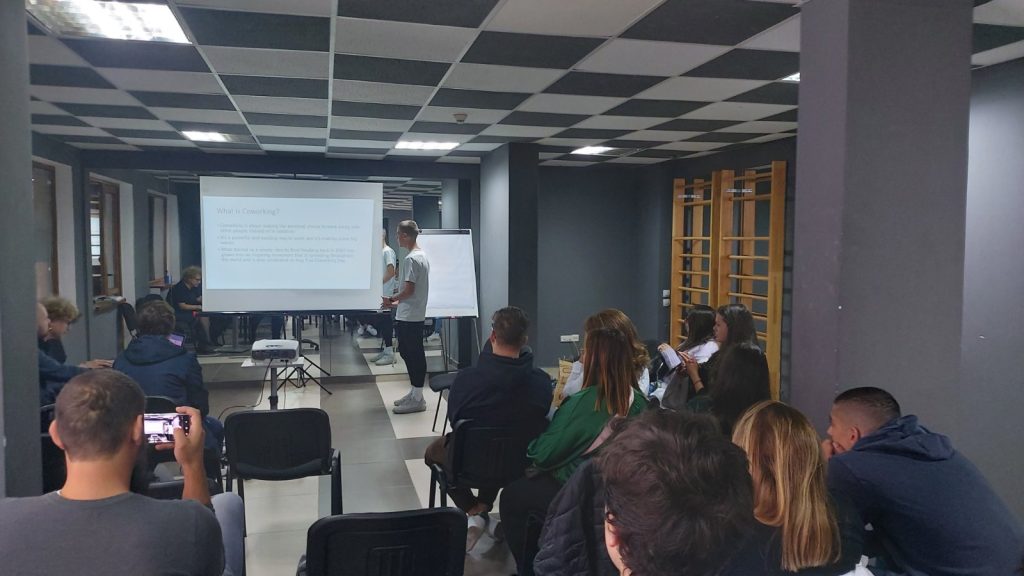
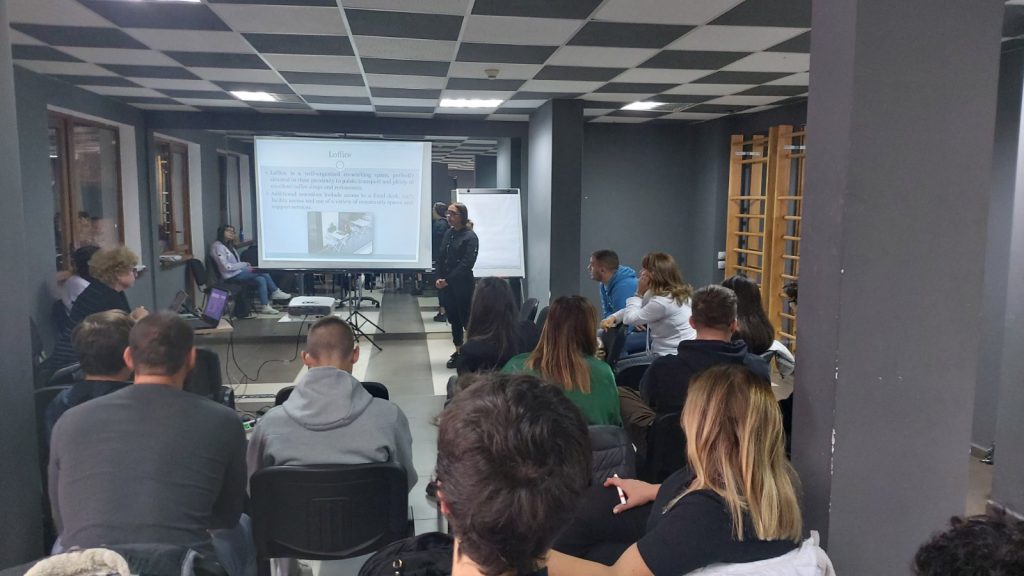
————–
TRANSNATIONAL PROJECT MEETING
KA210-SCH – Small-scale partnerships in school education and training
’Combatting Media&Information Illiteracy to Raise Good Citizens’
Under agreement N 2021-1-PT01-KA210-SCH-000031494
Razlog, 17th– 21st July, 2022
18.07 Monday
Workshop 1.
Welcome meeting.
Every partner presented the project partner organizations and their countries/regions.
The webpage/ blog – http://rila-pirin-enhancement.com/
Then a film about Bulgaria was played. – https://www.ricksteves.com/watch-read-listen/video/tv-show/bulgaria
- The Turkish partner presented their organization, MAGNESIA association, Manisa. He gave a detailed description of the projects implemented within Erasmus plus programme.
Then Ali gave a presentation about Manisa and Turkey /a slideshow/.
- The Portuguese partner gave a detailed description of Raisemotions Lda. School, Trofa-Agueda, Portugal.
The partners first provided some information about the Portuguese education system and then about their institution, which is a private secondary school founded in 1997. Alexandra talked about the school curriculum, extra-curricular activities and the major events.
Then a film about Agueda County was shown.
- The Italian partner presented his organization – EDUCANDATO STATALE AGLI ANGELI school – Verona, Italy, /online/ as Mauro’s giving the presentation has been recorded. The first part of the presentation contains a lot of information about the most interesting sights of Verona. The second part was devoted to the school, which is a boarding school founded by Napoleon. A short video gave the whole picture of the school whose students major in ITC, Mandarin and some other subjects.
Workshop 2.
Familiarising with the project application form in greater detail.
Distributing the project tasks among the partners.
The tasks are specified as follows:
The Portuguese partner, the project coordinator, is expected to be in charge of formulating the project tasks together with ensuring proper budget control and time management. The project coordinator and 3 partner organisations’ coordinators will keep track of the expenses. Each organisation should be aware of its role and the tasks that it is expected to carry out. That is why we singed up the agreements between the partners where everybody confirms their interest and involvement in the partnership. Adequate resources will be allocated to all the project tasks to ensure effective implementation of the work plan and cost-effective use of the project budget. The budget has been negotiated with the partners on the basis of their individual calculations which makes it realistic and adequate for their respective tasks.
They are also in charge of our FB group.
The Portuguese partner is in charge of Activity 2 – School Festival ”World Press Freedom Day”.
The Bulgarian partner is in charge of developing Educational Resources – a Flip book comprising good practices and of developing the final version of a model course syllabusc ontaining the course description.
They are also responsible for Activity 1 – Transnational project meeting +Teachers’ Exchange ”Media&Information Literacy Key concepts and approaches”.
The Turkish partner will be responsible for maintaining our project space in the new European School Education platform, that will be one of the main communication tools of our project with the use of social media (e.g. blogs, social networks) and good cross-linking between the different pages of our site and other sites as the contents are tobe updated regularly.
They are also in charge of our Google Drive.
The Turkish partner is in charge of Activity 4 – a Multiplier event/ Teachers&Students conference “Media and InformationLiteracy in the 21st century”.
The Italian partner will be responsible for the project webpage. It will containthe Homepage, the Project Overview, the Information on the project partners, Deliverables and Publications (downloadable), Events description and outcomes, Useful links, Media Centre (it will include posters/flyers; videos; Copyright-free photographs).
The Italian partner is in charge of Activity 4 ”Training event on Digital Citizenship”.
Workshop 3.
‘The main ideas and concepts of MIL’ delivered by Dr Elena Sayanova
The workshop included:
What is ‘Media&Information LITERACY’
Five Laws of ‘MIL’
KEY OUTCOMES/ELEMENTS OF MEDIA AND INFORMATION LITERACY
Five steps for developing Media&Information literacy
MIL Education Model of the Critical Thinking Development
Other models of media&Information literacy education
The Contributors’ names
Useful sources for implementing MIL education
Workshop 4.
‘MIL education in the partners’ countries and schools’
- The Italian partner presented their school cross-curricular subject on Digital citizenship / as part of the talk has been recorded/.
- The Turkish partner shared how MIL education is implemented in Turkey. He focused on what activities can lead to achieving better MIL competences. As a whole this type of education was launched in 2007 and Ali played some short videos that are used in such courses.
- The Portuguese partner presented all the national projects/programmes carried out in Portugal in the chronological order. Alexandra played some useful videos that educators can use and make references to particular Portugues websites /SEGURANET, INTERNET SEGURA and more/. Being a Microsoft school they organize a lot of contest related to digital literacy and are going to promote the MIL ideas widely.
- The Bulgarian partner informed the partners about a major project on Mil implemented in Bulgaria – the one organized by the Association of European Journalists and funded by the American Embassy in Bulgaria.
Elena also presented numerous activities that have been implemented in the local school where the NGO members work as teachers and develop Media education projects. A special focus has been on including elements of MIL into English lessons.
Cultural visit to Bansko, an international ski resort.
19.07 Tuesday
Workshop 1
Logo contest: all the partners
The partners presented their logo designs, discussed them and voted for the best one.
They singled out the logo developed by the Bulgarian partner. In this logo the main idea is: Media and Informtion are something difficult to know and you need a key to open this world and open your mind about them. This time you have just a key that begin with the countries involved.
The partners talked about drawing up the MIL course draft /how to develop essential skills for the Digital Age/. The Bulgarian partners will develop it in greater detail and present it during the next mobility.
Workshop 2. ‘Teaching Democracy or how Media Education can help to raise good citizens’ delivered by Assoc. professor Sylvia Kristeva fromThe South-West University, Blagoevgrad/.
Every participant has to choose the best image which presents you most.
How do you conduct media education in your teaching.
Aristotle on Democracy – the genesis of the term and the political problem of government.
Definition of Democracy – the essential features.
Task 1: three teams
The task is: each team does some brief research to identify and give an example of a highly democratic situation and respectively – the absolute undemocratic situation/institution/example of everyday life: an example can be historical or current, fictional or real – and explain why you chose these cases.
Problems of Democracy – how to improve, perfect, bring to perfection our democracy.
Task 2: the three teams now have to choose a topic on the problems of democracy and to demonstrate and argue on this topic, to give their pros and cons:
the political representation, the individual rights and freedoms, the tyranny of the majority the supremacy of law, the proper and dignified leadership, the massification of culture and moral, the average lifestyle – as the domination of taste andthe standards of majority.
Truth and Falsehood in Media, especially in the social media. How to estimate the reliability of the information?
What is your practice?
The Democracy in global world
The problem of rights.
The tolerance and multiculturalism.
The vote for EU elections.
The future of our common world.
Workshop 3. ‘Cybersecurity’ delivered by Mr Slav Astinov /slavastinov@gmail.com/ , who works for https://semansys.com/ – online session.
What Exactly is Cybersecurity?
Getting to Know Common Cyberattacks
Phishing
CEO Fraud
Personal data theft
Malware Viruses Ransomware
Prevention on a PC / Prevention on mobile devices
Improving Your Own Personal Security
Workshop 4.
Cultural workshop at the horse stables ‘Perivol’ – getting aware of the Bulgarian traditions.
20.07 Wednesday
Workshop 1. ‘How Education Can Combat Disinformation’ delivered by Dr Elena Sayanova.
The workshop comprised both theoretical and practical elements.
Information vs. Disinformation
Fake News and Information Bubbles
What can educators do in this complicated world of today?
Task 1: Social Media Consumption
Task 2: Your Media Diet
Task 3: Consequences of a post-truth world
Fact-checking
A trip to Plovdiv:
A guided tour in Plovdiv, the European Capital of Culture 2019
Visiting Plovdiv TV station
https://potv-arh.blogspot.com/
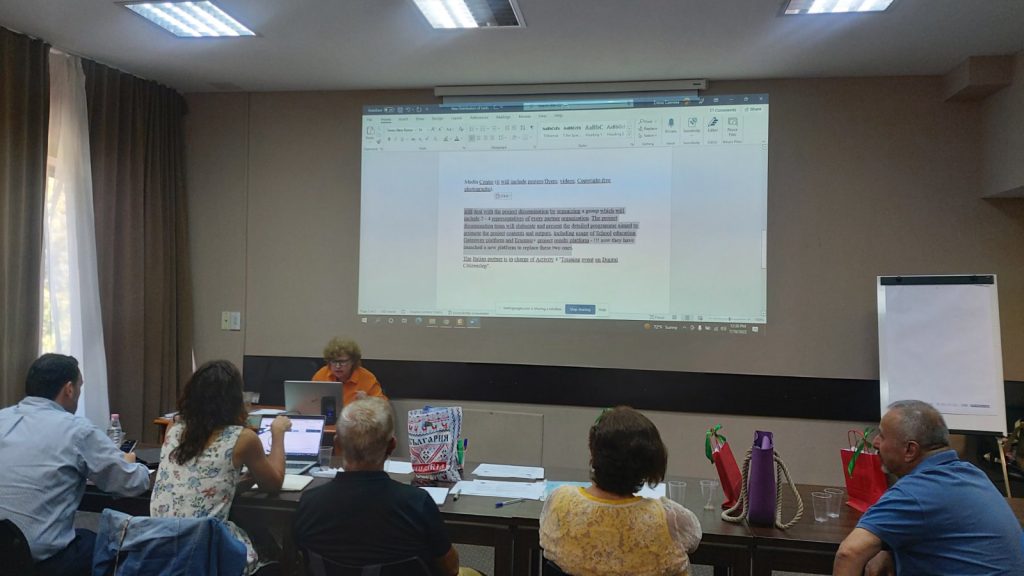
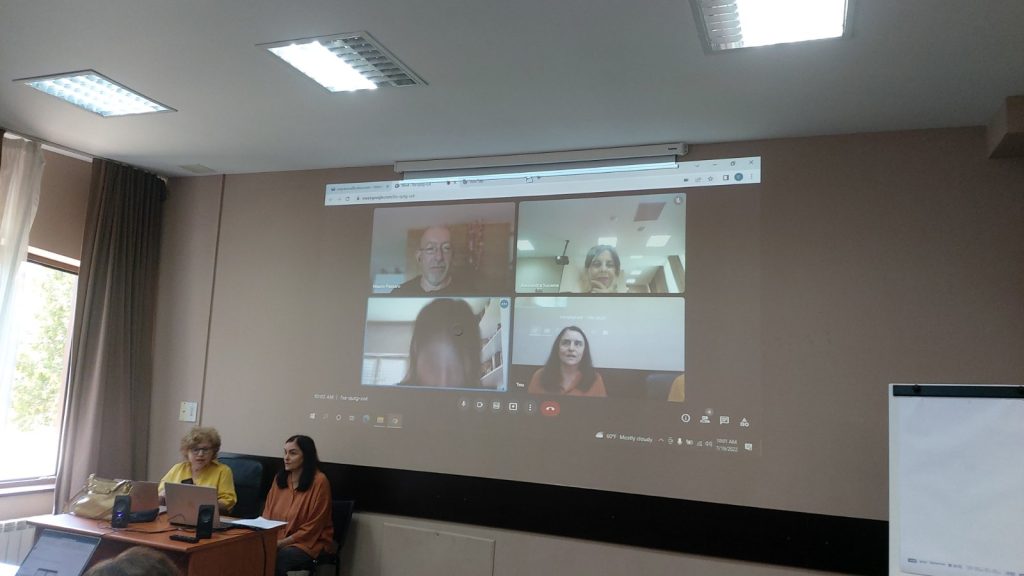
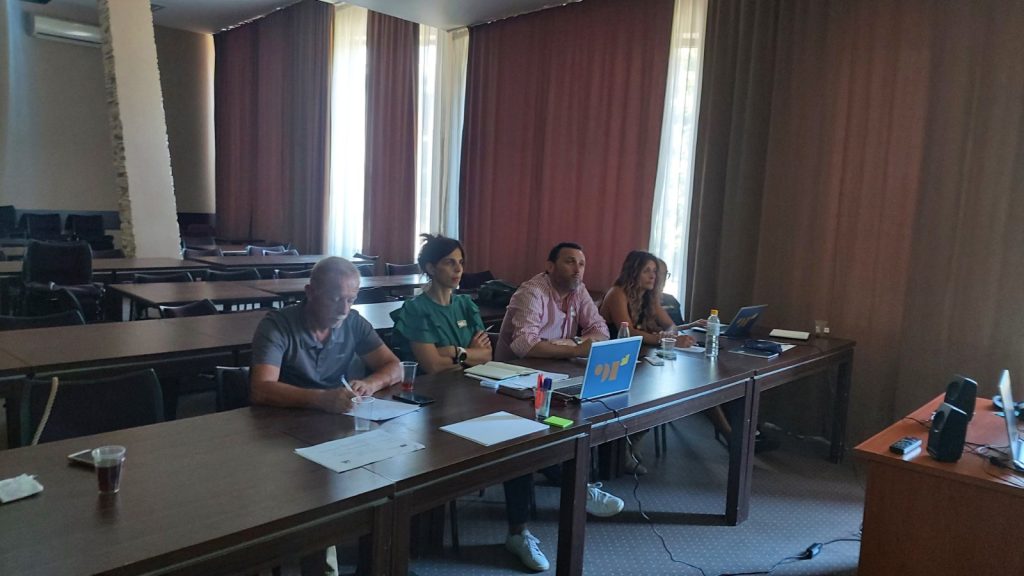
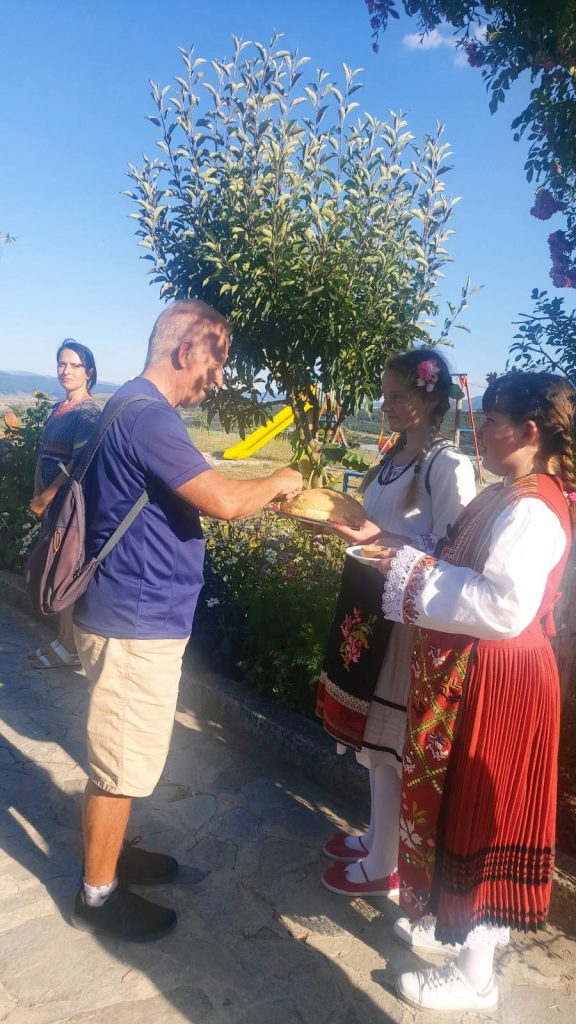
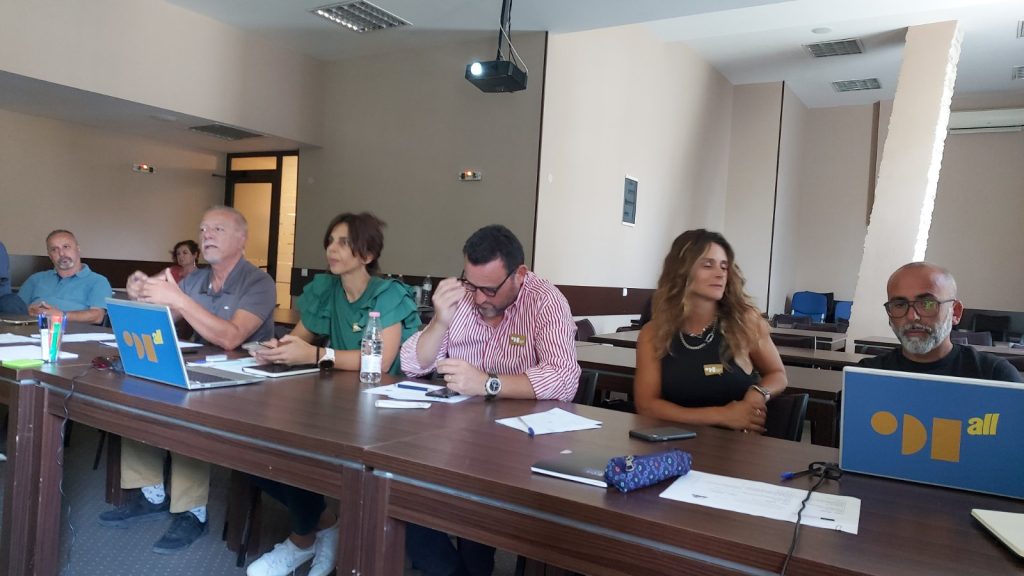
————–
15.06.2022

Our NGO, Rila-Pirin Enhancement Initiative, is a partner in KA210-SCH – Small-scale partnerships in school education.
’Combatting Media&Information Illiteracy to Raise Good Citizens’
Partnership: Portugal, Italy, Bulgaria, Turkey
We are aware that today’s generation of young people should learn to be citizens in a free and democratic society equipped with critical thinking and understanding of what the mass media are, how they work, and how they produce the media texts. One of our prime goals is to foster European citizenship and get involved
into civic participation due to the fact that in the last years, disinformation has become a very effective means in the political life. Citizens should be included into the democratic process and provided with true information. That is why with this project we aim to contribute to making young people become media&information literate, which will help them to avoid manipulation.
The project aims to help educators become more competent in the field of MIL and realise that in a mobile‐networked society, learning is not limited to the classroom, which necessitates considering new pedagogic approaches; to help young people to overcome media&information illiteracy, to obtain good M&I literacy skills, which are some of the key competences nowadays; to show students how individuals interpret messages differently, how values and points of view are included or excluded and how media can influence beliefs and behaviors; to contribute to educators’ and students’ mastering digital citizenship skills so that they are able to apply a fundamental understanding of the ethical and legal issues surrounding the use of media and embrace ideas of civic engagement.
We intend to develop the following products /tangible results: A Compendium of Good Practices will contain the current experience across the partners’ countries in providing Media&Information education to young people; some successful international practices in delivering Media&Information education for young people; a project web blog with all the project findings and events; a model of Media&Information Literacy Course Syllabus, which will facilitate introducing MIL education in the school curriculum; a Flip Book with a set of didactic materials related to developing MIL knowledge, skills and competences.
————–
12.06.2022
Our NGO, Rila-Pirin Enhancement Initiative, is a partner in KA210-SCH – Small-scale partnerships in vocational education 2021.
‘Up-skilling in Remote Working through Exploring the Relatively New Phenomenon of Co-working’
Partnership: Italy, Croatia, Bulgaria, Turkey
Co‑working is a modern way of working for entrepreneurs, self‑employed individuals and other professionals who share working space and establish networks, which serve as the basis for new start‑up companies. Today, many young people are faced with high unemployment rates. That is why, many young individuals from different backgrounds started to form
small communities, based on the same mind‑set of sharing and helping each other while realising their business ideas.
Since a lot of these young professionals are self‑employed and are using new technologies in their work process, they are extremely fexible and are able to work from different locations. s. By establishing more co‑working locations across the European Union, European youth will have the environment to get actively engaged in collaboration with young
professionals from various work fields and pursue the positive outcomes of the social and innovative knowledge‑based economy.
The objectives of the project are to: – attract more attention to the need of incorporating new working practices into a training process as they are not covered by the vocational school curricular in the slightest.
As it is a small-scale project, we intend to spot some good practices, develop a model course syllibus and some relevant course contents to generate greater interest to this burning issue. Perhaps this project will be further developed in order to produce more innovative and more varied educational resources; to create some open educational resources, related to Co-working, for VET learners who at the present do not possess the needed key skills to work remotely.
We are going to organise 4 major activities:
1. Teachers/Students Exchange ”The phenomenon of Co-working – Good practices”
2. Training event ”Co-working: challenges and possibilities”
3. Field Day Event “Rural Co-working”
4. A Multiplier Event ”My Co-working experience”
We expect to produce the following results: compendium of good Co-working practices; the course syllabus and contents “Co-working” and on-teaching/learning materials for the Co-working course.
————–
04.01.2022
Mrs. Kristina Yurukova, who is a corporate PR manager for NBG Radio/TV Group: radio Vitosha, radio Veselina, The Voice Radio and TV, Magic FM & TV conducted a workshop, dedicated to media education in school.
The students from the 8th and 10th grades displayed large interest and took a big part in this event. They discussed the role of free media in a democratic society and within the existing genres of journalism. The main focus was on fake news, disinformation and how to combat it, what are our rights as media consumers and how to be such responsibly.
Of especially big interest was the discussion about what it is journalists actually do.
It was also of great importance to the students was to learn to recognise and oppose fake news. Here are some questions on the subject that need to be asked:
Have you checked the source of the news? Do you recognise the website? Is it a reliable source? If the site isn’t familiar, go to “About Us” and learn more about its authors. Watch beyond the title. Look at the whole article – many fake news use sensational and shocking titles in order to attract attention. The titles are often capitalised and with many exclamation points. Compare the information with such from a different source. Is this news available in other, more respected media sources? Are sources cited in the article? If they are, check if they are reliable or if they exist at all.
The second part of the workshop was aimed at understanding the requirements for writing a journalist article.
The students were unanimous that such seminars are of tremendous help to future citizens of a democratic society, which does not want to be manipulated.
————–
11.05.2021
A round table organized by Dr. Elena Sayanova was held in RPG, with the aim of forming a deeper media and information literacy. The event was dedicated to the problem of the increased wave of fake news in the Bulgarian media, with the participation of a journalist from the newspaper ‘’24 Hours’’, Mrs. Antoineta Maskruchka, a highly qualified advertiser and PR specialist, Mrs. Snezhana Stoimenova.
The mayor of Razlog, Mr. Krasimir Gerchev, took part in the meeting. He especially emphasized that recognizing fake news and propaganda content is a problem among a large part of Bulgarian youth, they need additional training and upgrading of their knowledge regarding credible and true content, as well as acquiring skills for working with information on news sites and social networks.
Together with the students, the guests discussed the phenomenon of ‘fake news’, the main causes and mechanisms of their emergence and spread. The students showed great interest, asked many questions, to which they received competent answers from true professionals.
В РПГ, с цел да формираме по-дълбока медийно-информационна грамотност, беше проведена кръгла маса, организирана от д-р Елена Саянова. Събитието беше посветено на проблема на засилилата се вълна от фалшиви новини в българските медии, с участие на журналист от вестник ’24 часа’ г-жа Антоанета Маскръчка, висококвалифициран рекламист и PR-специалист г-жа Снежана Стоименова. В срещата взе участие кметът на гр. Разлог г-н Красимир Герчев. Той специално подчерта, че разпознаването на фалшивите новини и пропагандното съдържание е проблем сред голяма част от българските младежи, те имат нужда от допълнително обучение и надграждане на знанията си по отношение на достоверно и истинно съдържание, както и от придобиване на умения за работа с информация в новинарски сайтове и социалните мрежи.
Заедно с учениците гостите обсъдиха феномена ‘фалшива новина’, основните причини и механизми на тяхната поява и разпространение. Учениците проявиха голям интерес, задаваха много въпроси, на които получиха компетентни отговори от истински професионалисти.
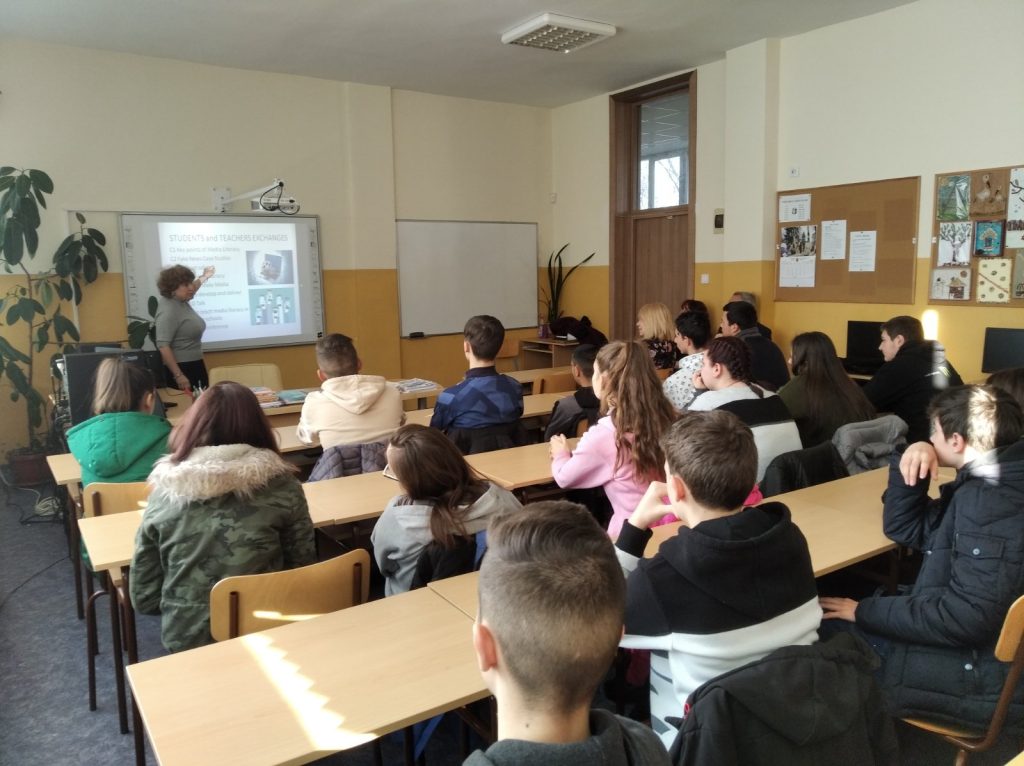
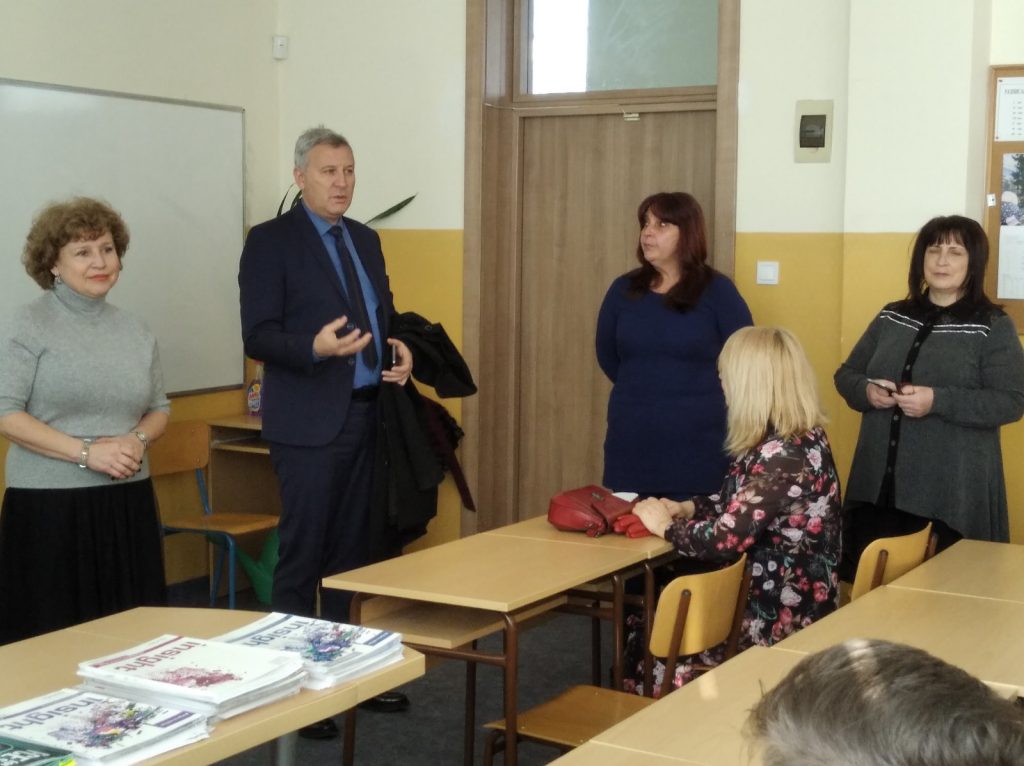
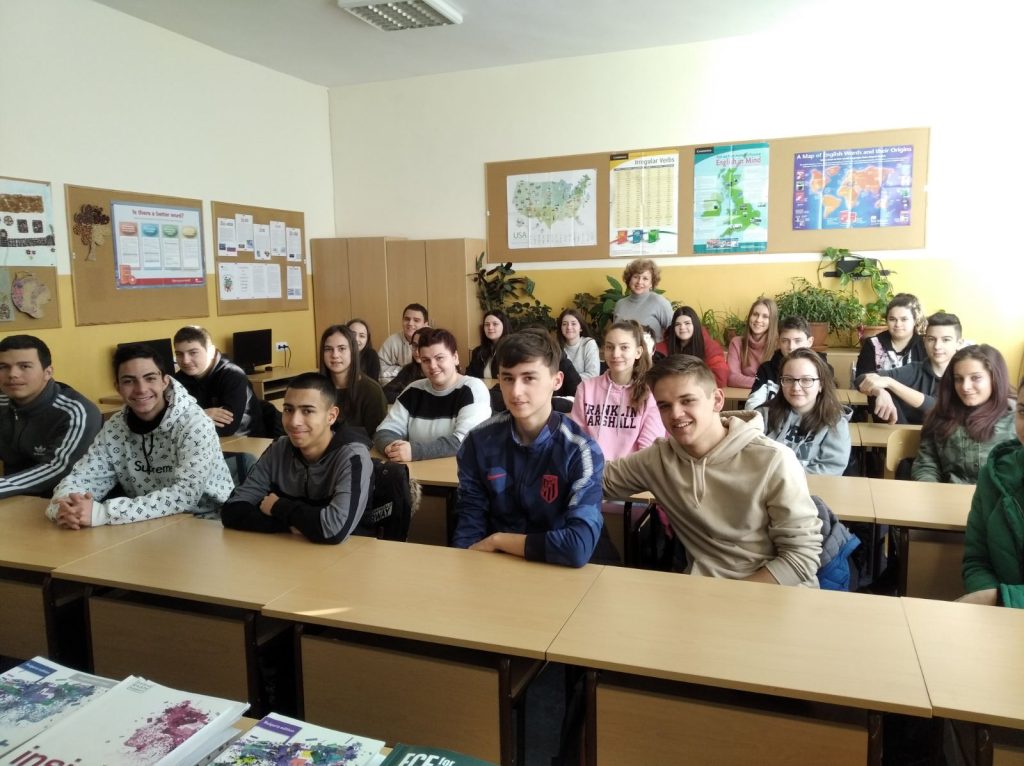
————–
06.03.2021
Rila-Pirin Enhancement Initiative representatives organized a workshop on Media Literacy for the local schools.
Six students from American University in Bulgaria delivered a workshop for the students in RPG devoted to spreading ideas, usually in the form of short, powerful talks. TED is a global community, welcoming people from every discipline and culture who seek a deeper understanding of the world. We believe passionately in the power of ideas to change attitudes, lives and, ultimately, the world.
The purpose of the workshop was to teach students how to make great ideas accessible and spark conversation.
See part of this workshop:
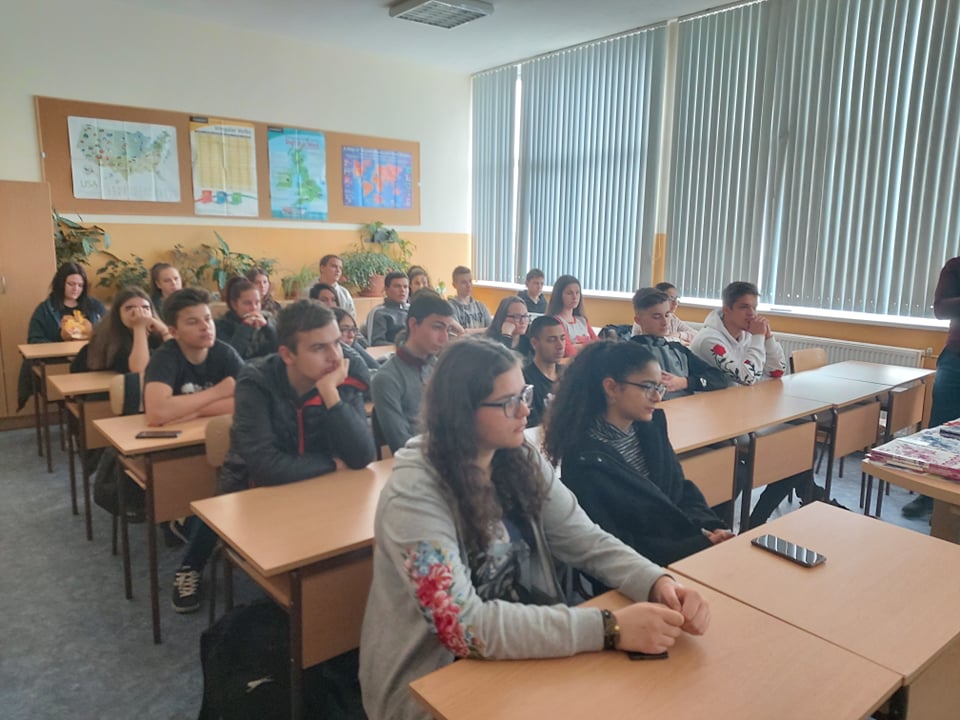
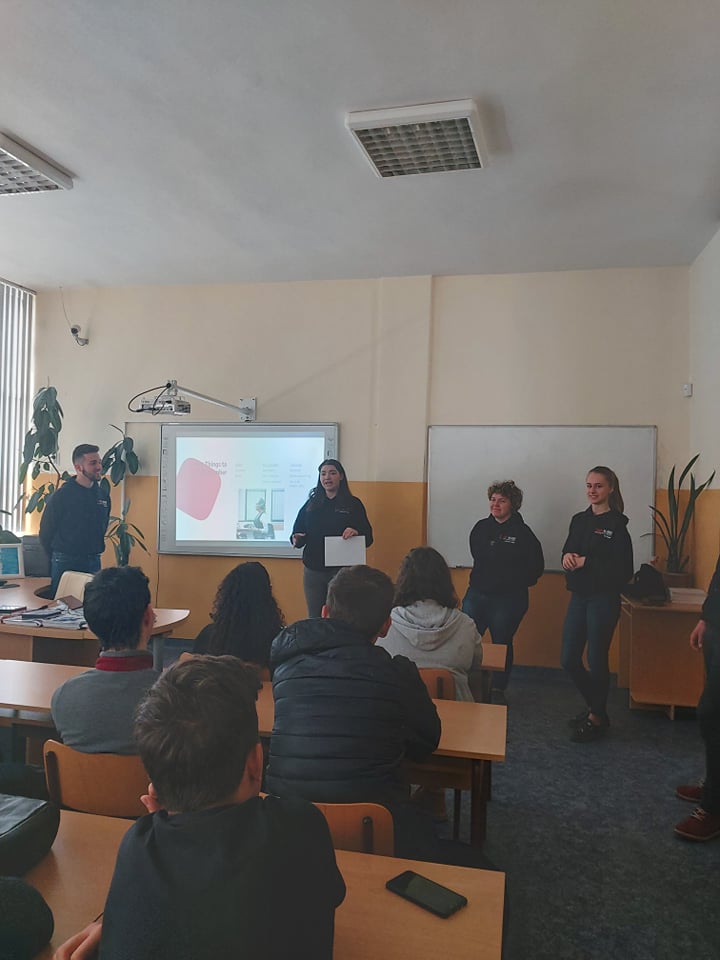
————–
04.03.2021
Rila-Pirin Enhancement Initiative donated BGN 1,120.00 (one thousand one hundred and twenty BGN) for the purpose of paying for designing and printing panels/ banners for a mobile museum exhibition dedicated to old crafts.
Until then, there had not been any mobile exhibitions in the Historical Museum – Razlog that would present the rich cultural and historical heritage of the city of Razlog. The reason for the lack of such an exhibition is the limited budget of the museum and the renovation of the museum buildings as a primary need. The creation of the new exhibition will promote the area as a tourist destination and contribute to attracting more visitors to the museum. Disappearing crafts will be promoted as well.
The exhibition consists of 8 /2m X 60cm/ panels – with photos from the museum in Razlog and text /in two languages/, which are designed and printed on suitable material – easy to carry to the various places of visitation. The boards show the most common crafts in Razlog and the region. A large part of the tools of the masters are stored in the museum fund, and therefore the idea of making the exhibition is easy to implement. Through the exhibition, materials that are large in volume and difficult to transport will be shown in photographs. But this way they are now available to the people who want to see them. The panels, together with exhibits from the museum, can become a wonderful mobile exhibition that will visit other museums throughout the country and will be included in the catalog of museum exhibitions in Bulgaria. Original master certificates and documents are also used for the exhibition.
The most common crafts are pottery, foundry, goldsmithing and others. Now there are no living masters to continue making such products. That is why there is a need to make this exhibition. It can also be mounted in schools for various occasions.
До тогава в Исторически музей – Разлог няма изработена мобилна изложба, която да представя богатото културно-историческо наследство на град Разлог. Причината за липсата на такава изложба е ограничения бюджет на музея и ремонтирането на музейните сгради като първостепенна нужда. С направата на новата изложба се популяризира района като туристическа дестинация и може да допринесе за привличане на повече гости в музея. Популяризират се изчезващи занаяти и това може да послужи като опит за възраждането им.
Изложбата се състои от 8 /2m X 60cm/ пана – със снимки от музея в Разлог и текст /на два езика/, които са подготвени и отпечатани на подходящ материал – лесен за пренасяне до различните места на гостуване. Таблата показват най-разпространените занаяти в Разлог и региона. Голяма част от инструментариума на майсторите са съхранени в фонда на музея и затова идеята за направата на изложбата е лесна за изпълнение. Чрез изложбата се показват на снимки материали, които са големи по обем и трудни за пренасяне. Но така те вече са достъпни за хората, които искат да ги видят. Таблата, заедно с експонати от музея могат да се превърнат в една прекрасна мобилна изложба, която възможно да гостува по други музеи в цялата страна и ще бъде включена в каталога на музейните изложби във България.
Най-разпространените занаяти са грънчарство, леярство, златарство и други. Сега няма живи майстори, които да продължат да ги работят. Затова се появява нуждата от направата на тази изложба. Тя също така може да гостува по училища за различни празници и поводи. Най-голямо значение и табла се отделя на грънчарството – най-разпространения занаят в Разлог. Показват се снимки на майстори, свидетелства, книги на еснафа и се обръща особено внимание на съдовете. Те се отличават с различна символика на тях и ги отличават от останалите грънчарски съдове, съхранени по другите музеи. Съдовете от Разлог впечатляват туристите със своята форма и богата символична украса. Те представляват един разказ, който може да се прочете върху съда с различните символи и соларни знаци. На тях са изобразени слънцето, земята, водата, змията и още много символи. Керамичните съдове са разделени за ежедневна функция и за специални поводи – сватби и кръщенета. Затова е интересно и необходимо да се опишат тези ценни съдове и да се популяризират.
Леярството – отливане на калъпи на различни предмети и накити
Златарството е представено върху направата на накити. Каменоделството – потомствен занаят и също много разпространен в Разлог.
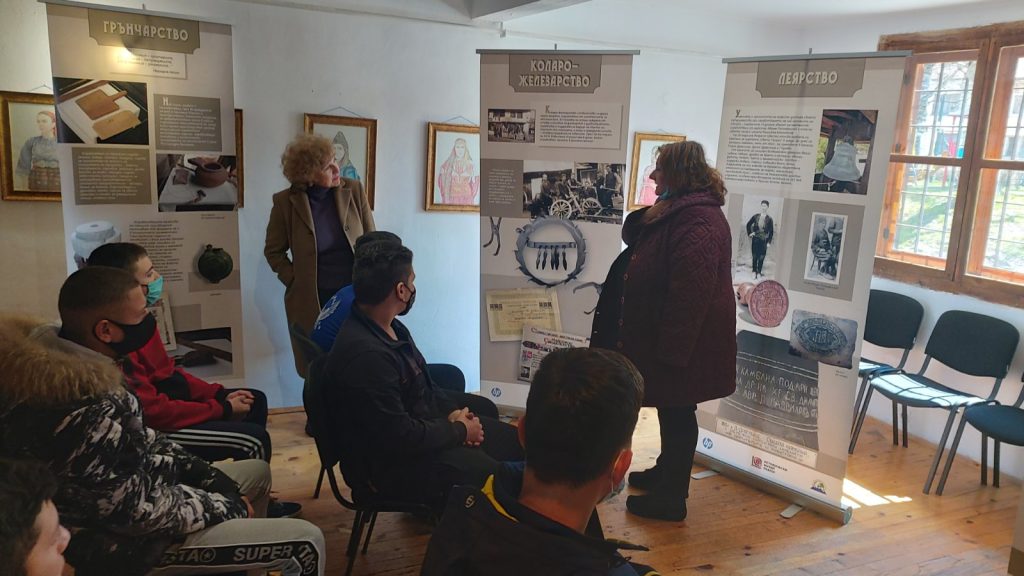
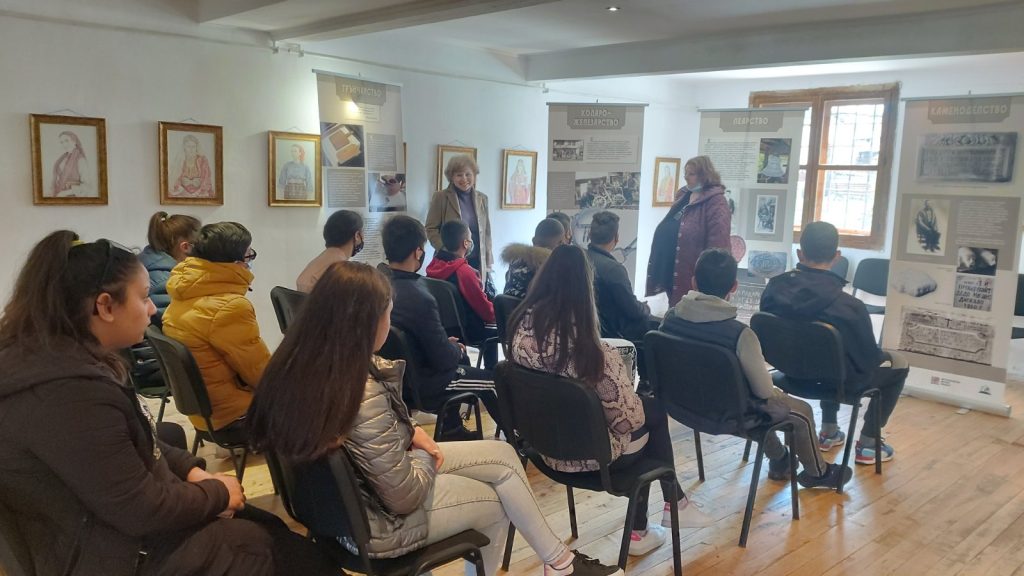
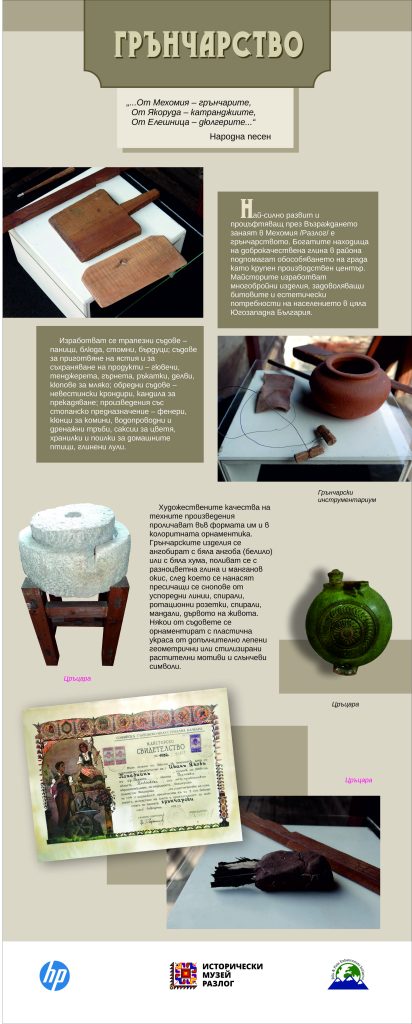
————–

26.10.2020
Rila&Pirin Enhancement Initiative is an associated partner of
‘Fake News Among Teenagers – Towards a More Responsible Media Literacy’
2019-1-SI01-KA229-060523 1. Context: Six schools from Austria, Bulgaria, France, Germany, Norway and Slovenia have joined together with the aim to examine phenomenon of fake news and include it in media literacy and civic education activities. Fake news is becoming a fashionable term to depict misleading information, deliberately spread over social networks. The teenagers, internet natives, accept internet as the predominantly reality but are often deceived and used by online predators, what often leads to ignite populist ideas. Parents often lack experience and knowledge, schools curricula are falling behind since the development is rapid.
2. Objectives: Our general, underlaying objective is INTERNATIONALIZATION: Pupils and teachers cooperate in the international environment and exchange good practices internationally. Another objective concerns MEDIA LITERACY: We integrate media literacy into classrooms. The project makes pupils and teachers more ICT skilled and enables them to tell truth from fake. We develop sets of teaching materials on Media Education within different subjects. An important objective is related to POPULISM: The project increases awareness among the pupils about populism in the political discourse in digital media, provides pupils with skills for critical thinking about media contents. An important objective is SOCIAL INCLUSION: We include more pupils with fewer chances, poorer economic background and weaker access to digital technologies in our project.
3. Participants: In this project, we include vocational and general schools form six countries which educate teenagers from 15-20 years. In the core activities, we will bring at least 80 pupils to shortterm pupils’ exchanges, and 20 teachers to short-term joint staff training events. Another 30 teachers will be accompanying their pupils and will also be directly involved in the activities. The pupils will be warily selected (gender, fewer opportunities). Considerable number of teachers and pupils will be also involved in the host school activities.
4. Activities: There will be seven Learning Teaching Training Activities. Three of them are meant for teachers. In the first one, they set the foundation for the development of the project and learn about key points of media literacy; the second one is dedicated to internet safety; the last one, parallel to the pupils’ exchange, talks about teaching media literacy in secondary schools. Four LTT activities are pupils’ exchanges. In the first one, they start a national case study on fake news and get familiar with the international institutions from the field, based in Geneva; in the second one, they learn about implications of fake news in the politics and about fighting populism; in the third one, they learn about producing media contents; in the last one, parallel to the joint staff training event, they learn and deliver a TED talk about fake news and related issues. Besides that, there will be numerous local activities and events, from conducting a survey to start a public campaign, some of them with the help of experts, journalists, activists and their organisation, we will seek to include parents more actively.
5. Results/impact: After the project is over, we expect following results: survey and report on media literacy and citizenship education in six countries, website of the project, round tables and lectures, report on fake news in six countries, public campaign on press freedom day, guidelines with teaching materials pack, caricature exhibition, eBook of case studies, TED talks on fake news, digital magazine. The project will impact mostly pupils and teachers. We expect, they will develop their multicultural awareness and related skills, they will show considerable improvement in their media literacy, and they will become more aware of not always so welcoming media landscape and more skilful in reading news in social media properly. We think we will partly fill the social gap among some of our pupils regarding their access to digital technologies and their use. We will promote our project beyond the school walls, in the local community, in the region and among the fellow teachers.
6. Benefits: In the long term, we expect to start a project with our partners to build on the present one. We will experience changes as teachers – becoming more confident while talking to our pupils on media literacy and populism. We sincerely hope our pupils will benefit most from the project – in becoming smart and virtuous citizens in the social media and elsewhere.
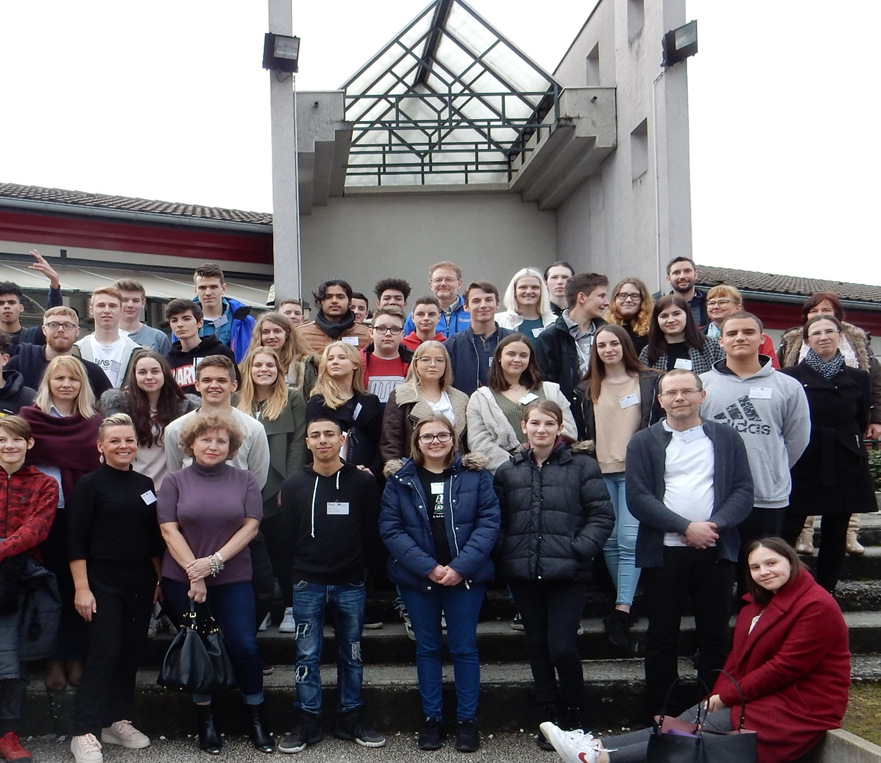
————–
30.09.2020
Rila&Pirin Enhancement Initiative is an associated partner of CLICHÉ
Project: 2018-1-EL01-KA201-047861
C L I C H E – Capitalizing on Local Intangible Cultural Heritage around Europe
The proposal consists of 4 modules:
Module 1
Baseline assessment of the current situation- identifying best methods of upskilling students and teachers; Doing research into the local ICH field; Inventorying ICH in a participatory wiki; A glossary of terms;
Module 2
Compiling a Blended Learning package for ESD (Education for Sustainable Development);
Module 3
Valorization of the local heritage; A SWOT analysis and a future-oriented vision – action plan;
Students become would-be sustainability entrepreneurs promoting innovative local ICH and delivering ‘Ted Talk’ style presentations, which are video recorded and uploaded on You Tube; Writing guidelines about how to deliver Ted Talks;
Transmedia storytelling. Students become curators of an online gallery and ambassadors of their local ICH. Students develop a cultural route that connects their 6 cities/countries through a shared element of ICH.
Module 4
Disseminating project outcomes. Organising workshops/seminars, a multiplier event promoting the project outcomes.